
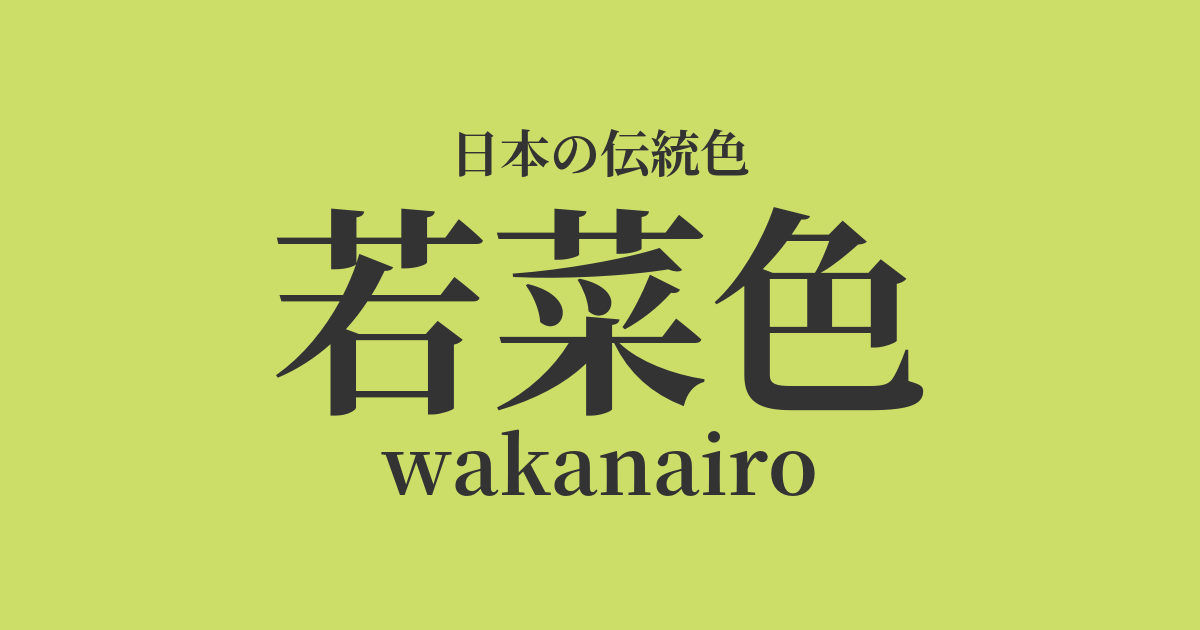
| Japanese color name | Wakana color |
|---|---|
| reading | wakanairo |
| HEX | #CCDE68 |
| RGB | 204, 222, 104 |
What is Wakana-iro (young green color)? Origin and etymology.
Wakana-iro refers to a bright, vivid yellowish-green color, like the young greens that sprout in early spring. As the name suggests, it derives from the fresh color of young edible vegetables, such as those found in the seven spring herbs. The freshness and vitality of the word "waka" (young) combined with the image of plants represented by "na" (vegetable) has made it a color that has been cherished since ancient times as a color that evokes the arrival of spring and the breath of new life.
It is believed that this color name was already established during the Heian period, and it is one of the colors that symbolizes Japan's rich view of nature and the changing seasons.
The historical background of the young green
The name "wakana-iro" (young leaf green) can be found in literary works from the Heian period. Particularly famous is its appearance in "The Tale of Genji," where Hikaru Genji is depicted wearing a wakana-iro garment, suggesting that it was recognized as a color symbolizing spring in the aristocratic society of the time. This color was considered a symbol of youth and longevity, and it is said to have been particularly favored for the clothing and furnishings of young women.
During the Edo period, it became more widely known among the common people and was established as a color that represented spring in various aspects of culture, such as kimonos and ukiyo-e prints.
Related literature, waka poetry, and seasonal words
The color "wakana-iro" (young green) has deep ties to the world of literature, particularly Heian period literature. "Wakana," which is also the title of a chapter in "The Tale of Genji," marks a crucial turning point in the story, and the ritual of picking young greens that takes place there is depicted as a symbolic event wishing for longevity and prosperity. Wakana-iro is effectively used as the color of the clothing worn by the characters in this scene. Furthermore, in the world of haiku, "wakana" and "wakana-tsumi" (picking young greens) are seasonal words for the New Year, and this color evokes images of vitality and the joy of spring.
Through these literary works, the color "wakana-iro" (young green) transcended mere color representation and acquired cultural significance.
For your sake, I went out into the spring fields to gather young greens, and snow fell on my sleeves.
Color scheme preview
This is to check the readability of the text when this color is used as the background.
A color scheme proposal in light green.
Cherry blossom pink (#FEEAFA)
The combination of young greens and cherry blossoms, representative of spring, expresses the joy of the sprouting and blooming of life. This bright, hopeful, gentle, and vibrant color scheme is suitable for occasions celebrating the arrival of spring.
Kutsuha color (#917347)
By combining the contrasting colors of the seasons—the fresh green of budding leaves and the withered green of falling leaves—the colors evoke a sense of nature's cycle and the passage of time. Earth tones complement each other well, creating a calm, deep, and traditional Japanese atmosphere.
Lapis Lazuli (#1F4788)
By combining a bright, light green with a deep, vibrant lapis lazuli blue, a contrast is created where each color enhances the other. This color scheme gives a refreshing and intellectual impression, like young leaves shining under a clear sky.
Practical Scenes
In traditional Japanese clothing, the light green color (wakana-iro) is considered ideal for expressing the feeling of spring. It is especially used in the furisode (long-sleeved kimono), houmongi (formal visiting kimono), and accessories such as obiage (kimono sashes) worn by young women, giving a youthful and lovely impression. It is a suitable color for celebratory occasions such as tea ceremonies in early spring, graduation ceremonies, and entrance ceremonies.
In interior design, using a light green as an accent color brings a bright and fresh atmosphere to a space. Incorporating it into cushion covers, curtains, or parts of the wallpaper will make the entire room come alive, creating a space that evokes the warmth of spring and the breath of nature.
In the fields of web design and graphic design, the color Wakana (young green) is effective in conveying themes such as freshness, health, nature, and ecology. When combined with natural colors such as white and beige, it creates a clean and approachable impression, evoking a sense of security and positive emotions in the user.