
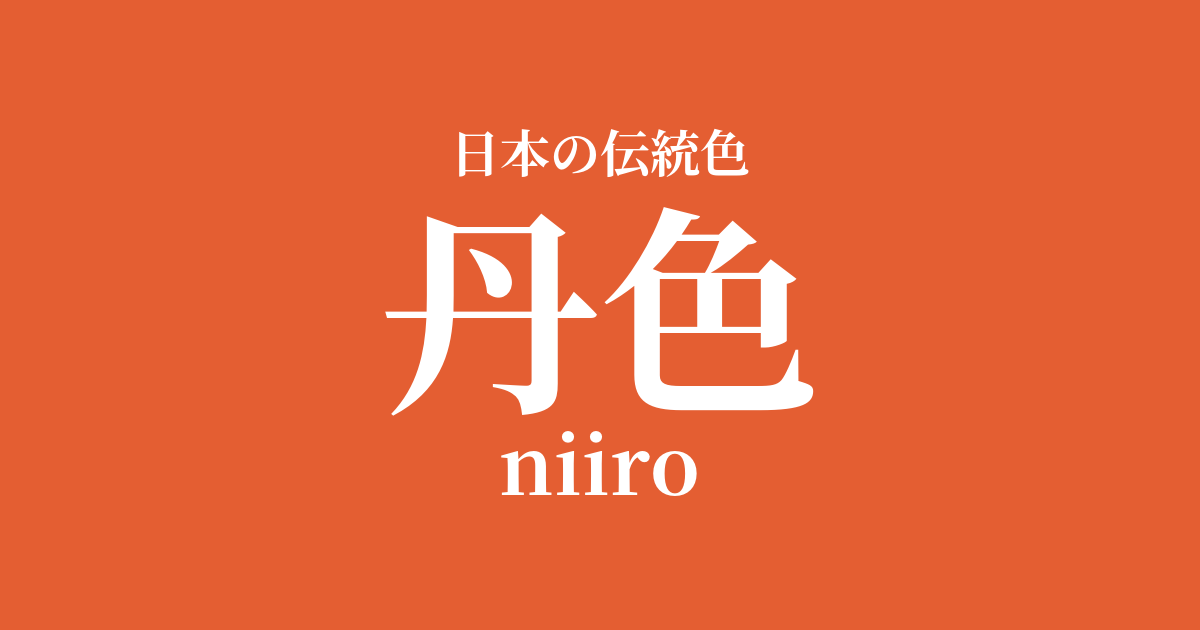
| Japanese color name | red |
|---|---|
| reading | niiro |
| HEX | #E45E32 |
| RGB | 228, 94, 50 |
What is "tan-iro" (vermilion)? Origin and etymology.
Niiro (丹色) is a vivid, reddish-orange color derived from the pigment "Ni" (丹), which is made from red clay. This "Ni" mainly refers to cinnabar (丹沙), a mineral whose main component is mercury sulfide, or red clay (赭土) which contains a large amount of iron oxide. It has been used as a pigment since ancient times, and the mining area was called "Niu" (丹生).
The "ni" in the name of the color is said to be a variation of "hani," meaning earth, or a word referring to cinnabar itself, and has been treated as a symbol of vitality and sanctity.
The historical background of the color red
The history of vermilion is ancient, with traces of its use found in the coloring of Jomon period pottery and clay figurines. In the Kofun period, it was used in murals and stone sarcophagi, such as those in the Takamatsuzuka Tomb, with the meaning of warding off evil. From the Nara period to the Heian period, it became an important color in the architecture of shrines and temples, and was established as a sacred color that adorned pillars, torii gates, and shrine buildings. In particular, the use of vermilion paint in many shrines, such as Ise Grand Shrine and Kasuga Grand Shrine, is said to be due to its sanctity and the expectation of its antiseptic and insect-repellent effects.
Related literature, waka poetry, and seasonal words
The color vermilion appears frequently in classical Japanese literature. In the Manyoshu, it is written, "The capital of Nara, beautiful with its blue (green) and vermilion (red) colors, is now in its prime," and there is a theory that this epithet "aoniyoshi" describes the beautiful appearance of the capital city with its blue (green) and vermilion (red) colors. In addition, in the Kojiki and Nihon Shoki, sacred ships and palaces are described as "vermilion-painted boats" and "vermilion-painted arrows," indicating their special status.
These descriptions suggest that vermilion has long been a symbol of beauty and sacredness.
The beautiful capital of Nara is now in its prime, like the fragrant blossoms in full bloom.
Color scheme preview
This is to check the readability of the text when this color is used as the background.
A proposed color scheme using vermilion.
Navy blue (#223A55)
The warmth and vitality of the vermilion are complemented by the deep, calming navy blue. The two colors enhance each other, creating a powerful yet dignified impression. This is a classic color scheme often seen in the decorations of shrines and temples, as well as in traditional crafts.
White-green (byakuroku) (#D6E9D6)
The vibrant vermilion is softened by the pale, gentle green of the white-green, creating a refreshing and sophisticated impression. Reminiscent of the greens and reddish-brown colors of nature, this combination brings tranquility and elegance to Japanese-style spaces and designs.
Golden color (#E6B422)
Although both are warm colors, the combination of the reddish hue of vermilion and the shimmering brilliance of gold creates a magnificent and festive atmosphere. Suitable for expressing high status and wealth, it is used in special decorations and designs.
Practical Scenes
Due to its historical background, vermilion is effectively used in situations that emphasize a Japanese aesthetic. In kimonos and obi sashes, it creates a splendid look suitable for celebratory occasions, and when combined with classical patterns, it creates a dignified appearance. In interior design, using it as an accent color for wallpaper or fabrics can bring warmth and energy to a space. It is particularly well suited to creating a Japanese modern space.
In web design and graphic design, the strong presence of vermilion attracts attention, making it effective for highlighting important elements. Using it in buttons, icons, and headings can effectively draw user attention and encourage action. However, large areas of vermilion can create a sense of oppression, so it's recommended to balance it with neutral colors such as white, black, or gray.