
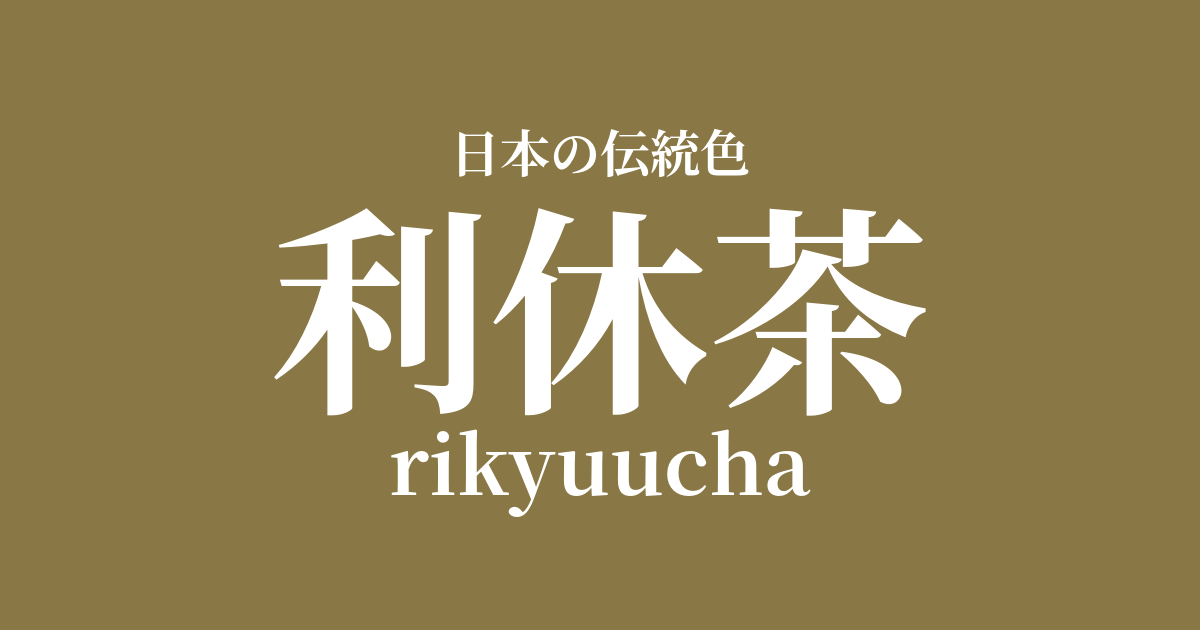
| Japanese color name | Rikyu Tea |
|---|---|
| reading | rikyuucha |
| HEX | #897845 |
| RGB | 137, 120, 69 |
What is Rikyu Tea? Origin and Etymology
Rikyu-cha is a traditional Japanese color named after Sen no Rikyu, a tea master who perfected the tea ceremony during the Azuchi-Momoyama period. It is one of the colors that Rikyu is said to have favored, and is particularly known as a color that symbolizes the "wabi-sabi" spirit of his tea ceremony. Its hue is a subdued brown with a greenish tint, and is said to strongly reflect Rikyu's aesthetic sense of rejecting ostentation and finding beauty in simplicity.
However, there is no direct record that Rikyu himself established this color name. It is believed that later generations associated this color with Rikyu's philosophy and preferences and gave it this name.
This color name is believed to have become common from the mid-Edo period onward. At that time, the tea ceremony spread among the common people, and simultaneously, many fashionable colors were created that bore the names of Kabuki actors and cultural figures. The color named after "Rikyu" was one such example, and within the culture of enjoying subtle differences in shades, such as "Rikyu gray" and "Rikyu white tea," Rikyu tea was particularly favored by tea masters and connoisseurs. This color, reminiscent of natural elements like soil, wood, and moss, beautifully represents the color sensibility rooted in the Japanese climate and culture.
Historical background of Rikyu tea
The color name "Rikyu-cha" first appeared on the historical stage during the mid-Edo period. This was a time when townspeople culture flourished and interest in color grew among the common people. In particular, as a reaction to the restrictions on bright colors imposed by sumptuary laws, a trend called "Forty-Eight Browns and One Hundred Grays" emerged, where people found and enjoyed subtle differences within subdued colors such as brown and gray. Rikyu-cha was born out of this trend and was widely accepted as a refined color.
Rikyu tea, associated with Sen no Rikyu's spirit of "wabi-sabi," was particularly highly valued in the world of the tea ceremony. This color was used in various aspects of the tea ceremony, including the walls and fixtures of the tea room, tea utensils, and the kimonos worn during tea ceremonies. It was a manifestation of the aesthetic sense of tea masters who sought to create a quiet and spiritually rich space by avoiding flashy colors.
Since the Meiji era, its calm and dignified hue has continued to be cherished in a wide range of fields, including traditional Japanese clothing, crafts, and architecture, as a color that symbolizes traditional Japanese beauty.
Related literature, waka poetry, and seasonal words
Although the color name "Rikyu-cha" is rarely mentioned directly in waka or haiku, the "wabi-sabi" aesthetic associated with this color is deeply connected to an important aesthetic sensibility that underlies Japanese literary works. For example, the sense of becoming one with nature in silence, as seen in Matsuo Basho's haiku, and the sensibility of finding beauty in aged things, resonate with the imagery evoked by the color Rikyu-cha.
This color evokes a quiet and picturesque atmosphere when depicting scenes such as withered fields or moss-covered rocks.
In modern literature, Rikyu tea is sometimes depicted indirectly as a color symbolizing traditional Japanese aesthetics and spirituality. The beauty that arises from the dimness of traditional Japanese houses and the deep flavor of the materials, as discussed by Junichiro Tanizaki in "In Praise of Shadows," resonates with the worldview of the subdued and calming colors of Rikyu tea. When depicted as the color of the characters' kimonos or the furnishings in the rooms, it gives the works a sense of elegance and traditional depth.
Color scheme preview
This is to check the readability of the text when this color is used as the background.
Color scheme proposal for Rikyu tea
Black (#1C1C1C)
The astringency of Rikyu tea and the deep black of ink create a combination where each color enhances the other. It gives an impression of tranquility and dignity, and is a traditional and profound color scheme that evokes the space of a shoin-zukuri (a type of Japanese architectural style) or formal Japanese attire.
Moss color (#69821B)
The brown of Rikyu tea and the green of moss are both earth tones found in nature. They evoke the moss-covered rocks and trees found in Japanese gardens, creating a calm and peaceful atmosphere. They are well suited to a natural and tranquil setting.
Generated color (#FBFBF0)
The deep hues of Rikyu tea are complemented by the soft off-white of the natural color, creating a color scheme that adds brightness and a sense of lightness. The contrast is not too strong, resulting in a sophisticated, modern Japanese impression. This color scheme is effective when you want to achieve both cleanliness and warmth.
Practical Scenes
In the world of traditional Japanese clothing, Rikyu-cha (a shade of green) is an extremely popular color. It is especially favored for kimonos, obi sashes, and accessories such as obi-jime (kimono sash cords) worn at tea ceremonies, creating an understated yet dignified look. Its calm hue is easy to combine with other colors and can be widely adopted by people of all genders and ages, making it a valuable color to have in one's wardrobe.
In the field of interior design, incorporating Rikyu tea into wallpaper, curtains, and furniture can create a calm and profound Japanese modern space. It pairs particularly well with natural materials such as wood, bamboo, and washi paper, bringing a peaceful atmosphere that evokes traditional Japanese aesthetics. Even using it as an accent wall on just one wall can tighten the overall space and give it a high-quality feel.
In web and graphic design, using this color as a background or key color can effectively convey a sense of luxury, reliability, and tradition. It is particularly well-suited to content with a background in Japanese culture and history, such as websites for long-established Japanese confectionery shops, inns, and brands dealing in traditional crafts. While not flashy, it is a color that gives viewers a sense of security and sincerity.