
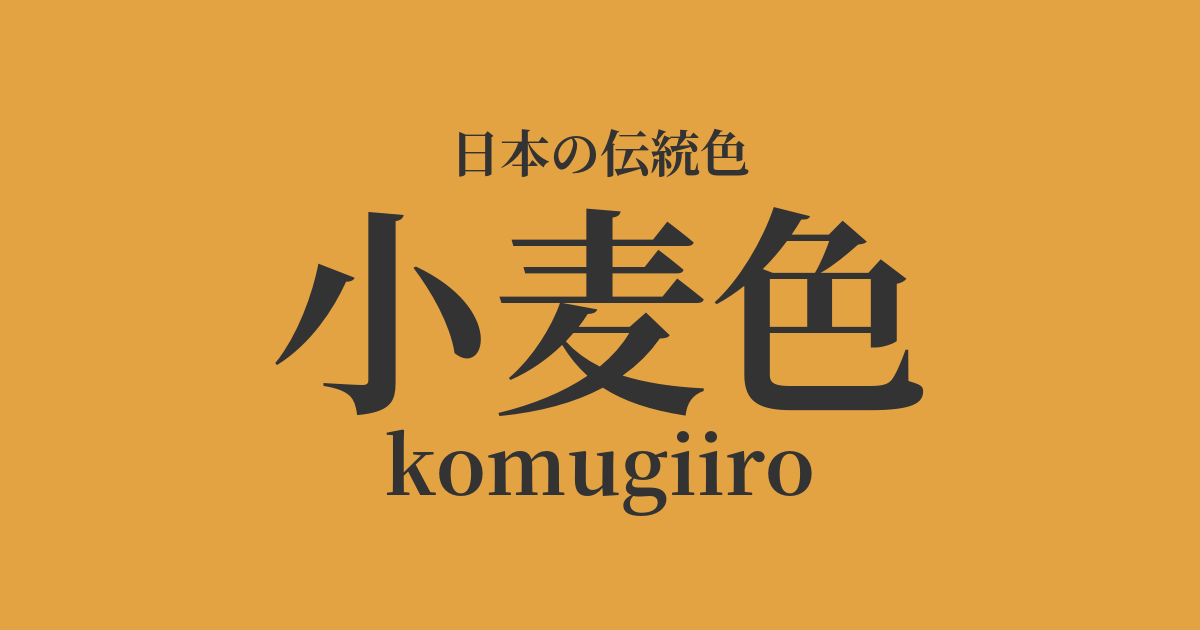
| Japanese color name | Wheat-colored |
|---|---|
| reading | komugiiro |
| HEX | #E4A343 |
| RGB | 228, 163, 67 |
What does "wheat-colored" mean? Origin and etymology.
Wheat brown, as the name suggests, refers to a bright, reddish-yellowish-brown color reminiscent of wheat ears ready for harvest. Although wheat has been cultivated in Japan since ancient times, it is believed that the color name only became commonly used after the mid-Edo period. With the development of dyeing techniques at the time, the range of brown shades diversified, and many color names derived from familiar plants were created. Wheat brown became popular among people as a simple and warm color that evokes the blessings and abundance of nature.
In modern times, a healthy tan is commonly described as "wheat-colored skin." This is thought to be a combination of the image of wheat stalks shining in the sunlight and the impression of vitality and health. Beyond being merely a color name, it is widely used as a word symbolizing vitality and natural beauty, and its cultural background is very rich.
The historical background of wheat
The term "wheat color" first appears in literature as a color name during the Edo period. It can be found in the contemporary dyeing sample book, "Tekagami Moyo Setsuyo," indicating that it was recognized as one of the variations of brown and yellow. During the Edo period, influenced by sumptuary laws, subdued colors such as brown and gray became popular, and it is presumed that wheat color was one of these, used in the clothing of common people.
Even after the Meiji era, wheat-colored fabric continued to be widely used in textiles and crafts as a color that blended well with the Japanese landscape and lifestyle. In particular, it paired well with natural materials such as cotton and linen, creating a simple and warm texture. Even as modernization progressed, this color, reminiscent of Japan's original landscape, continued to be loved as a color that brings peace to people's hearts.
Related literature, waka poetry, and seasonal words
In the world of literature, "wheat" is a seasonal word for summer, and "bakushu" (wheat harvest season), referring to early summer, has been celebrated in many haiku and waka poems as a symbol of abundant harvest. The color name "wheat color" is deeply connected to this quintessential Japanese landscape. Although the color name is not often used directly in the works, descriptions of golden wheat fields richly convey the image of this color.
Since the modern era, particularly in novels set in summer, the term "wheat-colored" has been used to describe characters with a healthy tan. This can be seen as an influence of Western culture, reflecting a shift in values beyond the traditional notion that "fair skin hides a multitude of flaws," towards appreciating the active and healthy beauty associated with a love of outdoor activities.
I walked through the wheat where my shadow lay.
Color scheme preview
This is to check the readability of the text when this color is used as the background.
Suggested wheat-color scheme
Indigo (#264348)
The yellow hues of wheat and the blue hues of indigo are close to complementary colors, and they vividly enhance each other's colors. This color scheme gives a simple and calm impression, reminiscent of traditional Japanese rural landscapes.
Persimmon color (#ED6D3D)
Wheat brown and persimmon brown are both warm colors, giving a rich and warm impression reminiscent of autumn harvests. As a combination of similar colors, they harmonize and create a friendly and lively atmosphere.
White training (#EFEFEF)
The warmth of wheat and the cleanliness of white combine to create a bright and sophisticated impression. This color scheme is suitable for natural and modern interior design, as well as refreshing fashion.
Practical Scenes
In the world of kimono, wheat-colored is a popular dye for natural materials such as pongee silk, cotton, and linen. Its simple and warm hue gives it a casual feel, and when paired with indigo or green for the obi and accessories, it creates an outfit reminiscent of the changing seasons of Japan. It is a particularly suitable color for expressing the seasonal feel from early summer to autumn.
In interior design, wheat brown is a valuable earth tone. Incorporating it into wallpaper, fabrics, and wooden furniture brings warmth and tranquility to the entire space. Combining it with the green of houseplants or bright colors like white creates a natural and relaxing atmosphere.
In web and graphic design, wheat brown is effective when you want to convey friendliness and a sense of security. It is often used as a background or accent color for websites related to organic food, natural cosmetics, and agriculture. It is expected to give users a warm and trustworthy impression.