
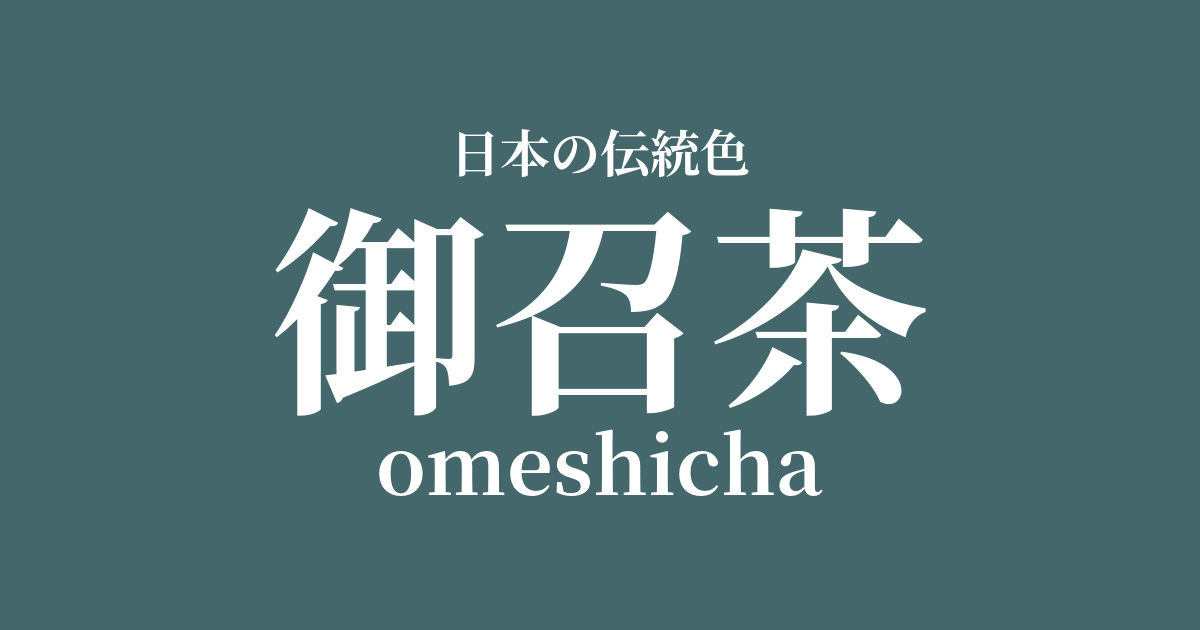
| Japanese color name | Omeshi Tea |
|---|---|
| reading | omeshicha |
| HEX | #43676B |
| RGB | 67, 103, 107 |
What is Omecha? Origin and Etymology
Omeshi-cha is a dark, greenish-blue color that was popular in the late Edo period. Its name originates from "Omeshi Chirimen," a type of crepe fabric favored by the 11th Shogun, Tokugawa Ienari. "Omeshi" is an honorific term meaning "something worn by the Shogun," and it particularly referred to clothing worn by the Shogun and other nobles. It is believed that the color came to be called "Omeshi" because Ienari frequently wore crepe fabric of this color.
Although the name includes "cha" (tea), it is not a brown color. During the Edo period, due to the influence of sumptuary laws, subdued colors were favored, and a culture arose of adding "cha" or "nezumi" (mouse) to the names of various colors. This trend, sometimes called "Forty-eight Chas and One Hundred Nezumi," is a reflection of the Edo people's aesthetic sense, which appreciated subtle differences in color. Omeshicha is one such example, and it can be said to be a color name that symbolizes the sophisticated sense of color of that time.
Historical background of the Imperial Tea
The popularity of Omeshicha tea is believed to have begun around the Bunka-Bunsei era (1804-1830) in the late Edo period. This was during the reign of the 11th Shogun Tokugawa Ienari, and Edo's townspeople culture reached its peak. Because the shogunate frequently issued sumptuary laws, people avoided flashy colors and found delicate beauty in understated colors such as brown and gray.
Against this backdrop, the shogun's attire, known as Omeshicha (a type of brown), became a symbol of authority and, at the same time, a sophisticated and refined color that was extremely popular among the stylish people of Edo. It is said that kabuki actors and wealthy townspeople, in particular, favored wearing this color, and it was one of the leading colors in fashion at the time.
Related literature, waka poetry, and seasonal words
Omeshicha is a relatively new color name, originating in the late Edo period, and therefore does not directly appear in Heian period waka poetry or classical literature. However, figures wearing kimonos in Omeshicha can be seen in ukiyo-e prints and illustrated books depicting the customs of the time when this color was popular. In particular, its refined hue was effectively used in works depicting stylish townspeople, geishas, and kabuki actors.
Through these works, we can see that Omeshicha was not merely a color name, but a color that symbolized "iki," the sophisticated and refined aesthetic of the late Edo period. Although it is not designated as a seasonal word, its deep, calm hue is suitable for expressing the feeling of the season from autumn to winter.
Color scheme preview
This is to check the readability of the text when this color is used as the background.
Color scheme proposal for Omeshicha (a type of tea ceremony dressing).
Indigo tea (#555647)
The bluish-green of Omeshicha and the dark yellowish-green of Aibikocha are both colors that bore the name of a subdued "tea" that was favored during the Edo period. Their similar saturation and brightness levels create a harmonious and unified impression, making them suitable color combinations for creating a refined Japanese atmosphere.
Persimmon color (#ED6D3D)
The quiet blue-green of the Omeshicha tea color is almost complementary to the vibrant red-orange of the persimmon color, and they enhance each other's beauty. This modern combination evokes the sophistication of Edo, and when used as an accent in accessories, it tightens the overall look and creates a more vibrant impression.
Color produced (#FBFBF4)
The deep, rich hue of Omeshicha, when combined with a soft white like off-white, stands out, creating a clean and dignified impression. The contrast is not too strong, creating an elegant and calm atmosphere that blends well with modern Japanese styles.
Practical Scenes
In traditional Japanese clothing, Omeshicha (a shade of brown) is extremely popular as a color for kimonos and haori jackets due to its origins. For men's kimonos, it creates a stylish and calm impression, while for women's kimonos, it conveys an intelligent and refined atmosphere. Pairing it with brighter colors for the obi (sash) and obi-jime (sash cord) allows for an even more dignified look.
In interior design, incorporating it into a wall of wallpaper, curtains, or sofas brings depth and tranquility to a space. It blends well with both Japanese-style rooms and modern Western-style rooms, creating a luxurious atmosphere. It also pairs well with other materials such as wood and metal.
In web and graphic design, using it as a main or accent color can convey a sense of reliability, tradition, and sophistication. Combining it with white or light gray backgrounds allows you to create a website with a refined and calm impression while maintaining readability.