
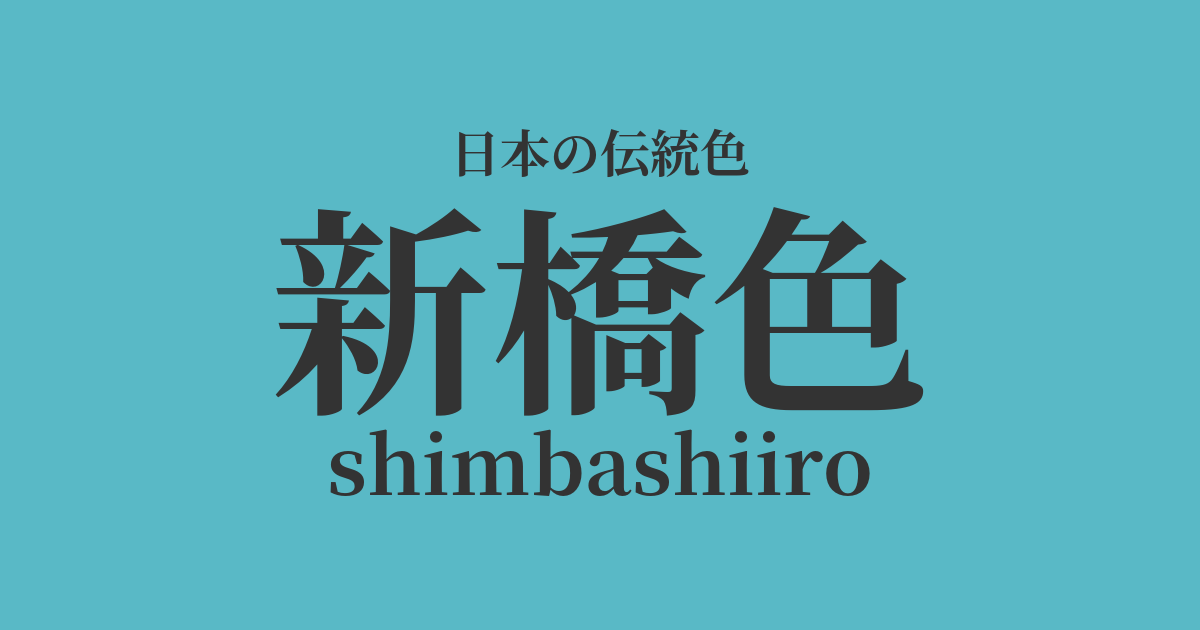
| Japanese color name | Shinbashi color |
|---|---|
| reading | shimbashiiro |
| HEX | #59B9C6 |
| RGB | 89, 185, 198 |
What is Shinbashi-iro? Origin and etymology
The name "Shinbashi-iro" (Shinbashi color) originates from Shinbashi, a fashionable and stylish district in Tokyo during the Meiji era. It is said that the name "Shinbashi-iro" became established because geishas working in the Shinbashi entertainment district at the time favored wearing this vibrant blue-green color. Their chic and modern attire attracted attention as cutting-edge fashion, and this color also spread as a symbol of urban and new culture.
The import of chemical dyes from the West played a significant role in the creation of this color. Until then, traditional Japanese dyes were mainly derived from natural plants such as indigo and safflower, making it difficult to express a vivid blue-green color like Shinbashi-iro. In the Meiji era, the introduction of inexpensive and highly pigmented chemical dyes led to the creation of new and unprecedented shades that enriched people's lives.
The historical background of Shinbashi Color
Shinbashi color was particularly popular from the mid-Meiji era to the Taisho era. With the rapid influx of Western culture due to the Meiji Restoration, people's sense of color changed dramatically. This color, as a symbol of the era's "stylish" and modern style, was embraced by many. It was especially popular among urban women who favored a modern aesthetic.
The advent of chemical dyes revolutionized Japanese dyeing culture. Previously expensive and laborious, dyeing became more accessible and inexpensive, allowing ordinary people to enjoy vibrant colors and fashion. Shinbashi-iro is a new traditional Japanese color born amidst these societal changes, and its history is deeply intertwined with the progress of modern Japan.
Related literature, waka poetry, and seasonal words
Shinbashi color is a relatively new color, having originated in the Meiji era, and therefore does not appear in classical literature or waka poetry from the Heian or Edo periods. Instead, it can be found in modern literary works from the Meiji to Taisho periods, as a popular color of the time. For example, in novels by authors such as Izumi Kyoka and Nagai Kafu, it is depicted as the color of the characters' clothing, playing an important role in conveying the urban customs and atmosphere of the Meiji Restoration era.
This color is not classified as a traditional seasonal word. However, its bright and refreshing hue evokes a sense of the season from early summer to summer. In modern creative works, it is sometimes effectively used to express the coolness of summer or modern scenery.
Color scheme preview
This is to check the readability of the text when this color is used as the background.
Color scheme proposal for Shinbashi
Coral color (#F88379)
The bluish-green of Shinbashi and the reddish-orange of coral are close to complementary colors, vividly enhancing each other's beauty. This combination gives a modern and lively impression, recreating the stylish atmosphere of the Meiji era in a contemporary way.
White green (#D6E9D6)
By combining it with a lighter, softer blue-green than the Shinbashi color, a refreshing and unified color scheme is created. It's a combination that gives a cool, refreshing, light, and elegant impression reminiscent of early summer.
Blue gold (#FABE00)
Adding a vibrant yellow, turmeric, as an accent further enhances the modern feel of the Shinbashi color scheme. The brightness of each color resonates with the others, creating a stylish, playful, and eye-catching impression.
Practical Scenes
In the world of kimono, Shinbashi color is popular as a color symbolizing the romanticism of the Meiji and Taisho eras. It is especially seen in antique kimonos and yukata with reproduced patterns, and simply incorporating it into accessories such as obiage (sash ties) and han-eri (collar linings) completes a stylish and modern coordination. It is suitable for those who want to combine a retro atmosphere with a fresh feel.
In interior design, using it as an accent color gives a space a fresh and modern feel. It is effective when incorporated into cushions, art panels, or parts of wallpaper. Combining it with white, gray, or natural wood-grain furniture can create a sophisticated Scandinavian modern space.
In the fields of web design and graphic design, Shinbashi color is attracting attention. Its bright and positive hue is favored as the image color for startup companies, technology-related services, and fashion brands. Because of its high visibility, using it for buttons and icons can also be expected to encourage user interaction.