
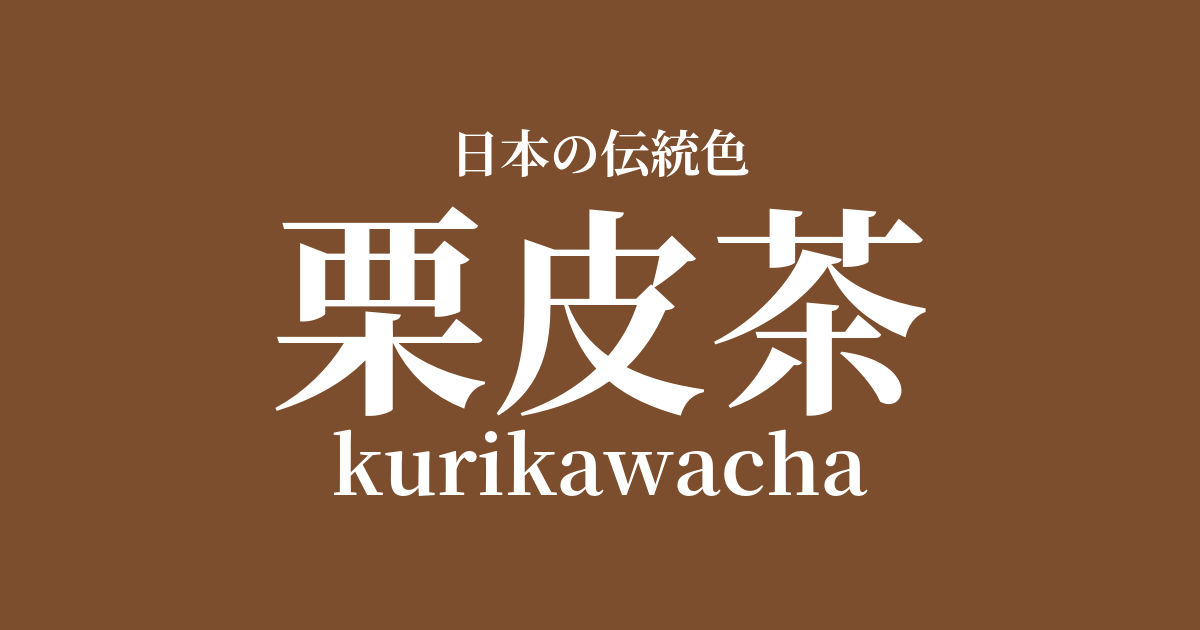
| Japanese color name | Chestnut peel tea |
|---|---|
| reading | kurikawacha |
| HEX | #7D4E2D |
| RGB | 125, 78, 45 |
What is chestnut peel tea? Origin and etymology
Chestnut skin tea, as the name suggests, derives its name from the reddish-dark brown color of chestnut skin, especially the inner skin. Chestnut skins and burrs have been used as dyes since ancient times, and because they are rich in tannins, a variety of brown and black shades could be achieved by changing the mordant. It is believed that the color obtained by this traditional dyeing method, or a color created to imitate that shade, came to be called chestnut skin tea. It is a simple and warm color name derived from a natural product.
Historical background of chestnut tea
It is believed that chestnut tea became widely available from the mid-Edo period onward. As a result of the shogunate's sumptuary laws restricting commoners from wearing brightly colored clothing, a culture of appreciating subtle differences in subdued colors such as brown and gray flourished. A wide variety of browns were created, so much so that it was called "forty-eight browns and one hundred grays," and chestnut tea was one of them that became popular. In particular, the popularity of brown tones as a color favored by popular Kabuki actors is thought to have boosted its popularity.
Related literature, waka poetry, and seasonal words
"Chestnuts" have long been a seasonal word associated with autumn, frequently appearing in waka and haiku poetry. While the color "chestnut brown" itself is rarely used directly, the rich autumn scenery evoked by chestnuts has been depicted in numerous literary works. For example, Matsuo Basho's haiku also feature chestnuts, treating them as a symbol of life in mountain villages and the changing seasons. This color has the power to visually evoke the melancholy and richness of autumn in literary works.
Flowers that the world doesn't see, and chestnuts hanging from the eaves
Color scheme preview
This is to check the readability of the text when this color is used as the background.
Chestnut Tea Color Scheme Proposal
Kutsuha color (#917347)
The combination with the brownish, withered leaf color, also named after natural elements of autumn, creates a calm and unified color scheme reminiscent of the deepening autumn scenery. It gives a natural and tranquil impression, enhancing the Japanese atmosphere.
Blue gold (#FABE22)
The vibrant turmeric color enhances the richness of the chestnut tea. It evokes images of the autumn harvest and golden rice fields, adding a sense of abundance and splendor. The resulting contrast creates an eye-catching color scheme.
Tsune Meng Huang (#8FBB3F)
The reddish-brown of chestnut tea and the youthful yellowish-green of yew green are close to complementary colors, and they have the effect of making each other appear more vibrant. It gives the impression of vitality, as if the season of budding and the season of harvest coexist.
Practical Scenes
The subdued color of chestnut brown is widely used in the world of traditional Japanese clothing. In particular, when used in men's kimonos, haori jackets, and obi sashes, it creates a refined and sophisticated impression. It blends easily with other colors, making it a valuable color for expanding coordination possibilities.
In interior design, it pairs exceptionally well with wooden furniture and flooring. Incorporating it into wallpaper and fabrics brings warmth and a sense of solidity to a space. It harmonizes with both Japanese and modern styles, creating a calming atmosphere.
In web design and graphics, using this color in elements such as backgrounds and footers gives the entire site a sense of stability and reliability. It is an effective color when you want to convey calmness and authenticity, such as on websites for traditional crafts, food products, or natural product brands.