
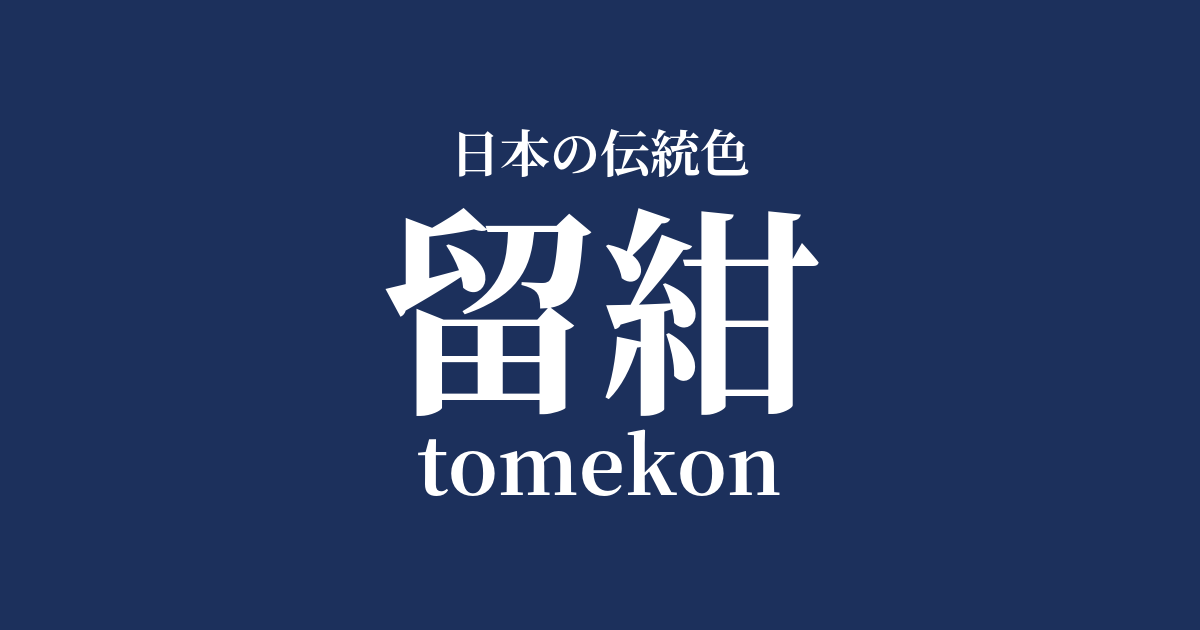
| Japanese color name | Tomekon |
|---|---|
| reading | tomekon |
| HEX | #1C305C |
| RGB | 28, 48, 92 |
What is "Ryukon"? Origin and etymology
"Tomekon" refers to the deepest shade of color achievable through indigo dyeing. Its name originates from the meaning of "stopping the dyeing," indicating the final stage of the dyeing process, where the fabric is repeatedly dipped into a vat of indigo dye, representing the limit of how dark the dye can go. It is a deep navy blue that can be mistaken for black, yet it is characterized by a subtle hint of blue depending on the lighting.
This deep, rich color represents one of the pinnacles of traditional Japanese dyeing techniques and is often referred to as the "ultimate indigo."
As its etymology, "Tome" (留), suggests, this color symbolizes the skill and philosophy of indigo dyers. Not simply black, but a deep indigo blue born from meticulous dyeing over time, it has been appreciated not only for its visual beauty but also for the spirit embodied in its creation. The fact that this color, embodying the Edo-period aesthetic of "iki" (粋), was so beloved by many is likely due to an understanding of and respect for its origins.
Historical background of the navy blue
The widespread popularity of dark blue (Tomekon) dates back to the mid-Edo period. At that time, sumptuary laws issued by the shogunate restricted commoners from wearing gold, silver, or brightly colored clothing. Within these constraints, people found beauty in subdued colors such as brown, gray, and indigo, and refined them. These were collectively known as "Forty-eight Browns and One Hundred Grays," and a culture of appreciating subtle differences in shades flourished.
Among them, dark blue was particularly favored as a color that, while appearing plain like black at first glance, possessed a subtle blue hue that was considered elegant and symbolized the refined aesthetic sense of the Edo townspeople. The fact that indigo dyed cotton well rather than expensive silk also contributed to its popularity, as it was an accessible dye for ordinary people. It was also used in practical clothing such as samurai uniforms and firefighters' jackets, and its durability and subdued color were highly valued.
Related literature, waka poetry, and seasonal words
Tomekon, a deep indigo color, strongly reflects the customs and culture of Edo, and can be seen in the literature and performing arts of the time. For example, in Ihara Saikaku's ukiyo-zoshi and Chikamatsu Monzaemon's joruri plays, the lives of Edo townspeople are depicted, and a deep indigo color like tomekon often appears as the color of their kimonos. Through these works, it can be seen that tomekon was deeply rooted in the daily lives of people at that time.
Furthermore, dark blue also played an important role in Kabuki stage costumes. Colors were skillfully used to visually represent the social status and character of the characters, and the honest and powerful impression of dark blue was said to have been used for roles such as samurai and townspeople with a strong sense of duty and compassion. Although the term "dark blue" is rarely used directly, dark blue shades are an indispensable element when discussing Edo culture.
Color scheme preview
This is to check the readability of the text when this color is used as the background.
Dark navy color scheme proposal
White training (#F3F3F3)
The combination of the deep navy blue and the pure white of the silken silk creates a strong contrast. This color scheme is perfect for conveying a sense of cleanliness and elegance, and expressing the traditional Japanese aesthetic of "iki" (chic/refined elegance). The colors complement each other, giving a sophisticated impression.
Silver mouse (#AFB1B4)
The combination of deep navy blue and silvery-gray (silver-gray) creates a calm and intelligent color scheme. Reminiscent of the Edo period's "48 shades of brown and 100 shades of gray," it gives a sophisticated and modern impression. Suitable for business settings and minimalist designs.
Blue gold (#FABE22)
The deep navy blue is accented by a vibrant turmeric yellow, a color dyed with turmeric. The beautiful contrast, reminiscent of the moon floating in the night sky, combines strength and elegance. The combination with turmeric yellow, which has long been considered a color that wards off evil, creates an impressive and auspicious color scheme.
Practical Scenes
In the world of traditional Japanese clothing, dark navy blue (tomekon) is a widely used and classic color. It is particularly popular as the base color for men's yukata, kimono, and hakama, creating a calm and dignified adult look. It is also used for women's obi sashes and happi coats, giving the overall impression a refined and polished feel. Dark navy blue yukata, often seen at summer night festivals, are one of the quintessential symbols of Japanese summer.
In interior design, incorporating deep navy blue into large areas such as wallpaper, curtains, and sofas brings a sense of gravitas and tranquility to the space. Combining it with white, beige, or wood-grain furniture can alleviate any feeling of oppression and create a sophisticated, modern Japanese atmosphere. Using it as an accent in cushions and small accessories is also effective.
In modern graphic and web design, dark blue is used to express reliability and sophistication. Using it as a corporate color or website background color can give users a sense of stability and integrity. Combining it with colors like white, gold, or silver enhances visibility and results in a powerful and dignified design.