
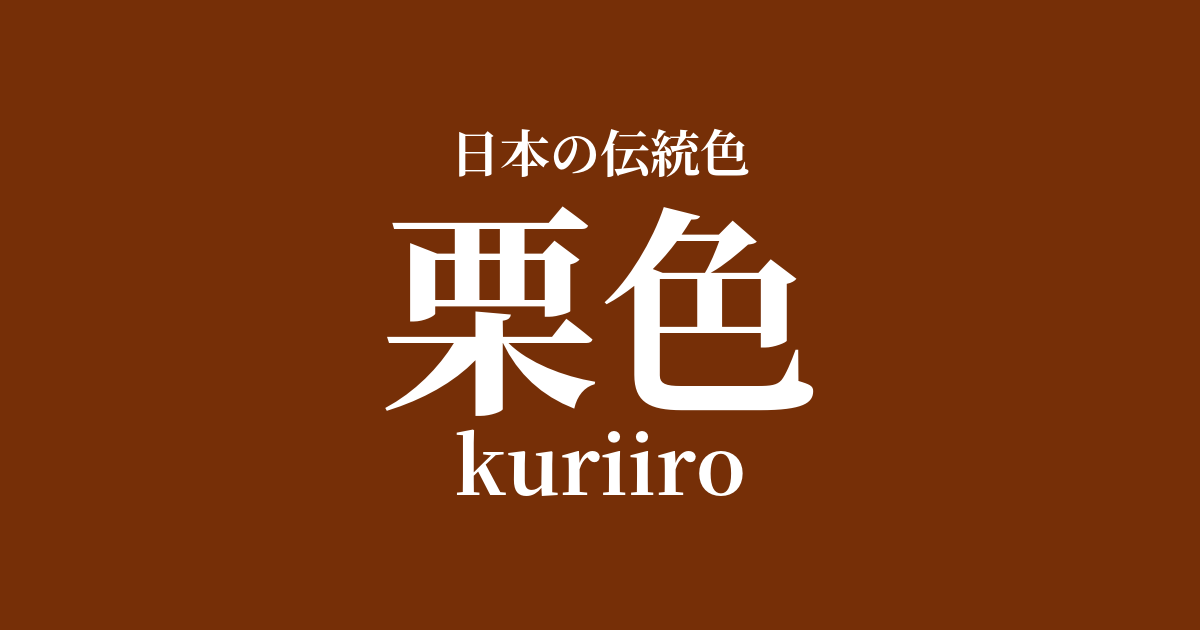
| Japanese color name | sorrel |
|---|---|
| reading | kuriiro |
| HEX | #762F07 |
| RGB | 118, 47, 7 |
What is chestnut color? Origin and etymology
Chestnut color refers to a dark reddish-brown color, like the skin of a chestnut. As the name suggests, it originates from the chestnut, a plant that has been deeply involved in the Japanese diet since ancient times. Chestnuts were so familiar to the Japanese that they have been unearthed from Jomon period ruins. Chestnut color is a reproduction of the color of the hard skin of the chestnut, and can be said to be one of the color names born from the blessings of nature. The bark and burr (the outer skin that surrounds the fruit) of the chestnut tree were used as dyes.
These dyes are rich in tannins, and by changing the type of mordant used, it was possible to produce a variety of brown shades, including chestnut brown.
Chestnut-colored historical background
The color name "chestnut" is believed to have become widely used from the mid-Edo period onward. At that time, due to the sumptuary laws imposed by the shogunate, flashy colors were restricted among commoners, and subdued colors such as brown and gray became popular. This trend was so widespread that it was expressed as "forty-eight shades of brown and one hundred shades of gray," and people enjoyed the subtle differences in these shades as a sign of sophistication.
Chestnut brown, along with derivative colors such as "chestnut skin brown," became popular among ordinary people during that period. Its calm and subdued hue, in particular, suited the Edo aesthetic, and it was favored for use in kimonos, obi sashes, and accessories.
Related literature, waka poetry, and seasonal words
Chestnuts themselves have long appeared in numerous literary works and waka poems as a taste of autumn and as an element that makes up the autumn landscape. For example, poems about chestnuts can be found in the Manyoshu, but the color name "chestnut color" is not explicitly recorded until relatively recently. In the Edo period, in Ihara Saikaku's ukiyo-zoshi and ukiyo-e prints depicting the customs of the time, townspeople and samurai can sometimes be seen wearing chestnut-colored kimonos.
This suggests that chestnut brown was not merely a color name, but a familiar color deeply rooted in the lives of people at that time.
Color scheme preview
This is to check the readability of the text when this color is used as the background.
Chestnut color scheme proposal
Kutsuha color (#915E33)
The combination of chestnut brown and a brownish-brown color reminiscent of autumn nature brings a sense of unity and depth to the overall look. The calm, nuanced shades of the same color create a gentle and elegant impression, making it suitable for autumn attire and Japanese-style interiors.
Light green (#A9D159)
The vibrant, fresh green color, reminiscent of the new leaves of a chestnut tree, adds a sense of life and youthfulness to the dark, heavy chestnut brown. Their near-complementary relationship enhances each other, resulting in a striking and impactful color scheme. This combination also looks great in modern Japanese designs.
Color produced (#FBFBF4)
The richness of the chestnut color is softened by the soft, natural brightness of the off-white color, creating a warm and elegant atmosphere. The gentle contrast gives a refined impression, making it suitable for a wide range of applications, including website backgrounds and textile designs.
Practical Scenes
In the world of kimono, chestnut brown is one of the colors that represent the autumn season and is used for obi sashes, haori jackets, and the kimono itself. It is particularly popular for men's kimono and among women who prefer a stylish look. The calm color is easy to match with other colors, and it can be shown in a variety of looks by adding accents with accessories such as obi sashes and collars.
In interior design, chestnut brown is valued for its warmth and sense of depth. It harmonizes naturally with the colors of wood in flooring, furniture, and fixtures, creating a calm and sophisticated space. Incorporating it into wallpaper or fabrics can bring a sense of stability and luxury to the entire room.
In modern web and graphic design, chestnut brown is an effective color for expressing themes such as trust, tradition, and nature. When used as a main color, it creates a sense of gravitas, while when used as an accent color, it has the effect of tightening the overall design. It is a particularly suitable color for brands that want to convey history and a sense of luxury.