
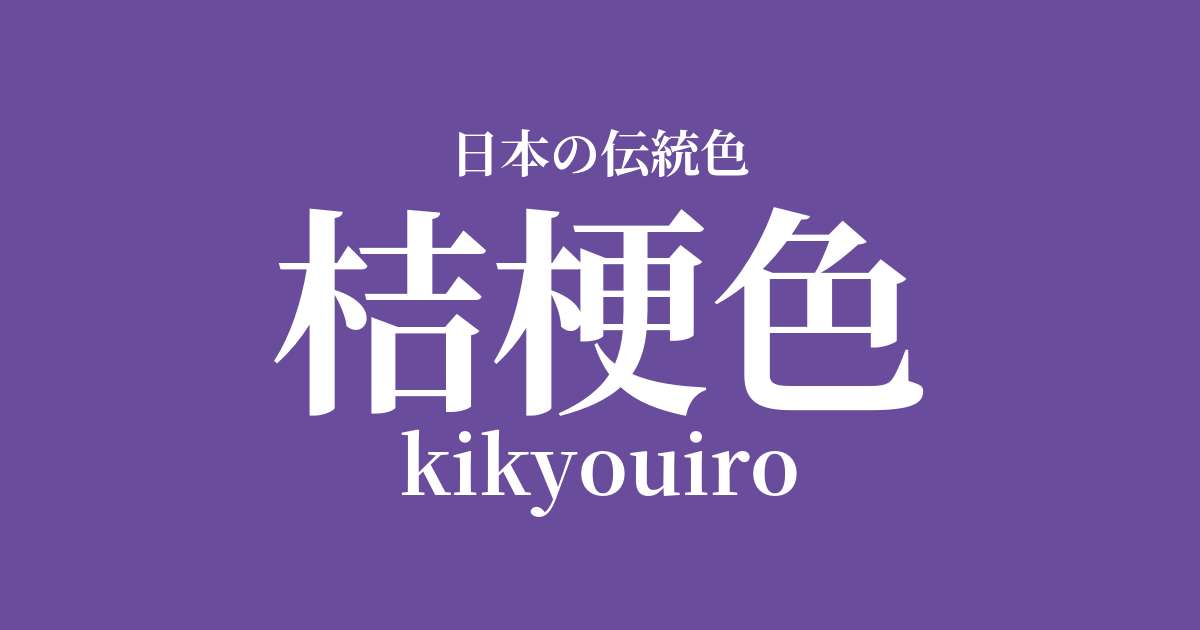
| Japanese color name | Bellflower color |
|---|---|
| reading | kikyouiro |
| HEX | #6A4C9C |
| RGB | 106, 76, 156 |
- What is the color "Kikyo-iro" (bellflower color)? Origin and etymology.
- The historical background of the color bellflower
- Related literature, waka poetry, and seasonal words
- Color scheme preview
- A color scheme proposal in the color of bellflower.
- Practical Scenes
- FAQ
- Japanese colors similar to bellflower color
What is the color "Kikyo-iro" (bellflower color)? Origin and etymology.
The color "Kikyo-iro" refers to a deep, beautiful bluish-purple, like the flower of the bellflower (Platycodon grandiflorus), a perennial plant belonging to the Campanulaceae family and one of the seven autumn flowers. This color originates from the color of a plant that has been familiar to the Japanese people since ancient times, and the pure and dignified appearance of the flower is directly reflected in the name of the color. The bellflower was formerly called "kichikau," and it is widely believed that the "morning glory" mentioned in the Manyoshu (an ancient collection of Japanese poetry) refers to the bellflower we know today.
It is believed that the color name "Kikyo-iro" (bellflower color) began to be clearly used sometime after the Heian period.
The historical background of the color bellflower
During the Heian period, the color bellflower pink was a noble color favored by the aristocracy. The name "bellflower" also appears in "kasane no irome," a system of color combinations for clothing, and it was used for autumn attire. Its elegant hue was one of the colors that symbolized the aesthetic sensibilities of the time.
From the Kamakura period to the Sengoku period, the color became particularly favored among samurai. It is well known that the Toki clan, the shugo daimyo of Mino Province, used the "Kikyo crest" as their family crest, and Akechi Mitsuhide, who is said to have been a member of that family, also used the same crest. It is said that the kikyo (bellflower) was used on armor and banners as an auspicious symbol because it can be read as "sara ni kitsu" (even more good fortune).
Related literature, waka poetry, and seasonal words
As one of the seven autumn flowers, the bellflower has long held an important place in Japanese literature and poetry. In the world of haiku in particular, the bellflower is established as an autumn seasonal word, and its cool and elegant appearance has been celebrated by many haiku poets. Famous haiku poets such as Matsuo Basho, Yosa Buson, and Kobayashi Issa have left behind poems featuring the bellflower.
Furthermore, in classical literature such as "The Tale of Genji," the bellflower appears as a flower that adorns the autumn scenery. It is widely believed that the "morning glory" that appears in the waka poems composed by Hikaru Genji is actually the bellflower, and it plays a role in symbolizing the changing seasons and the feelings of the characters in the story.
When the bellflower blooms, it seems like it will say "Pon!"
Color scheme preview
This is to check the readability of the text when this color is used as the background.
A color scheme proposal in the color of bellflower.
White training (#FFFFFF)
The combination of pure white and bellflower pink accentuates cleanliness and elegance. Reminiscent of the white center of a bellflower petal, the colors complement each other. It's a sophisticated color scheme that is both classic and modern.
Joroka (#F2DDA4)
The gentle yellow of the Patrinia scabiosifolia, also one of the seven autumn flowers, and the bluish-purple of the bellflower are close to complementary colors, creating a vivid contrast. This color scheme evokes the scenery of autumn fields and mountains, showcasing a beautiful harmony that is natural and full of vitality.
Silver mouse (#AFB1B4)
When combined with a calm silver-gray, the intellectual and cool aspects of the bellflower color are emphasized. It gives an urban and modern impression, creating a stylish atmosphere. It is suitable not only for traditional Japanese clothing but also for contemporary designs.
Practical Scenes
In the world of traditional Japanese clothing, the color of the bellflower (kikyo) is considered a representative color of autumn and is used in kimonos, obi sashes, and accessories. In particular, incorporating it into yukata patterns or obiage (sash ties) creates a stylish and elegant look that evokes a sense of the season. Its subdued hue is widely appreciated by people of all ages.
In interior design, using it as an accent color brings depth and tranquility to a space. Incorporating bellflower pink into cushion covers, curtains, or parts of the wallpaper can create a sophisticated, modern Japanese atmosphere. It looks particularly striking in white or wood-toned spaces.
In the fields of web design and graphic design, this color is effective in expressing nobility, intelligence, and trustworthiness. Using it as a corporate color for a company or as a key color for a highly specialized website can give users a sense of calm and reassurance.