
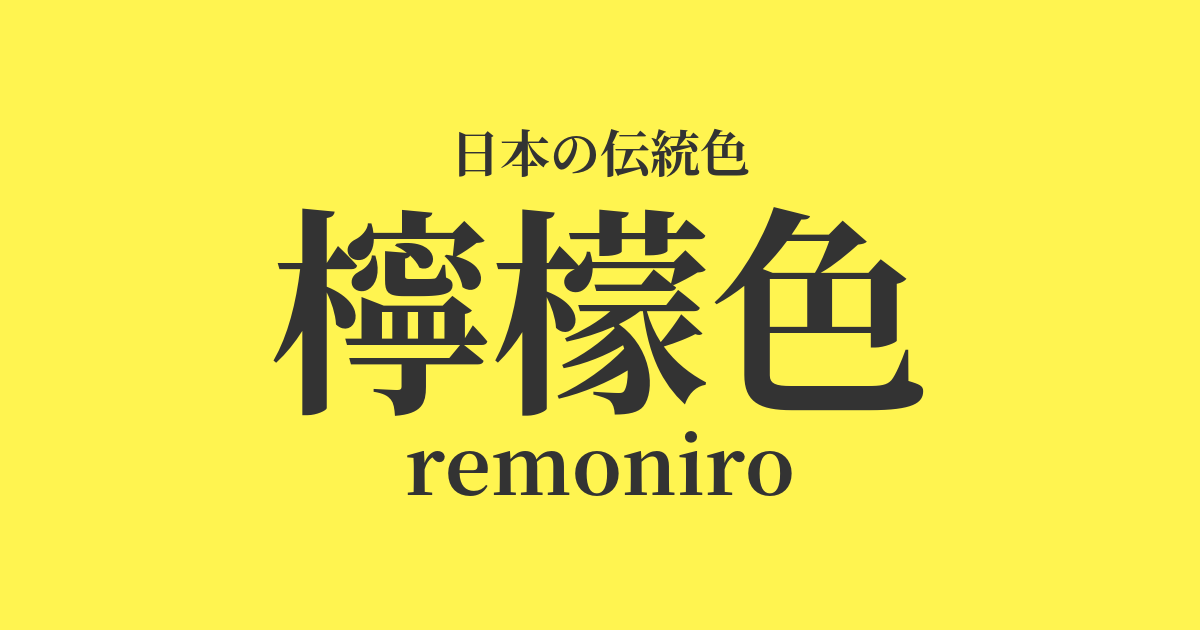
| Japanese color name | lemon color |
|---|---|
| reading | remoniro |
| HEX | #FFF450 |
| RGB | 255, 244, 80 |
What is "lemon color"? Origin and etymology
Lemon yellow is a vibrant, greenish-yellow color, reminiscent of a lemon peel. As the name suggests, it originates from the lemon, a fruit of the citrus family. Lemons are believed to have been introduced to Japan in the early Meiji era, and were initially used primarily for medicinal purposes and as a fragrance. Therefore, the color name "lemon yellow" is relatively new among traditional Japanese colors and is considered one of the modern color names that became established after the Meiji era under the influence of Western culture.
Many of the earlier names for yellow-based colors, such as "yamabuki-iro" (golden yellow) and "ukon-iro" (turmeric yellow), are derived from plants and dyes that have been used in Japan since ancient times.
Lemon-colored historical background
The history of the color "lemon yellow" is intertwined with the history of lemons' introduction and spread in Japan. Lemons, which arrived in Japan in the early Meiji period, gradually began to be cultivated domestically, and by the Taisho era, they were well known to the general public. It is believed that around this time, their vibrant yellow color began to be recognized by people as "lemon yellow." In particular, Motojiro Kajii's novel "Lemon," published in 1925, played a major role in establishing this color's image in literature.
Since then, it has also been adopted as a color name for paints, and has come to be widely used not only in Western-style painting but also in modern Japanese painting and design.
Related literature, waka poetry, and seasonal words
A literary work indispensable when discussing the color lemon is Motojiro Kajii's short story "Lemon." In the story, the vibrant color and cool feel of a single lemon held by the protagonist are depicted as a symbolic representation that temporarily dispels his melancholic mood. Through this work, the color lemon has been imbued with a poetic and vivid image that goes beyond mere color. Furthermore, in the world of haiku, "lemon" is sometimes treated as a seasonal word for autumn.
Its refreshing scent and colors are used to express the crisp autumn air and the changing of the seasons.
Each plate has a vibrant yellow lemon.
Color scheme preview
This is to check the readability of the text when this color is used as the background.
Lemon-colored color scheme proposal
Lapis Lazuli (#1F4788)
Lemon yellow and lapis lazuli blue are close to complementary colors, enhancing each other's vibrancy. This color scheme creates a strong contrast, giving a lively and modern impression. Its high visibility makes it suitable for use in eye-catching situations such as design and advertising.
Young leaf color (#B5D969)
These colors, both derived from plants, evoke a fresh image of the natural world. The natural harmony, reminiscent of lemon fruit and leaves, creates a fresh, vibrant, and approachable atmosphere. It's also well-suited for expressing the feeling of spring and summer.
White Rat (#BDC0BA)
This color scheme elegantly complements a vibrant lemon yellow with a light, neutral gray. It softens the lively impression of the lemon yellow, creating a sophisticated and calm overall tone. This combination is suitable for modern and stylish spaces and designs.
Practical Scenes
In traditional Japanese clothing, lemon yellow is often used for accessories such as obiage (sash ties), obijime (sash cords), and han-eri (collar inserts), adding a bright and youthful accent to the overall outfit. Especially in modern yukata and kimono designs, it is boldly incorporated as part of the base color or pattern, creating a contemporary look. It is also a popular color for children's kimonos.
In interior design, incorporating lemon-colored items as accent colors in cushion covers, curtains, and art panels brings vibrancy and brightness to a space. Adding just one lemon-colored item to a simple room based on white, gray, and wood tones can tighten the overall look and create a stylish atmosphere.
In web and graphic design, lemon yellow is effectively used for buttons, headings, and icons that you want to attract attention. It is expected to give users a positive impression of fun and energy, and encourage action. However, using it too much can strain the eyes, so it is recommended to use it sparingly and in a way that balances the overall design.