
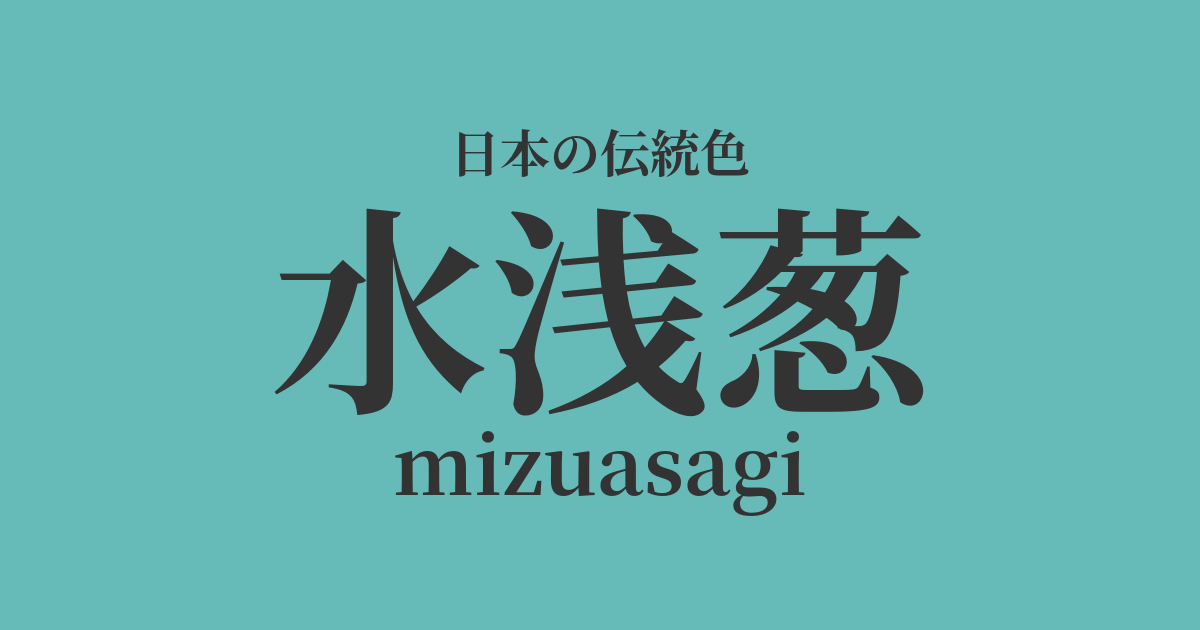
| Japanese color name | Japanese light green onion |
|---|---|
| reading | mizuasagi |
| HEX | #66BAB7 |
| RGB | 102, 186, 183 |
What is Mizuasagi? Origin and etymology
Mizuasagi, as its name suggests, derives from its pale hue, resembling a diluted version of the "asagi" color. "Asagi" refers to a light greenish-blue color, like the young shoots of a leek. Mizuasagi is a color that adds a watery transparency and brightness to this asagi, resulting in a refreshing and cool tone. This color name became widely used during the Edo period, reflecting the rich sense of color among people at that time.
Historical background of Mizuasagi (Japanese scallion)
The popularity of light blue-green (mizuasagi) is believed to have begun in the mid-Edo period. At that time, the shogunate frequently issued sumptuary laws, restricting commoners from using bright colors and expensive dyes. Amidst this, light blue-green colors such as "asagi-iro," which could be dyed with relatively inexpensive indigo, and its derivative, mizuasagi, became popular as one of the trendy colors known as "shijuhachichahyakunezumi" (forty-eight shades of brown and one hundred shades of gray).
In particular, it is said that it was favored for use in summer kimonos, linings, and accessories due to its cool and refreshing appearance.
Related literature, waka poetry, and seasonal words
While there aren't many famous waka or haiku that directly mention the color "mizuasagi" (light blue-green), the imagery associated with this color appears in classical literature. For example, its image can be found in descriptions of refreshing landscapes such as the surface of clear water or the color of the sky on a summer morning. Although it doesn't exist as a direct seasonal word, "asagi" is sometimes treated as a seasonal word for summer, and mizuasagi is similarly recognized as a color that symbolizes the coolness of summer.
This color scheme can sometimes be seen in Edo period ukiyo-e prints and Kabuki costumes.
Color scheme preview
This is to check the readability of the text when this color is used as the background.
A proposed color scheme using light blue.
White training (#F3F3F3)
This combination maximizes the refreshing feel of Mizuasagi (a type of light blue-green). The purity of Shironeri (another type of light blue-green) highlights the refreshing blue-green of Mizuasagi, creating a clean and cool impression. It is suitable for summer Japanese clothing, interiors, and web designs that convey a clean impression.
Haizakura (#E8D3D1)
When combined with the soft, calming ash-pink, the refreshing quality of light blue is enhanced with elegance and gentleness. The combination of soft tones of cool and warm colors creates a calm and sophisticated atmosphere, which can be applied to fashion and cosmetic packaging designs, among other things.
Blue gold (#FABE29)
Adding a vibrant turmeric as an accent brings life and elegance to the tranquil impression of light blue. The near-complementary relationship between the colors enhances each other, resulting in a modern and striking color scheme. It can be effectively used as an accent color for accessories and designs.
Practical Scenes
Mizuasagi (a type of light blue-green) is a popular choice for summer kimonos, yukatas, and obiage (sash accessories) due to its refreshing appearance. Its coolness provides a visually refreshing effect during the hot and humid season. In modern fashion, incorporating it into blouses and dresses can create a fresh and elegant style.
In interior design, using this color in fabrics such as wallpaper, curtains, and cushions brings a sense of openness and tranquility to the entire room. It is especially compatible with natural spaces based on white or wood tones. It is a suitable color for bedrooms where you want to relax, and for bathrooms where cleanliness is desired.
In the fields of web and graphic design, light blue (Mizuasagi) is often used for corporate websites and healthcare-related themes because it gives a clean and trustworthy impression. It is easy to use as both a main color and an accent color, and when combined with white or gray tones, it can create a sophisticated and minimalist design.