
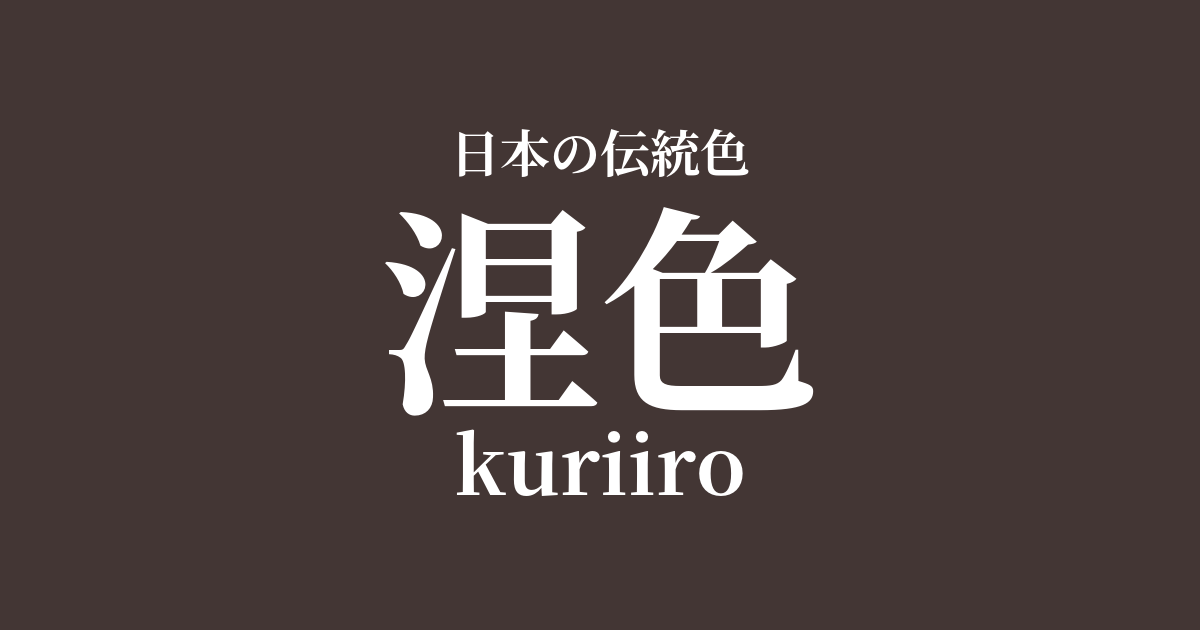
| Japanese color name | Yellow color |
|---|---|
| reading | kuriiro |
| HEX | #433634 |
| RGB | 67, 54, 52 |
What is "nirish color"? Origin and etymology
The color "kuri-iro" (涅色) is derived from the kanji character "涅," which means black earth or mud. This color is deeply connected to the Buddhist term "nirvana." "Nirvana" is a transliteration of the Sanskrit word "nirvana," and refers to the state of enlightenment where the fires of worldly desires are extinguished. It is said that the color was named "kuri-iro" because it was used for the robes and vestments worn by monks as a symbol of this tranquil state of liberation from the secular world.
The dark, almost muddy color suggests a simple yet highly spiritual way of life.
The dyeing method known as "Ne" (涅) is thought to have involved using dyes extracted from the bark or fruits of trees such as chestnut or oak, or from clay rich in iron. In particular, dyeing methods utilizing the principle that plant tannins react with iron to produce black dye have existed since ancient times. Therefore, "Ne" was not merely a color name, but also a term referring to a specific dyeing technique or material. Its natural, simple, and profound hue resonated with an aesthetic that avoided ostentation, and it became deeply rooted in Japanese color culture.
A historical background of nirod
The history of the color "nire-iro" (black) is long, and its name can be found in documents from the Heian period. In the section on the Imperial Sewing Bureau of the Engishiki, "nire (chestnut)" is listed as a dyeing material, and it is believed that this was the dye used for nire-iro. During this period, nire-iro was mainly used as the color of monks' robes and had become established as a color symbolizing the spirituality of Buddhism. While people of high status preferred bright colors, nire-iro played a role in indicating a distance from the secular world.
From the Kamakura period onward, with the spread of Zen Buddhism, the aesthetic of "wabi-sabi" became important, and subdued, calm colors like niro (black) became popular among cultured people and the samurai class. In the Edo period, partly due to sumptuary laws, plain colors such as brown and gray became fashionable among commoners. Niro was one of these colors, widely used in kimonos and everyday items, and became a beloved, stylish color.
Related literature, waka poetry, and seasonal words
Due to its Buddhist roots, the color Nirvana is often used in classical literature to depict monks and hermits. In narrative literature such as "The Tale of Genji," it appears as the color of the robes worn by characters who have renounced worldly life, symbolically representing the state of mind of those who have left the secular world. It is often depicted as the color of a quiet and introspective world, in stark contrast to the flamboyant court culture.
Furthermore, although "nire-iro" (a shade of sleet) is not a direct seasonal word, its hue often evokes autumnal scenes, and is frequently found in the background of waka and haiku poetry. Because it resembles the color of decaying leaves and dry earth, it easily connects to Japanese emotions such as mono no aware (a sense of pathos) and a sense of impermanence. In literary works, the tranquility and depth of this color have effectively portrayed the characters' feelings and the atmosphere of the story.
Color scheme preview
This is to check the readability of the text when this color is used as the background.
Black color scheme proposal
Kutsuha color (#917347)
Like the dark brown, this color is derived from nature, and its combination with the withered leaf color, reminiscent of fallen autumn leaves, evokes a deep sense of calm and a wabi-sabi aesthetic. The harmonious gradation of similar colors creates a refined and sophisticated color scheme.
Blue gold (#FABE22)
The vibrant yellow of turmeric, dyed with turmeric, adds brightness and splendor to the dark, somber shade of nirvana. It also has deep Buddhist connotations, resulting in a color scheme that conveys formality and refinement. It's a contrasting combination where each color enhances the others.
White training (#FCFAF2)
The lustrous white of this white, reminiscent of refined silk, complements the richness of the darker shades, adding a sense of cleanliness and elegance. While the contrast is clear, the soft white creates harmony, making it suitable for modern and sophisticated spaces and designs.
Practical Scenes
In kimonos and Japanese accessories, the dark brown color is used not only for the robes of Buddhist monks but also for obi sashes and haori jackets, creating a subdued, calm, and mature style. It is considered a particularly suitable color for quiet and formal occasions such as tea ceremonies, conveying a sense of understated yet profound elegance. When combined with other shades of brown or off-white, it creates a refined look.
In interior design, incorporating this color into wallpaper, furniture, and fabrics can create a quiet and meditative space. It pairs exceptionally well with natural materials such as wood, Japanese paper, and earthen walls, adding depth and stability to a modern Japanese style. Adding a touch of bright color as an accent creates rhythm in the space.
In web design and graphic design, using dark brown as a background color enhances text and other elements, creating a sense of sophistication and reliability. It is particularly suitable for content themed around traditional culture, history, and spirituality, giving users a calm and serene impression.