
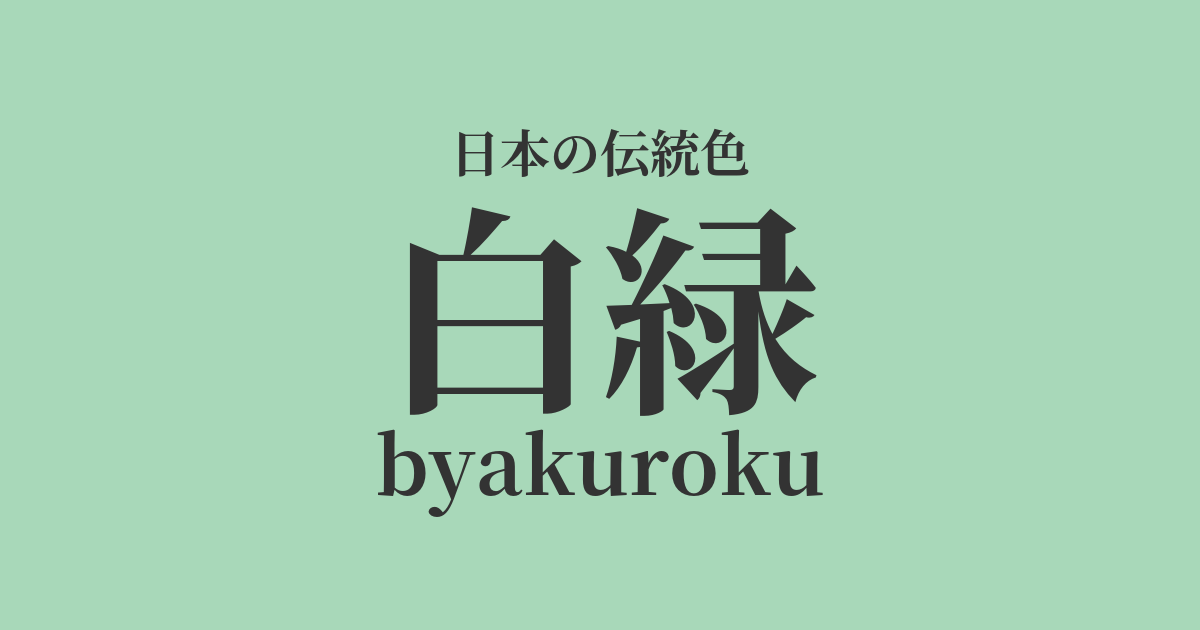
| Japanese color name | White and green |
|---|---|
| reading | byakuroku |
| HEX | #A8D8B9 |
| RGB | 168, 216, 185 |
What is "Hakuryoku"? Origin and etymology
White-green is a color created by mixing the green pigment "rokushō" with white pigments such as gofun. As the name suggests, it means a "white" "green" color. Rokushō is a natural mineral pigment made from the rust of copper and has been used in paintings and crafts since ancient times. By adding white to it, a lighter, softer shade is created. This manufacturing method is the origin of the color name, and it accurately represents its visual characteristics.
The historical background of white and green
White-green is a traditional color found in ancient works of art, such as picture scrolls from the Heian period. In particular, it has been treated as one of the important pigments in Japanese painting. For example, various shades of green based on verdigris were used in the coloring of works such as the Tale of Genji picture scroll, and white-green is thought to have been one of them used to depict plants and clothing. Even as time went on, its soft hue was favored in a wide range of fields, including the coloring of buildings and the glazes of ceramics.
Related literature, waka poetry, and seasonal words
While the color name "shiramidori" (white-green) is rarely used directly in waka or haiku poetry, its hue evokes images of young spring leaves and shallow water, making it a color often associated with nature descriptions in literary works. For example, this soft, gentle green is often used to describe the budding of willows in spring or the lush green of moss in early summer. Although it doesn't exist as a direct seasonal word, words like "wakamidori" (young green) and "asamidori" (light green) share some similarities in imagery.
Light green threads intertwine, and white dew falls like jewels—is this a spring willow?
Color scheme preview
This is to check the readability of the text when this color is used as the background.
White and green color scheme proposal
Cherry blossom pink (#FEEAFA)
The combination of the fresh, young leaves evoked by the white-green color and the delicate pink of cherry blossoms creates a gentle and calming color scheme that evokes the arrival of spring. Because the brightness and saturation of the colors are similar, they harmonize easily, giving a soft impression.
White tea (#DDBC95)
The coolness of the white-green combined with the warmth of the earth and wood in the white-brown creates a natural and calming earth-tone color scheme. It is suitable for Japanese-style spaces and natural-themed designs, creating a sense of security and elegance.
Blue and white (#EBF4F8)
The combination of pale green and slightly bluish white creates a refreshing and invigorating impression. This color scheme evokes the crisp air and clear streams of early summer and is effective when you want to express cleanliness and transparency.
Practical Scenes
In the world of kimono, white-green is used in formal kimono such as visiting kimono, casual kimono, and accessories like obiage (kimono sashes), giving an elegant and youthful impression. It is especially often incorporated into spring outfits. When combined with other light colors, it creates a graceful and delicate coordination.
In interior design, incorporating it into fabrics such as wallpaper, curtains, and cushions brings a bright and calming atmosphere to the entire room. It pairs well with wooden furniture and helps create a natural and relaxing space. As an accent color, it is not too overpowering and harmonizes easily with other colors.
In web and graphic design, using it as a background or accent color can create a gentle and organic impression. It is particularly compatible with the brand image of natural cosmetics, health foods, and lifestyle products. It can be expected to provide users with a sense of security and cleanliness while maintaining readability.