
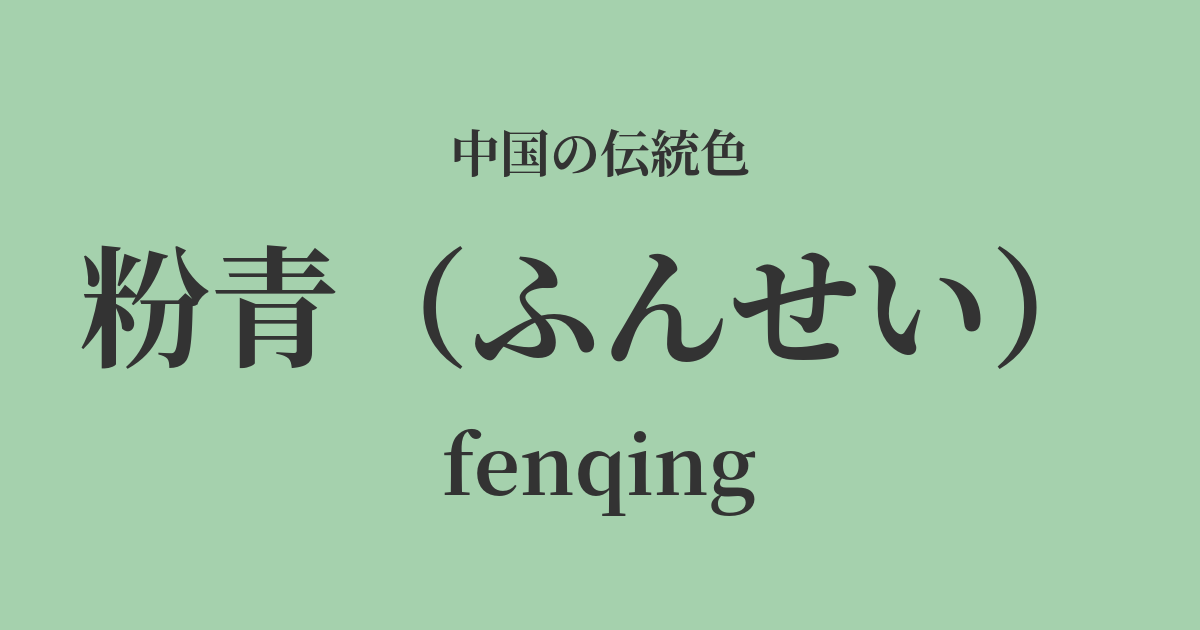
| Color name | powder blue |
|---|---|
| reading | Funsei |
| pinyin | fenqing |
| HEX | #A5D1AD |
| RGB | 165, 209, 173 |
What is powdered blue? Origin and etymology
"Funsei" refers to a soft, slightly whitish, gentle bluish-green color that is moist and smooth like jade. "Fun" refers to something powdery or soft and white, while "sei" represents a wide range of blue colors, including green.
This color's name originates primarily from the glaze of celadon porcelain produced during the Song Dynasty in China. In particular, the celadon with "fenqing glaze" fired at the Longquan kilns in Zhejiang Province is renowned for its supreme beauty, and this color came to be known as "fenqing." The thickly applied, opaque (semi-transparent) glaze softly captures light, creating a depth and elegance reminiscent of jade.
More than just a color name, "penny celadon" has held special significance in the history of ceramics as a term referring to the ideal shade of celadon. Its quiet and subdued hue was like a mirror reflecting the harmony with nature and the introspective spiritual culture that the people of the Song dynasty valued.
Historical background of Buncheong
The color of celadon flourished most during the Song Dynasty in China, particularly the Southern Song period (1127-1279). During this time, celadon firing techniques reached their peak, and the color was highly valued among the imperial court and literati.
In particular, the celadon porcelain with its delicate powder glaze produced at the Longquan kilns was highly prized as a gift to the emperor, and its elegant form became a symbol of the aesthetic sensibilities of the time. The rejection of extravagant decoration and the pursuit of balance between the beautiful color of the glaze and the shape of the vessel speaks to the refined culture of the Song dynasty.
This color is deeply connected to the philosophies of Confucianism and Taoism. A spirit that dislikes ostentation and values tranquility, purity, and the simple beauty of nature was embodied in the gentle hues of celadon. Although celadon continued to be produced during the Ming and Qing dynasties, the refined beauty of Song dynasty celadon remained an eternal aspiration for potters of later generations.
In Chinese art and crafts, the Buncheong
The art form most closely associated with Buncheong is, needless to say, ceramics, especially celadon from the Longquan kilns. Its surface is praised as being "like jade," characterized by its smooth, moist texture and the endlessly deep color of its glaze. In contrast to Kinuta celadon, which is a more transparent, clear blue-green, Buncheong has a milky white, soft hue and a warm appearance.
Furthermore, in the realm of fashion culture, subdued blue-green colors like powder blue were favored in the attire of the aristocracy and the literary class. Avoiding gaudy colors and wearing elegant shades close to natural colors was considered an expression of intelligence and refinement. Powder blue dyed on high-quality silk fabrics, in particular, would have subtly changed color depending on the light, elegantly enhancing the wearer's presence.
Powdered green pureed rice cake soup
Color scheme preview
This is to check the readability of the text when this color is used as the background.
Powder blue color scheme proposal
Moon white (#D9D6C3)
When combined with the pale, yellowish-white of Tsukishiro, the elegance and classic beauty of Bunsei are enhanced. This combination is recommended for creating a quiet, calm, and dignified space.
Coral beads (#F4A7B9)
The gentle, vibrant red of the coral beads adds warmth and accent to the quiet blue-green of the powder blue. Enjoy a striking color combination that is both traditional and modern.
Matsuka (#A4A484)
By combining it with pine blossoms, a calming green reminiscent of pine flowers, the color scheme becomes an earth tone reminiscent of a natural landscape. It gives a relaxing, calm, and refreshing impression.
Practical Scenes
In interior design, powder blue brings tranquility and peace to a space. When used over large areas such as wallpaper, curtains, or sofa upholstery, it envelops the entire room in a calm atmosphere. It pairs exceptionally well with natural materials such as light wood, bamboo, and linen, and blends seamlessly into both Japanese and Western-style rooms.
In the world of fashion, powder blue can be used to create an elegant and sophisticated impression. When incorporated into dresses or blouses, it brightens the complexion and creates a refined atmosphere. Especially in the spring and summer seasons, its refreshing hue will add a lightness to your outfit. It also harmonizes beautifully with silver jewelry and pearl accessories.
In web and graphic design, using it as a background color enhances the content while conveying a sense of security and trust to the user. It is suitable for websites introducing natural cosmetics, lifestyle brands, and traditional culture.