
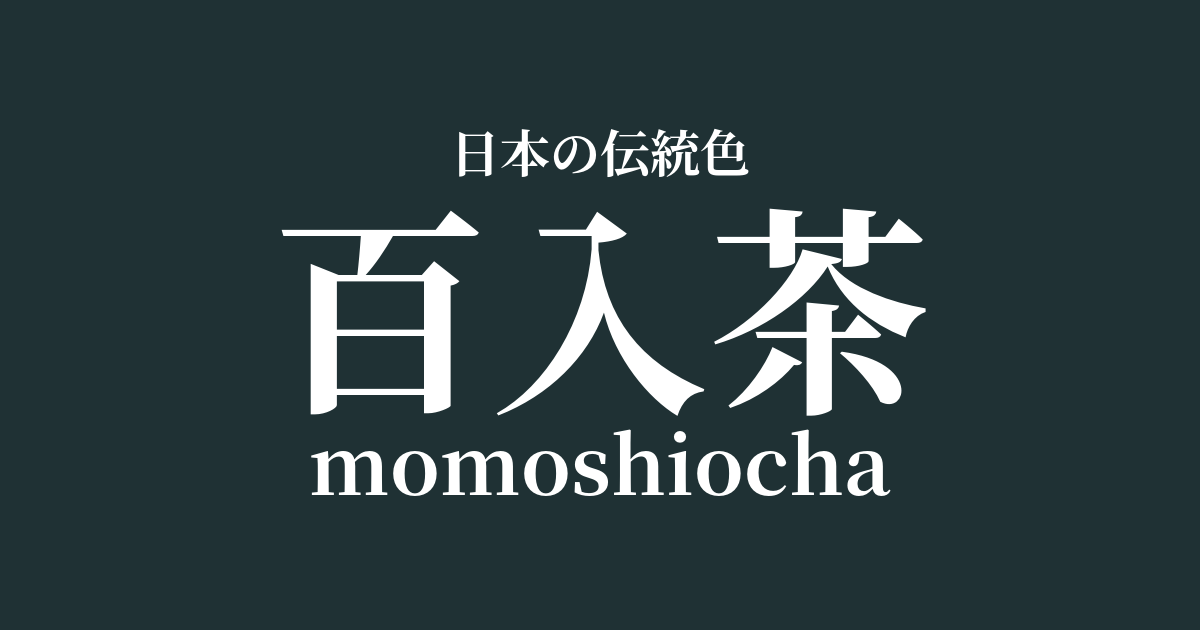
| Japanese color name | 100 tea leaves |
|---|---|
| reading | momoshiocha |
| HEX | #1F3134 |
| RGB | 31, 49, 52 |
What is Hyakunyu-cha? Origin and etymology
Momoshio, as the name suggests, is a color name derived from the dyeing process. "Momoshio" means to repeatedly dip cloth into a vat of dye, with "Hyaku" meaning many times and "Shio" being derived from the old word "shioru," which means to immerse in dye solution. In other words, it indicates an extremely deep color achieved by repeatedly dipping the cloth in indigo dye solution countless times.
The actual color is a deep indigo, almost black, but the name "cha" (brown) comes from a trend during the Edo period. At that time, a culture emerged among common people of finding and enjoying subtle differences in shades of muted colors such as brown and gray, resulting in such a diverse range of colors that it was called "forty-eight browns and one hundred grays." It is believed that Hyakuiri-cha was one of the colors that emerged during this trend and thus bore the name "cha."
Historical background of Hyakunyu Tea
Hyakunyu-cha (a type of tea) only became widely known from the mid-Edo period onward. Due to sumptuary laws issued by the shogunate, commoners were restricted from wearing silk fabrics, gold and silver threads, or brightly colored clothing. Within these restrictions, people developed a unique aesthetic sense called "iki," which found subtle beauty in subdued colors.
Hyakuiri-cha is a deep color that at first glance could be mistaken for black, yet it possesses a profound depth with a subtle hint of indigo. Understanding and wearing such subtle color differences was considered a sign of "chic," and it was particularly favored by Edo townspeople and connoisseurs. It was mainly used for everyday clothing such as kimonos, haori jackets, and tenugui towels, and became one of the colors that symbolize Edo's color culture.
Related literature, waka poetry, and seasonal words
It is difficult to identify any famous waka poems or literary works that directly feature the color name "Hyakuiri-cha." However, Edo period works such as Ihara Saikaku's ukiyo-zoshi and Shikitei Sanba's humorous books vividly depict the lives and customs of townspeople at the time, and among them, we can see people who favored stylishly colored kimonos. It is thought that kimonos of a deep indigo color like Hyakuiri-cha functioned as a prop to express the refined temperament of the characters in these works.
Furthermore, in Kabuki plays, a color close to Hyakuiri-cha (a type of dark brown) is sometimes used for the costumes of people living in the common people of Edo. In particular, this deep color is effectively used for the costumes of characters who embody sophistication, such as chivalrous men and outlaws. This can be said to be one example of a theatrical technique that skillfully utilizes the background and imagery associated with color.
Color scheme preview
This is to check the readability of the text when this color is used as the background.
Color scheme proposal for Hyakuin Tea
White training (#EFEFEF)
The deep color of Hyakuin-cha contrasts sharply with the pure and soft white, creating a striking color combination. The strong contrast gives a clean and sophisticated impression. This is an effective combination that enhances each other's beauty, not only in kimono layering and obi pairings, but also in modern designs.
Blue Rat (#6C848D)
The combination of Hyakunyu-cha (a type of blue-gray) and Ai-nezumi (another type of blue-gray) creates a unified and calming gradation. It gives an intelligent and gentle impression, and the varying shades of color allow for the expression of depth. This color scheme is suitable for men's kimonos and modern interiors.
Dark brown (#654321)
The combination of deep indigo and deep brown is a traditional color scheme that symbolizes the "chic" aesthetic of Edo. While possessing a sense of gravitas, the slight reddish tint of the dark brown adds warmth. It evokes a sense of calm and dignity, and harmonizes well with Japanese-style spaces and classic fashion.
Practical Scenes
In the world of traditional Japanese clothing, Hyakuiri-cha (a deep shade of brown) is particularly used for men's kimonos, haori jackets, and hakama trousers, creating a stylish and refined atmosphere. For women's kimonos, it is often incorporated into fashionable garments such as komon (small-patterned silk kimonos) and tsumugi (pongee silk kimonos). Pairing it with bright colors for the obi (sash) and obi-jime (sash cord) further enhances the deep color, resulting in a more sophisticated look.
In interior design, using it over large areas such as wallpaper, curtains, and rugs brings a sense of gravitas and tranquility to the space. Combining it with white, off-white, or light wood-grain furniture creates contrast, resulting in a modern and calming Japanese-style space. It is suitable for rooms where you want to concentrate or relax, such as studies or bedrooms.
In web design and graphic design, using it as a background color enhances the visibility of text and images placed on top. It is also effective as an image color for corporate websites that want to convey a sense of luxury and trustworthiness, or for brands that handle traditional products. When combined with colors such as gold, silver, and white, it creates a minimalist yet powerful impression.