
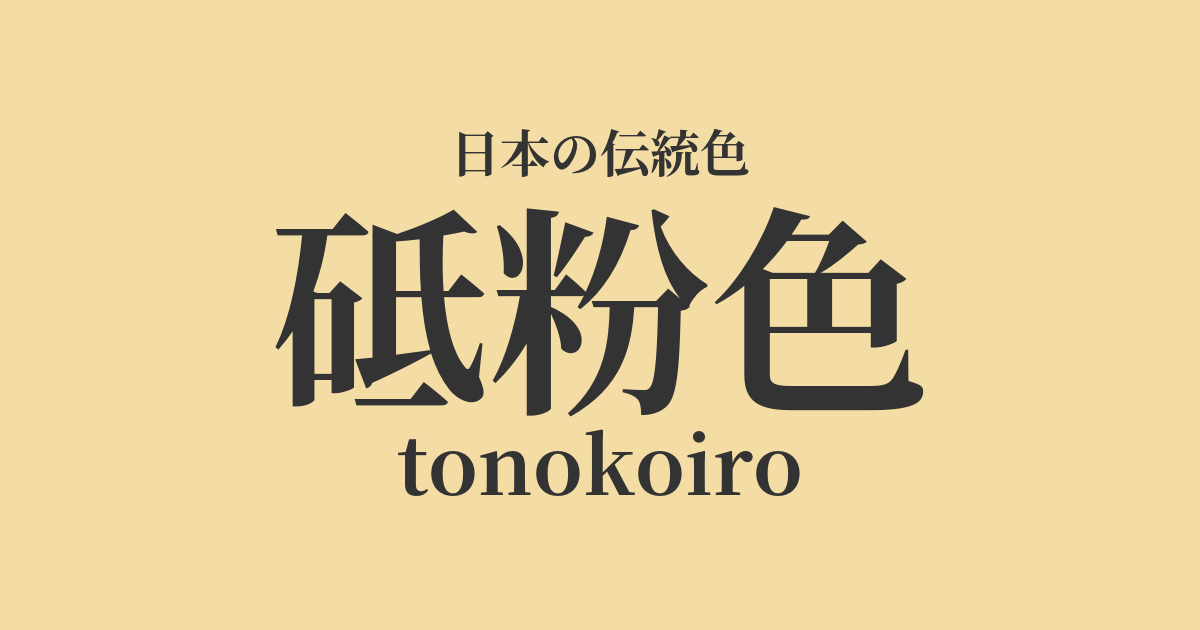
| Japanese color name | Abrasive powder color |
|---|---|
| reading | tonokoiro |
| HEX | #F4DDA5 |
| RGB | 244, 221, 165 |
What is "Togino-iro"? Origin and etymology
The name "tonoko" (togoshi color) originates from "tonoko," the fine powder produced when cutting and processing whetstones used to sharpen blades and other tools. Tonoko is mainly made by crushing a sedimentary rock called whetstone shale, and its color is a light beige with a yellowish tint. This powder has been used since ancient times for "me-sealing," a base treatment for woodworking, polishing lacquerware, and polishing metals. The color of a tool closely related to people's daily lives has become established as a color name.
Historical background of the polishing powder color
While polishing powder itself has been used in woodworking and lacquerware since ancient times, the color name "tofu-iro" (polishing powder color) is said to have become commonly used during the Edo period. During this time, influenced by the shogunate's sumptuary laws, muted and subdued colors such as brown and gray became popular among common people. It is thought that tofu-iro became one of these popular colors, represented by the "forty-eight shades of brown and one hundred shades of gray," and blended into people's lives.
Specifically, it was used for the color of earthen walls, the base color of Japanese paper, and for dyeing everyday clothing made of cotton and hemp. This color, which is not flashy but evokes warmth and simplicity, is said to have resonated with the spirit of "iki" (sophistication and elegance) in Edo townspeople's culture. It became established as a color that combined practicality and beauty, taking its name directly from the color of natural materials.
Related literature, waka poetry, and seasonal words
It is difficult to find waka or haiku poems that directly mention the color "tofu-iro" (a type of brownish-brown color) in existing historical documents. This color is associated more with everyday, simple landscapes than with vibrant scenes, which is likely why it was not a frequent subject in literary works. However, its hue evokes images of aged earthen walls, shoji paper, and well-worn wooden objects. Therefore, it is a color that indirectly conveys its presence in stories and essays, often used to describe the tranquil atmosphere of a tea room or the lives of ordinary people.
Color scheme preview
This is to check the readability of the text when this color is used as the background.
Color scheme proposal in polishing powder color
Indigo tea (#555647)
The bright, light brown color and the deep green of the indigo tea complement each other, creating a color scheme reminiscent of a calm, natural landscape. The combination of earth tones provides a sense of security and elegance. Suitable for interiors and traditional Japanese clothing.
Suou (#9E3D3F)
By combining a bright, soft polished brown with a deep, reddish sappanwood, a sense of elegance is created within the warmth. Using sappanwood as an accent color tightens the overall look, giving it a traditional yet modern impression.
Indigo (#274054)
The yellowish-brown color and the bluish-brown color are close to complementary colors, and they have the effect of making each other appear more vibrant. The intellectual and calm impression of the indigo color harmonizes with the gentle atmosphere of the bluish-brown color, creating a sophisticated contrast.
Practical Scenes
Togane-iro (a type of wood grain color) is ideal for wallpaper, plaster walls, and shoji paper in Japanese-style rooms. It softly reflects natural light, filling the room with a bright and tranquil atmosphere. It pairs exceptionally well with solid wood furniture and tatami mats, creating a warm and calming Japanese space. Even in modern interiors, incorporating it into accent walls or fabrics can add a natural warmth and gentleness to the space.
As a color for kimonos and obi sashes, the light brown color gives a subtle yet elegant impression. It is often used in everyday kimonos, especially those made of pongee silk or cotton, and enhances their simple texture. In Western clothing, incorporating it into linen or cotton shirts and trousers creates a natural and relaxed atmosphere. Combining it with other earth tones or deep colors completes a sophisticated look.
In web and graphic design, light brown is an excellent background color. It's easy on the eyes and reduces eye strain even during prolonged viewing, making it suitable for text-heavy websites. In minimalist designs and for natural brand websites, its organic image enhances brand value. It also provides good contrast with black or dark brown text, without compromising readability.