
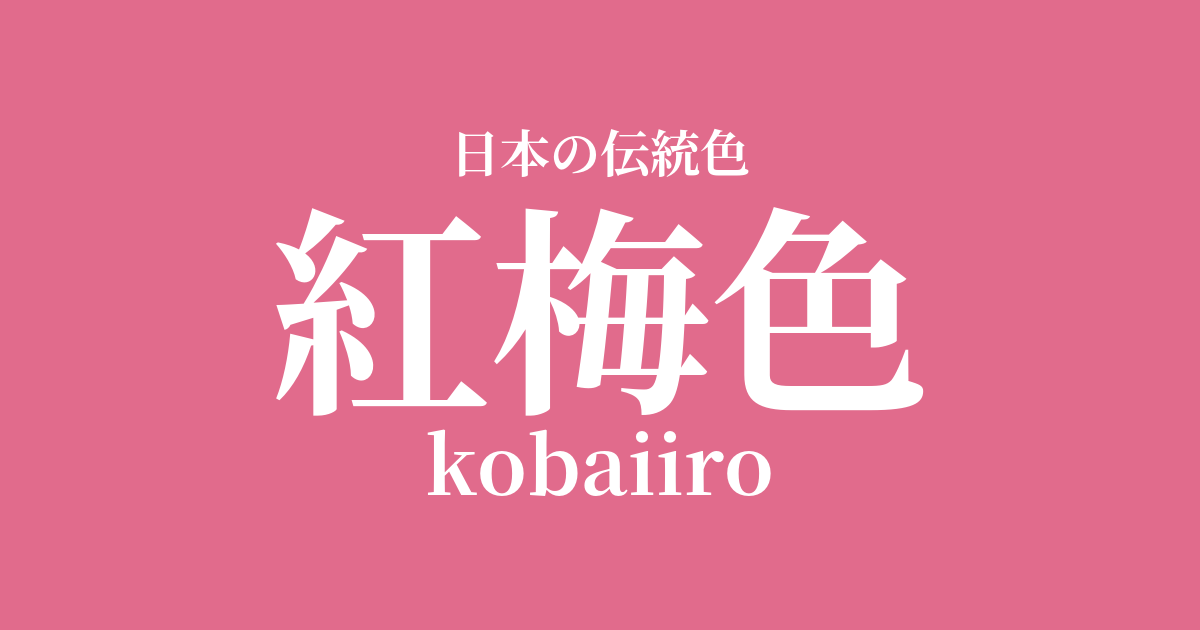
| Japanese color name | red plum color |
|---|---|
| reading | kobaiiro |
| HEX | #E16B8C |
| RGB | 225, 107, 140 |
What is the color "Koubai-iro" (red plum color)? Origin and etymology.
Koubai-iro refers to a bright red color with a slight purplish tint, like the red plum blossoms that bloom in early spring. As the name suggests, it derives from the color of the Koubai plum blossom, a variety of plum with a particularly deep color. In ancient times, the dye mainly consisted of expensive safflower, with small amounts of gromwell root and sappanwood added to create its unique purplish hue.
The color dyed with safflower was especially called "crimson" and was so precious that it was considered a forbidden color; therefore, it is thought that the color of red plum blossoms was also treated as a noble color.
The historical background of the red plum color
Plum blossom pink was a color particularly favored by the aristocracy during the Heian period. During this time, "kasane no irome," a style of layering clothing colors to express a sense of the seasons and aesthetic sensibilities, became popular, and "kasane no irome" was considered extremely important as a representative color scheme of spring. This style used plum blossom pink for the outer fabric and madder red for the lining, and its elegant color scheme is frequently described in masterpieces of Heian literature such as "The Tale of Genji" and "The Pillow Book."
The colors of the characters' costumes served to symbolize their social status, education, and the season in which they were worn.
It was passed down among samurai women and others from the Kamakura period onward, and spread among commoners during the Edo period. As an auspicious color that heralds spring, it was used in various situations, such as in kimonos, accessories, and the "rouge" in makeup. It was particularly popular as the color of formal wear for young women, and its lovely and gorgeous impression remains in the names of furisode (long-sleeved kimonos), Japanese clothing accessories, and cosmetics even today.
Related literature, waka poetry, and seasonal words
In Heian period literature, the color of plum blossom red frequently appears as a symbol of the beauty of spring and noble women. In "The Tale of Genji," among the garments that Hikaru Genji gives to the young Murasaki (later Murasaki no Ue) is a "kouchigi (short robe) with a raised plum blossom pattern." This color is effectively used to highlight the loveliness of the young princess.
Furthermore, in "The Pillow Book," Sei Shonagon lists "red plum blossoms with deep color and long clusters of flowers, emitting a fragrant scent" as one of the "things to be admired," indicating that she highly valued the beauty of their color.
In the world of Japanese poetry, the red plum blossom itself has been frequently used as a seasonal word for early spring. Although the phrase "red plum color" is rarely used directly, there are many poems praising the beauty of the red plum blossom's color, suggesting that people's longing for this color was behind it. The vibrant color of the red plum blossom is a powerful symbol announcing the arrival of spring amidst the lingering chill of the landscape, and it has been a source of inspiration for poets.
When I think of the color of the red plum blossoms in my dwelling, I don't think anyone will say it's sad.
Color scheme preview
This is to check the readability of the text when this color is used as the background.
A proposed color scheme in plum blossom red.
Nightingale (#72693A)
Known since ancient times as "plum blossoms and nightingales," this combination is a quintessential spring scene. The vibrant red of the plum blossoms is balanced by the calm, greenish-brown of the nightingale, creating a natural, tasteful, and traditional Japanese atmosphere. This color scheme is often seen in kimono designs.
White Rat (#BDC0BA)
By combining it with a light, soft gray called Shiro-nezumi, the sweetness of the plum blossom color is toned down, creating a sophisticated and modern impression. The contrast between the colors is beautiful, and they complement each other, making it suitable for interiors and web designs that create an elegant and modern space.
Rapeseed yellow (#F7D94C)
Both red plum blossoms and rapeseed flowers bloom in early spring. The combination of vibrant yellow and the gorgeous red of the plum blossoms is perfect for expressing the joy of spring's arrival. It gives a bright and cheerful impression and is expected to uplift the spirits of those who see it.
Practical Scenes
In the world of traditional Japanese clothing, the color plum blossom red is widely used for spring kimonos, obi sashes, and accessories such as obiage (sash ties). It is especially common in formal wear such as furisode (long-sleeved kimono) and houmongi (formal visiting kimono), giving the wearer a youthful and vibrant impression. It has become established as a suitable color for spring celebrations such as graduation and entrance ceremonies.
In interior design, it is most effective when used as an accent color. Incorporating plum blossom pink into cushions, rugs, or art panels adds warmth and elegance to a space. When paired with a simple room based on white, beige, or gray, the color stands out, creating an elegant and sophisticated atmosphere.
In web and graphic design, it is often used for websites promoting women's products and services, as well as in spring campaigns. Because using it as the main color can sometimes be too strong, using it as an accent color for buttons, headings, and icons can add vibrancy and appeal to the overall design.