
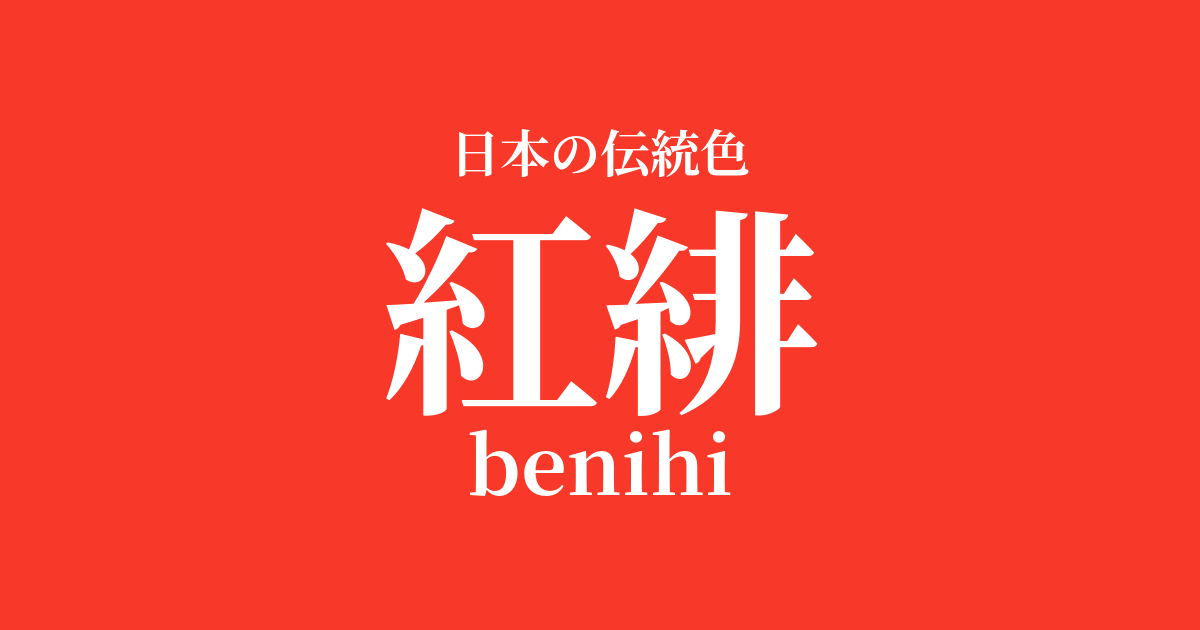
| Japanese color name | Crimson scarlet |
|---|---|
| reading | benihi |
| HEX | #F83929 |
| RGB | 248, 57, 41 |
What is "Benihi"? Origin and etymology
Crimson is a vibrant, yellowish-red color created by layering red dye extracted from safflower with yellow dyes from plants such as Phellodendron amurense and turmeric. The name is said to be a combination of "crimson" from safflower and "scarlet," meaning a fiery red. This dyeing technique is thought to have originated as a way to achieve a vibrant red color within the reach of ordinary people while minimizing the use of expensive safflower.
While "crimson," dyed solely from safflower, was extremely expensive, crimson offered a more economical alternative. By layering crimson over a yellow underdye, it was possible to achieve a vibrant color with less crimson. This practicality is said to have been one of the reasons why crimson became widely accepted, especially during the Edo period when townspeople's culture flourished.
Historical background of crimson
The color name "benihi" (crimson) appears in literature relatively late, only in the Edo period. It became particularly popular among commoners during the mid-Edo period, especially after the Genroku era, as townspeople culture matured. At the time, the shogunate frequently issued sumptuary laws, restricting commoners from wearing extravagant clothing, but people circumvented the law by creating new fashionable colors. Benihi is believed to have been one such example.
Crimson became an important color in Edo fashion, from the costumes of Kabuki actors to the kimonos and obi sashes of town girls, and even small accessories like combs and hairpins. Many figures wearing crimson kimonos are depicted in ukiyo-e prints, conveying the vibrant atmosphere of the time. This color, symbolizing the sophistication and splendor of Edo, was deeply rooted in people's lives.
Related literature, waka poetry, and seasonal words
Crimson is a color that frequently appears in literary works and ukiyo-e prints depicting the customs of the Edo period. For example, in Ihara Saikaku's ukiyo-zoshi novel "The Life of an Amorous Man," it is depicted as the color of the characters' flamboyant clothing, vividly conveying the fashion of the time. Through these works, it becomes clear that crimson was not merely a color, but a cultural symbol that reflected the atmosphere of the era and the aesthetic sensibilities of the people.
In modern literature, crimson is sometimes used in striking scenes. In Natsume Soseki's "The Poppy," it is effectively used as the color of a character's clothing, playing a role in symbolizing that character's personality and feelings. The depiction of crimson in literary works is an example of skillfully utilizing the passionate and sometimes provocative imagery that its vivid color evokes.
Color scheme preview
This is to check the readability of the text when this color is used as the background.
Crimson color scheme proposal
Blue iron (#2A3340)
The combination of vibrant crimson and deep, calming indigo creates a beautiful contrast where each color enhances the other. It embodies both strength and intelligence, giving a modern and sophisticated impression. It is effective as a kimono sash cord or as an accent in graphic design.
Blue gold (#FABE22)
The combination with turmeric, one of the dyes used for crimson, creates a harmonious color scheme and a very vibrant impression. The combination of warm colors is suitable for expressing a festive atmosphere and liveliness, making it ideal for celebratory attire and designs.
Color produced (#FBFBF4)
When paired with a pure, natural color, the vibrancy of crimson stands out even more, creating a bright and light impression. It also evokes a sense of good fortune, similar to the red and white color scheme, making it suitable for layering kimonos, interior design, and as a background and main color for websites.
Practical Scenes
In the world of traditional Japanese clothing, crimson is widely loved as a color that symbolizes youthfulness and splendor, and is used in furisode (long-sleeved kimono), obi (sash), and juban (undergarments). It is particularly effective in creating bold patterns when combined with other colors, and plays a role in brightening up celebratory occasions.
In interior design, using crimson as an accent color is highly effective. By incorporating it sparingly into cushion covers, curtains, and small decorative items, you can bring vibrancy and warmth to the entire space. Its vibrancy stands out more when used as a contrasting color rather than across large areas like walls.
In web and graphic design, crimson is a highly effective color for attracting user attention. Using it on purchase buttons, important headlines, and banner ads can guide the user's gaze and increase click-through rates. It's also suitable as a brand color for those who want to convey passion and energy.