
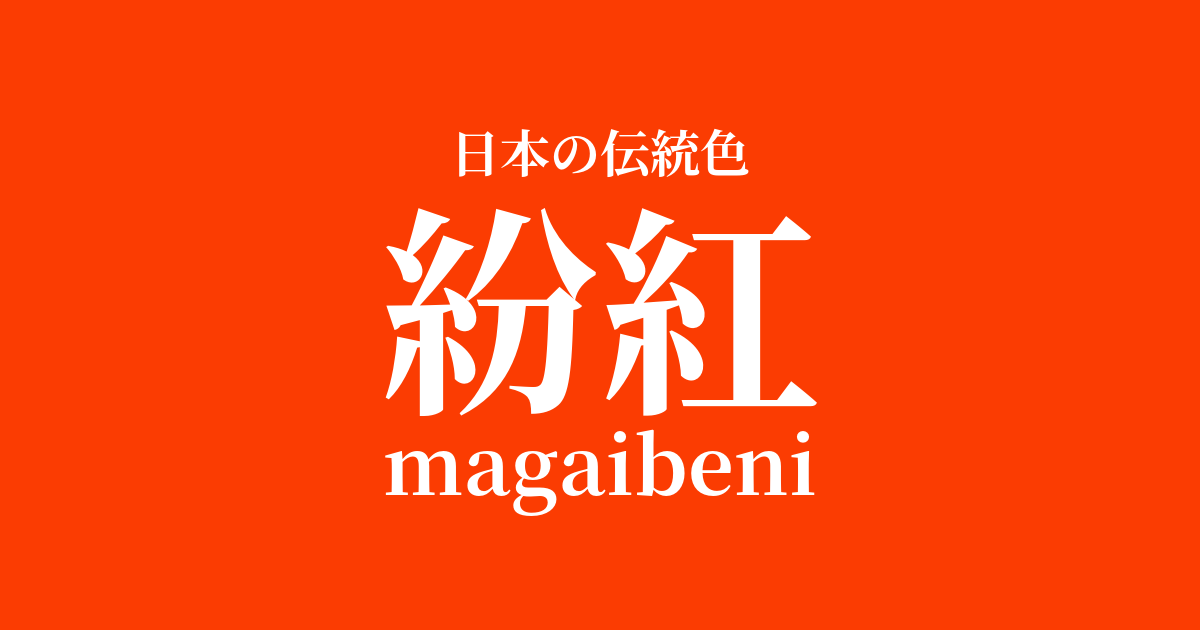
| Japanese color name | pale red |
|---|---|
| reading | magaibeni |
| HEX | #FB3C02 |
| RGB | 251, 60, 2 |
What is "Funkou"? Origin and etymology
Funbeni is a traditional Japanese color referring to a vibrant reddish-orange. Its name originates from "beni ni magau," meaning "a color that closely resembles genuine crimson." Originally, crimson referred to a color dyed with expensive safflower dye, which was not readily available to everyone. Therefore, funbeni was created by using cheaper and more readily available plant dyes such as sappanwood and madder to imitate the color of safflower.
This name embodies both a longing for noble colors and the ingenuity of those who sought to recreate them.
Historical background of the red
The history of safflower dye is deeply intertwined with the expensive dye of safflower. During the Heian period, deep red clothing dyed with safflower was considered a "forbidden color," a special color that only the emperor and a select few high-ranking nobles were permitted to wear. As a result, ordinary nobles and commoners sought to achieve a color similar to safflower, using substitute dyes such as madder and madder. This is considered the origin of safflower dye.
With the advent of the Edo period, further advancements in dyeing techniques and the flourishing of townspeople's culture led to the widespread enjoyment of a variety of red shades, including powdered red.
Related literature, waka poetry, and seasonal words
There are not many famous literary works in which the color name "Funbeni" (粉紅) appears directly. However, in classical Heian period literature such as "The Tale of Genji" and "The Pillow Book," detailed descriptions of the colors of the characters' clothing can be found throughout. In these works, color names such as "Beni" (紅) and "Suou" (蘇芳) are frequently used, functioning as important elements to express the characters' social status, feelings, and the sense of the season.
These descriptions offer a glimpse into the role that alternative colors like reddish-brown played in the lives and aesthetic sensibilities of people at that time.
Color scheme preview
This is to check the readability of the text when this color is used as the background.
Color scheme proposal for crimson
Light green (#A9D159)
The combination of vibrant crimson and youthful yellow-green is almost complementary, with each color enhancing the other. It evokes a sense of vitality, like the sprouting of spring, giving a lively and bright impression. This color scheme is well-suited for designing Japanese clothing and accessories.
Lapis Lazuli (#1F4788)
The contrast between the warm color crimson and the cool color lapis lazuli creates a powerful and striking contrast. It has a traditional yet modern and sophisticated feel, making it effective in eye-catching applications such as web design and posters.
Generated color (#FBF9F4)
This color scheme features a vibrant crimson gently complemented by a warm off-white. The crimson's intensity is softened, creating an overall gentle and approachable impression. It's easy to incorporate into interior design and fashion, creating a calm and elegant space.
Practical Scenes
In the world of traditional Japanese clothing, reddish-brown is used in kimonos, obi sashes, and accessories such as obiage (sash ties), adding vibrancy and youthfulness to the outfit. It is particularly effective as an accent color in formal wear and celebratory attire, and it pairs well with classical patterns, enhancing traditional beauty.
In interior design, incorporating crimson as an accent color in cushion covers, rugs, or parts of wallpaper brings warmth and vibrancy to a space. When paired with natural spaces based on white, beige, or wood tones, the color stands out and creates a modern impression.
In web and graphic design, the vibrancy of crimson attracts attention, making it ideal for call-to-action buttons and important headlines. It helps to capture the user's eye and convey an energetic and passionate brand image.