
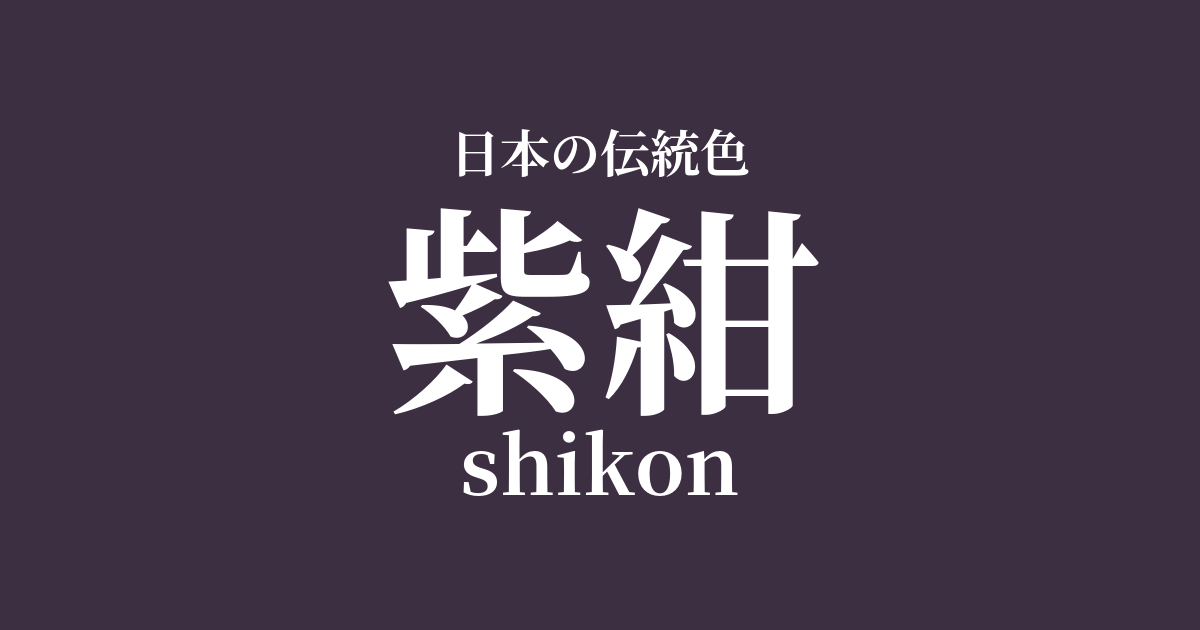
| Japanese color name | bluish purple |
|---|---|
| reading | shikon |
| HEX | #3C2F41 |
| RGB | 60, 47, 65 |
What is "Shikon" (purple-blue)? Origin and etymology.
Shikon, as its name suggests, derives its name from the color dyed using "shikon," the root of the purple gromwell plant (Murasaki), a member of the Boraginaceae family. In ancient times, purple was considered a noble color, and the dyeing technique using shikon was highly valued. The "kon" in the color name usually refers to the darkest shade of indigo dye, but in this case, it is used to mean "deep," expressing "a deep purple dyed with shikon."
It is characterized by a deep, slightly reddish, dark purple color achieved through repeated dyeing.
The historical background of deep purple
Purple has always been a symbol of noble status since it was designated as the highest-ranking color in the Twelve Levels of Court Rank during the Asuka period. In the Heian period, it became a forbidden color, permitted only to the emperor and a select few court nobles, making it extremely rare and valuable. For this reason, dyeing with purple gromwell root was considered a special technique, and the color itself is said to have been a mark of authority.
During the Edo period, purple became popular among commoners, partly due to the popularity of Kabuki theater, giving rise to shades such as "Edo purple" and "Kyoto purple." Deep purple is an even deeper and darker shade than these popular colors. Its dignified hue is said to have been favored by the samurai class as a symbol of dignity and composure. Even after the Meiji era, its refined appearance led to its continued use in formal wear and other ceremonial occasions.
Related literature, waka poetry, and seasonal words
The purple dye, derived from the gromwell plant (Murasaki), has long been an important motif in the world of literature. The Manyoshu anthology contains a famous poem attributed to Princess Nukata to Prince Oama: "Going to the crimson-dyed purple fields, going to the marked fields, does the field guardian not see you waving your sleeve?" This poem depicts a love affair in a field where gromwell grows. In this way, purple has been used in many waka poems as a symbol of love and feelings for someone special.
The deep shade of purple can be interpreted as a color that harbors such passion and nobility within.
Because of a single purple flower, I look upon all the grasses of Musashino with a sense of pity.
Color scheme preview
This is to check the readability of the text when this color is used as the background.
A purple-blue color scheme proposal
Generated color (#FCFBF4)
The deep, noble impression of the deep purple is softened by the soft, natural hue of the off-white. The two colors complement each other, creating an elegant, refined, and calming atmosphere. Suitable for traditional Japanese clothing and dignified interiors.
Blue gold (#FABE22)
The vibrant yellow of turmeric and the deep purple of purplish-blue are close to complementary colors, creating a strong contrast. Because they accentuate each other's colors and create a luxurious and impressive atmosphere, they are suitable for use as accents in festival decorations and designs.
Silver mouse (#AFB1B4)
The bright, almost achromatic silver-gray enhances the deep hue of the deep purple, giving it a modern and urban feel. By reducing the heaviness of the purple, it creates a cool and stylish color scheme that can be used in web design and contemporary fashion.
Practical Scenes
Deep purple, with its dignified hue, is often used in kimonos, obi sashes, and Japanese accessories. It is particularly used in formal occasions and situations where formality is important, adding depth and dignity to the attire. Incorporating it into men's haori jackets and hakama trousers, or as part of the patterns on women's visiting kimonos, creates a coordinated look that is both refined and elegant.
In interior design, using deep purple as an accent color brings a sense of luxury and tranquility to a space. For example, incorporating it into one wall, sofa, cushions, or rug will give the entire room a refined and sophisticated feel. It harmonizes well with both Japanese-style and modern interiors, creating a space with depth and character.
In the fields of web and graphic design, deep purple is used to express reliability and expertise. Using it in company logos, website headers, and footers can give users a sense of stability and sophistication. Combining it with white or gray tones allows for a modern and intelligent design while maintaining readability.