
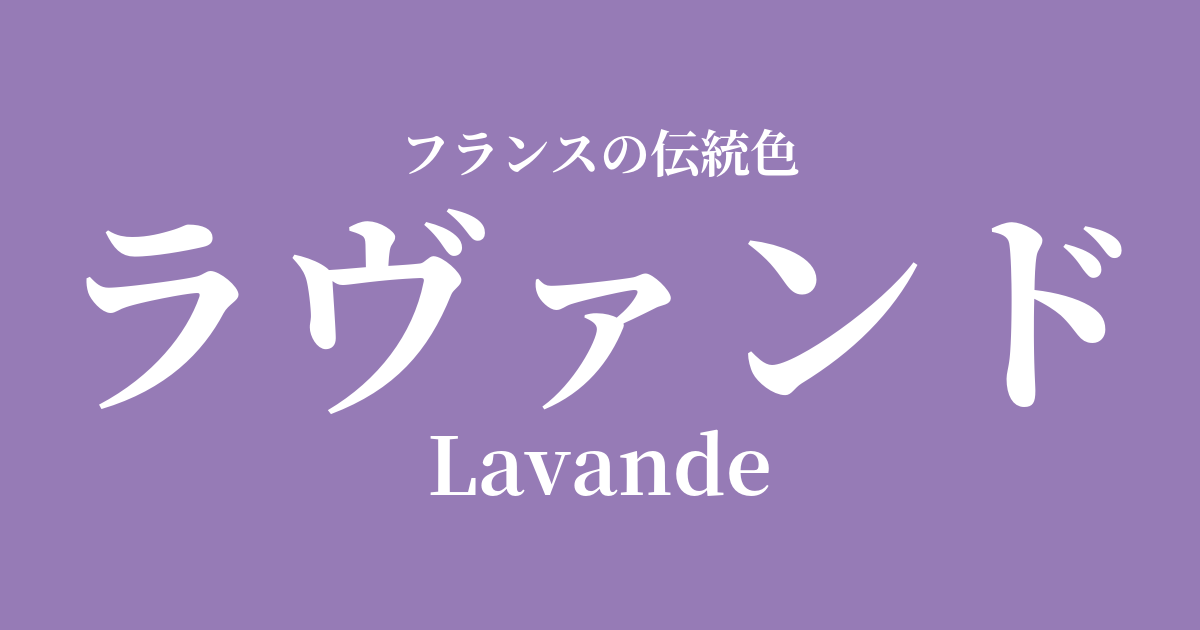
| French | Lavande |
|---|---|
| Katakana | Lavande |
| HEX | #967BB6 |
| RGB | 150, 123, 182 |
What is Lavande? Origin and etymology
"Lavande" is an elegant and gentle pale purple color, derived from the French word for lavender. As the name suggests, it captures the beautiful scenery of the lavender fields that stretch across the Provence region of southern France.
Tracing its etymology, it is said to lead to the Latin word "lavare," meaning "to wash." This stems from the ancient Roman custom of using lavender for fragrance and disinfection during bathing and laundry. Therefore, the color lavender encompasses not only a beautiful purple, but also images of cleanliness, purification, and a healing quality that washes away the mind.
The historical background of Lavande
Lavender has a long history; it was already valued as a medicinal herb and spice in ancient Roman times and was brought to Gaul (present-day France). In medieval Europe, it was carefully cultivated in monastery herb gardens due to its medicinal properties, and it is said that during plague outbreaks, bundles of lavender were carried around as a charm to ward off infection.
In the 18th century, during the French court, particularly in the time of Marie Antoinette, the scent of lavender was considered the epitome of sophistication and enjoyed immense popularity as an ingredient in perfumes, cosmetics, and sachets. The graceful and delicate aesthetic of Rococo culture perfectly harmonized with the pale, gentle hues of lavender, adorning the dresses and interior decorations of the noblewomen of the era.
In the 19th century, as Grasse in southern France developed into the "perfume capital," lavender established itself as a representative fragrant plant of France. Vast lavender fields became an iconic landscape of Provence, and the color "lavender" came to be loved by people all over the world as a color that embodies France's rich nature and refined culture.
Lavande in the world of art and fashion
The colors of lavender have inspired many artists. Impressionist painters, in particular, were captivated by the strong light and vibrant colors of southern France, and captured the landscapes of Provence on their canvases. In the landscape paintings of masters such as Claude Monet and Paul Cézanne, we can see the ever-changing purple gradations of lavender fields swaying in the sunlight.
In the world of fashion, lavender is a color that has been loved across generations. From the elegant dresses of the Rococo era to contemporary spring/summer collections, its romantic and sophisticated hue has captivated many designers. It pairs particularly well with natural materials such as linen and cotton, creating an elegant yet natural and relaxed atmosphere.
Furthermore, lavender flowers and colors are frequently used as motifs in "Provence prints," traditional textiles from the Provence region. The lavender colors and patterns depicted on tablecloths, curtains, and cushion covers symbolize the comfortable lifestyle of southern France itself.
Color scheme preview
This is to check the readability of the text when this color is used as the background.
Lavande's color scheme proposal
Ecru (#F5F5DC)
The natural softness of Lavande is enhanced by the off-white color, creating a simple yet sophisticated atmosphere reminiscent of Southern France. This color scheme is recommended for creating a relaxing space and for natural fashion.
Cerulean Blue (#007BA7)
This color scheme creates a refreshing and beautiful contrast reminiscent of the clear blue skies and lavender fields of Provence. Combining a sense of openness and elegance, it's a color combination that shines in wedding decorations and web designs.
Gris de l'Ain (#D1C7B8)
The sophisticated elegance of Lavande is complemented by a calm, linen-like gray, creating a chic and mature impression. This combination is suitable for urban, refined interiors and formal attire.
Practical Scenes
In interior design, lavender is ideal for spaces where you want to relax, such as bedrooms, living rooms, and bathrooms, due to its calming effect. Incorporating it into fabrics such as wallpaper, curtains, and cushions creates a gentle and soothing atmosphere. When combined with white, beige, light gray, or wood-grain furniture, it creates a sophisticated French chic or shabby chic space.
In fashion, lavender is a color that gives an elegant and feminine impression. Incorporating it into spring and summer dresses and blouses creates a light and refreshing look. It can also be used as an accent color in accessories such as scarves, bags, and jewelry to add a touch of sophisticated glamour to your outfit.
In the fields of website and graphic design, Lavande is a perfect fit for themes related to beauty, wellness, bridal, and lifestyle. It is effective when you want to convey a sense of security, relaxation, elegance, and luxury as a brand image.