
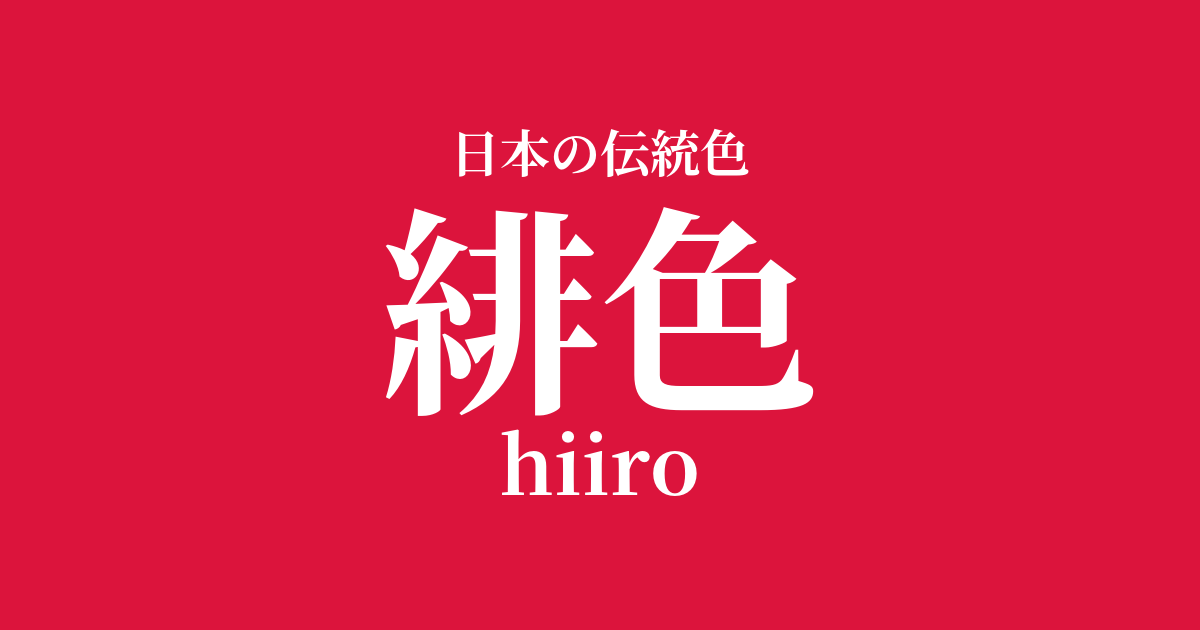
| Japanese color name | Scarlet |
|---|---|
| reading | hiiro |
| HEX | #DC143C |
| RGB | 220, 20, 60 |
What is crimson? Origin and etymology
The character "緋" (hi) in the word "緋色" (hiiro, crimson) is an ideogram representing the appearance of flames burning like flying threads, and signifies a vivid red like fire. As its etymology suggests, it is characterized by a deep, fiery red color. In ancient times, it was also called "ake" and has been used with special significance as a sacred color symbolizing the sun and vitality.
It is said that the roots of the madder plant and safflower were mainly used as dyes for scarlet. Madder dyeing, in particular, has been practiced since ancient times, and by changing the type and concentration of mordants, it was possible to dye fabrics in a wide range of reds, from yellowish-red to purplish-red. Scarlet is one of the colors that was created through this advanced dyeing technique.
The historical background of crimson
Scarlet has long been used as a color symbolizing high status. Records show that it was adopted as the color of the robes worn by high-ranking officials under the Ritsuryo system, which followed the Twelve Levels of Court Rank established in the Asuka period. Its value remained unchanged even into the Heian period, and it was one of the forbidden colors, permitted to be used only by a select few, such as the emperor and members of the imperial family.
As time progressed and the samurai class emerged, crimson became a favorite color among warlords as a symbol of strength and bravery. It was used in the lacing of armor and helmets, as well as in banners, and is said to have played a role in boosting the morale of one's own troops and intimidating the enemy on the battlefield. During the Edo period, it was also used in the costumes of Kabuki actors and the uchikake (outer robes) of courtesans, and became a color that was popular among common people as it added color to the vibrant culture.
Related literature, waka poetry, and seasonal words
Scarlet frequently appears as a noble color in Heian period literature. In "The Tale of Genji" and "The Pillow Book," it is described as the "scarlet robes" and "scarlet hakama" worn by high-ranking women and nobles, serving as an important element in conveying the high status and splendor of the characters. These descriptions suggest that scarlet was an object of admiration for people at that time. Furthermore, in the world of waka poetry, the fiery color of autumn leaves is sometimes likened to scarlet.
I long for the one who wears crimson clothing.
Color scheme preview
This is to check the readability of the text when this color is used as the background.
Scarlet color scheme proposal
Golden (#E6B422)
Scarlet and gold have long been a combination symbolizing authority and luxury. This traditional color scheme, seen in screen paintings and clothing from the Azuchi-Momoyama period, gives a dignified and magnificent impression.
Black (#1C1C1C)
The vibrant crimson is contrasted with the deep black of ink, creating a striking and modern impression. This combination is also used in the designs of armor and kimonos, expressing purity and passion.
White training (#FCFAF2)
The combination of pure white and crimson has long been used in Japan as the red and white color scheme for auspicious occasions. The contrast between purity and passion creates a bright and sacred atmosphere.
Practical Scenes
Scarlet is often used for special occasions due to its vibrant beauty. In the world of kimono, it is a popular base color for formal wear such as furisode (long-sleeved kimono) for coming-of-age ceremonies and uchikake (wedding kimono). Furthermore, incorporating scarlet into accessories such as obi (sash) and obi-jime (sash cord) can add vibrancy and elegance to the entire outfit. It is also widely used in traditional Japanese crafts such as shrine gates and lacquerware.
In contemporary design, scarlet is used as a striking accent color. In interior design, using it in cushion covers or on parts of wallpaper brings energy and warmth to a space. In web and graphic design, it is effective when used for buttons or logos that you want to draw attention to, visually conveying concepts such as strength and passion.