
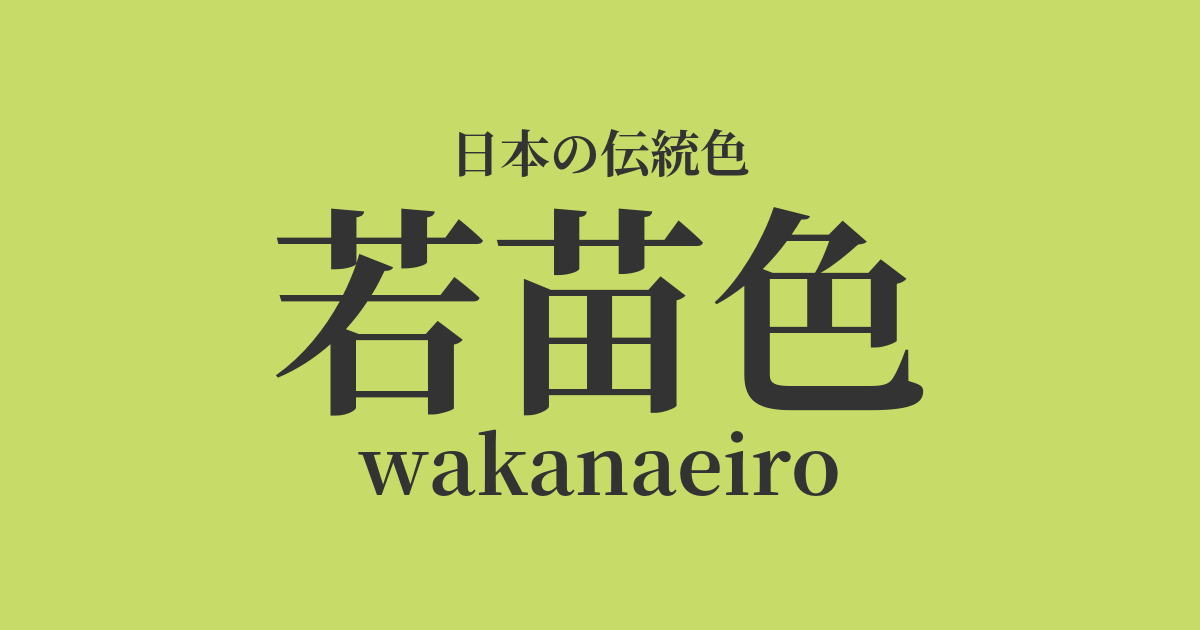
| Japanese color name | young seedling color |
|---|---|
| reading | wakanaeiro |
| HEX | #C7DC68 |
| RGB | 199, 220, 104 |
- What is "Wakanae-iro" (young seedling color)? Origin and etymology.
- The historical background of the young green color
- Related literature, waka poetry, and seasonal words
- Color scheme preview
- A proposed color scheme in the shade of young seedling green.
- Practical Scenes
- FAQ
- A Japanese color similar to young seedling green.
What is "Wakanae-iro" (young seedling color)? Origin and etymology.
As the name suggests, "wakanae-iro" refers to a bright, vibrant yellowish-green color, like the young rice seedlings that have just been planted. In traditional Japanese color sensibilities, it is one of the color names deeply connected to natural phenomena, especially agricultural culture. The sight of young rice seedlings spreading across a spring rice field is a symbolic scene that heralds the breath of life and the beginning of growth, and this color embodies positive images such as hope, youthfulness, and fresh energy.
For the Japanese people, who have relied on rice cultivation as the foundation of their lives since ancient times, this color has been cherished as a special color that reflects their prayers and hopes for a bountiful harvest.
The historical background of the young green color
It is difficult to pinpoint the exact date when the color name "wakanae-iro" (young seedling green) began to be used in literature. However, it is presumed that people recognized this color as familiar from ancient times, when rice cultivation culture took root. In Heian period literature, there are many records of young green colors such as "wakakusa" (young grass) and "moegi" (sprout green) being favored by the nobility, and it is thought that wakanae-iro was similarly favored as a color that colored spring and early summer.
During the Edo period, improvements in dyeing techniques allowed ordinary people to enjoy a wider variety of colors, and the color "wakanae-iro" (young seedling green) was incorporated into kimonos and accessories, becoming more commonly known as a color name.
Related literature, waka poetry, and seasonal words
The color of young rice seedlings plays an important role in the world of literature, especially in haiku. The word "sanae," which symbolizes this color, has been used in many haiku as a seasonal word for summer. The scene of wind blowing through rice paddies after planting, causing the green seedlings to sway in unison, evokes poetic sentiment as a quintessential Japanese landscape. Haiku poets such as Matsuo Basho and Yosa Buson also left behind poems on the themes of rice planting and young rice seedlings, making them indispensable elements in expressing scenes of agricultural work and the changing seasons.
While the direct use of color names is rare in waka poetry, expressions reminiscent of this color can be found in descriptions of the vibrant nature of early summer.
The hands picking rice seedlings, reminiscent of the old days of printing.
Color scheme preview
This is to check the readability of the text when this color is used as the background.
A proposed color scheme in the shade of young seedling green.
Iris color (#674196)
The vibrant energy of young seedlings and the noble, calming atmosphere of iris pink complement each other. While they are close to complementary colors, this combination evokes a scene of a waterside in early summer, creating an elegant and harmonious blend of Japanese aesthetics.
Rapeseed yellow (#FFEC47)
Both colors are derived from spring plants, giving a natural and bright impression. The rapeseed yellow complements the yellow of the young seedlings, creating an energetic and hopeful color scheme that is perfect for expressing the joy of spring.
Blue and white (#EBF4F7)
This combination evokes the surface of a rice paddy where young seedlings grow, or the clear sky of early summer. The refreshing quality of the indigo and white gently complements the vibrant green of the young seedlings, resulting in a fresh, clean color scheme that creates a pleasant atmosphere.
Practical Scenes
The youthful and bright impression of young green makes it suitable for use in various fields. In traditional Japanese clothing, it is used as part of the patterns on furisode and houmongi kimonos, and can also be incorporated as an accent in accessories such as obiage and obijime to create a seasonal feel from spring to early summer. In interior design, using it in cushion covers, curtains, or parts of wallpaper gives the entire room a fresh and open atmosphere.
It pairs particularly well with houseplants, contributing to the creation of a natural and relaxing space.
In the fields of web and graphic design, the color "Wakana-iro" (young seedling green) is ideal for expressing themes such as "nature," "eco," "health," and "growth." It is effective when you want to convey a fresh image, such as in the logos of startup companies or the packaging of organic products. As it is also an attention-grabbing color, using it in call-to-action buttons or headings on a website can naturally guide the user's gaze and create a positive impression.