
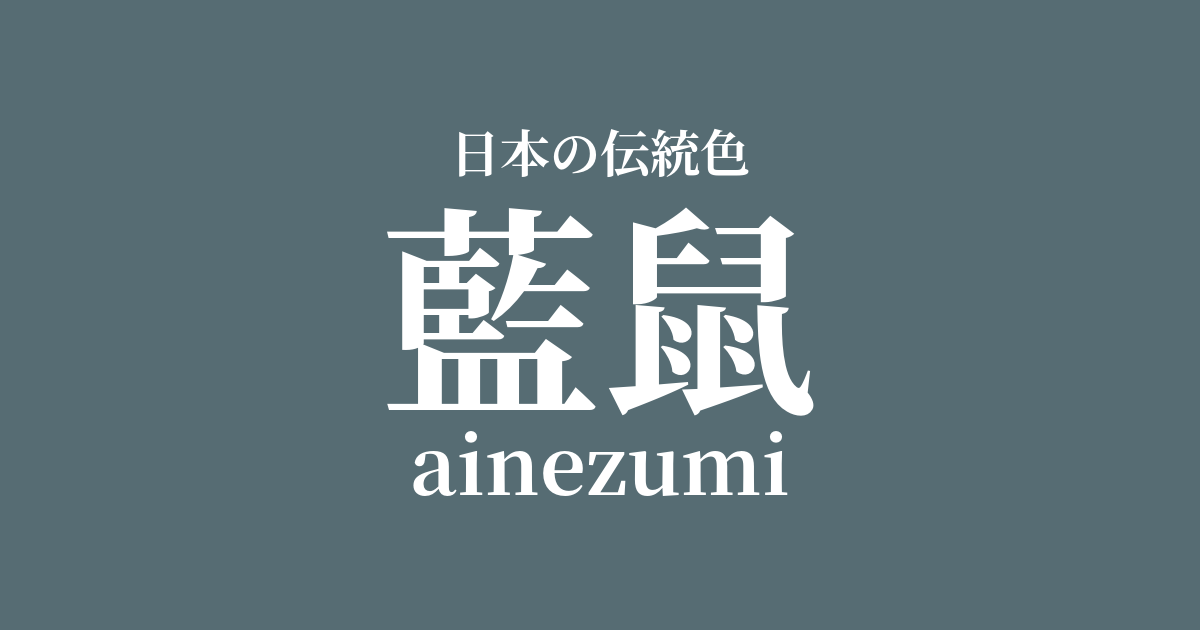
| Japanese color name | Indigo mouse |
|---|---|
| reading | ainezumi |
| HEX | #566C73 |
| RGB | 86, 108, 115 |
What is "Ainezumi"? Origin and etymology
Indigo gray is a color name derived from the fact that it is a gray color with an indigo tint. During the Edo period, the shogunate's sumptuary laws restricted commoners from wearing brightly colored clothing. As a reaction to this, people began to enjoy finding subtle differences in shades of muted colors such as brown and gray, resulting in such a wide variety of shades that it was called "forty-eight shades of brown and one hundred shades of gray."
Indigo gray was one of the colors that emerged during that trend, and it was loved as a stylish shade dyed using the indigo dyeing method.
Historical background of the color blue-gray
The popularity of indigo gray became particularly strong from the mid-Edo period onward. Sumptuary laws had a significant impact on the clothing of common people, making it difficult to openly wear bright colors. However, people pursued the greatest possible fashion within the confines of the restrictions, cultivating a unique aesthetic sense called "iki," which found refined beauty in subdued colors.
Colors with subtle nuances, such as indigo gray, were extremely popular among the townspeople of Edo because they appeared understated yet conveyed a sense of depth, and were particularly favored as colors for kimonos.
Related literature, waka poetry, and seasonal words
Edo period literature and ukiyo-e prints vividly depict the lives and customs of the people of that time, and indigo gray also appears in them. In particular, it was not uncommon for the colors of costumes worn by Kabuki actors to become popular among the common people, and it is said that indigo gray spread as one of those fashionable colors.
While the color name "ai-nezumi" (indigo gray) is rarely mentioned directly in specific waka or haiku poems, it can sometimes be found in books depicting Edo-period customs, such as sharebon and kokkeibon, as the color of the stylish clothing worn by the characters.
Color scheme preview
This is to check the readability of the text when this color is used as the background.
Indigo gray color scheme proposal
White tea (#B59775)
This color scheme combines the cool, calm impression of indigo gray with the warm brightness of off-white. The two colors complement each other, creating an elegant and refined harmony. It's a gentle combination that evokes a sense of Japanese aesthetics.
Coral color (#F58F78)
Against the subdued shade of indigo gray, the vibrant and warm red of the coral color provides an effective accent. Like the "ura-masari" (reverse lining) used by Edo-period connoisseurs for linings, this color scheme exudes a sense of understated elegance.
Navy blue (#1C2133)
Combining indigo gray with iron navy, another blue hue, creates a unified gradient. The brightness of indigo gray is highlighted, giving the overall impression of intelligence, gravitas, and sophistication.
Practical Scenes
Indigo gray, with its calming hue, is still used in a variety of situations today. Incorporating it into traditional Japanese clothing such as kimonos, obi sashes, and obi ties creates a sophisticated atmosphere reminiscent of Edo-period "chic." While not flashy, it is a color highly valued for enhancing the wearer's dignity.
In the field of interior design, using it in fabrics such as wallpaper, curtains, and cushions brings tranquility and elegance to a space. It pairs particularly well with wood and neutral colors such as white and black, making it suitable for creating modern Japanese spaces or minimalist room styles.
In web and graphic design, indigo gray is an effective color for conveying trustworthiness and intelligence. When used as a background color, it makes content stand out, and when used as an accent color, it can tighten up the overall design.