
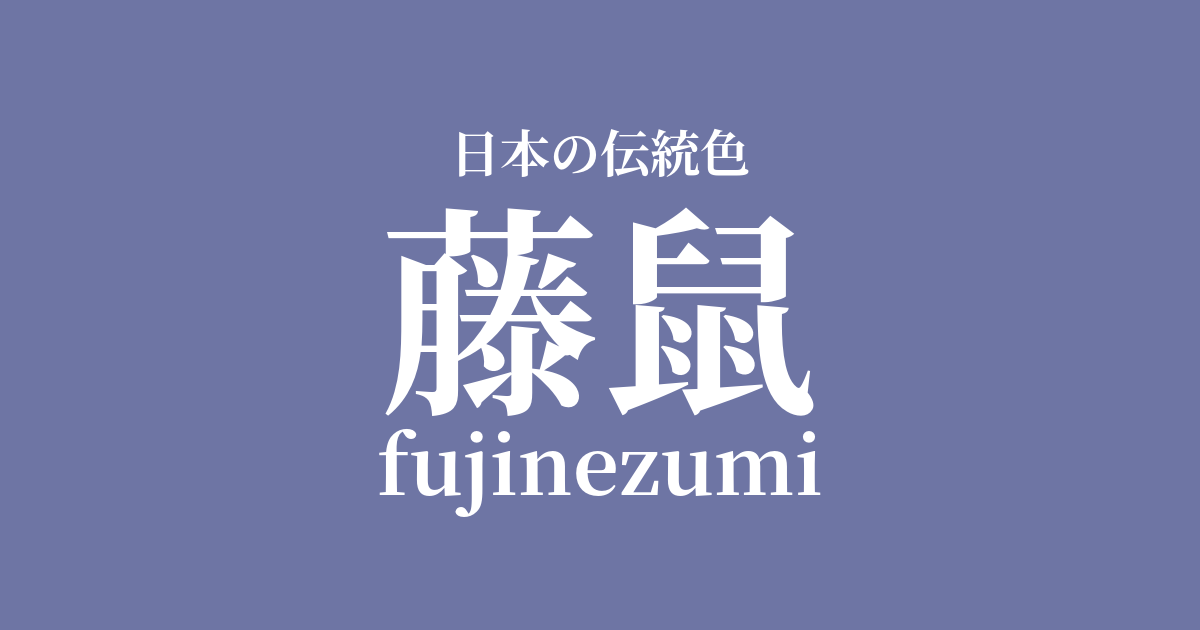
| Japanese color name | wisteria rat |
|---|---|
| reading | fujinezumi |
| HEX | #6E75A4 |
| RGB | 110, 117, 164 |
What is a wisteria rat? Origin and etymology
Fujinezumi, as its name suggests, is a gray with a slightly bluish-purple tint, a combination of "fuji-iro" (wisteria color) and "nezumi-iro" (mouse gray). The elegant and refined purple of the wisteria flower, combined with the achromatic color of mouse gray, creates a subdued, dignified hue. This exquisite shade can be said to be one of the colors that symbolizes the delicate sense of color cultivated during the Edo period. Its greatest charm lies in its understated elegance, which avoids ostentation while subtly exuding a sense of allure.
The reason this color became widely known is due to a trend called "48 shades of brown and 100 shades of gray" during the mid-Edo period. Due to sumptuary laws imposed by the shogunate, commoners were restricted from wearing brightly colored clothing. As a result, people began to enjoy finding subtle differences in shades of muted colors such as brown and gray.
Fuji-nezumi (wisteria gray) was one of the many shades of gray that emerged during that fashion trend, and it was loved as a color that embodied the spirit of "chic" and "refined" among the townspeople of Edo.
Historical background of the wisteria rat
It is believed that the wisteria gray color became popular in general from the mid-Edo period onward. Repeated sumptuary laws restricted the use of bright colors with expensive dyes among commoners. Within these constraints, Edo dyers used their ingenuity to create countless shades based on gray and brown.
These colors, along with "Onando-iro" (a type of dark blue) and "Ainezumi" (a type of indigo gray), were popular in townspeople's culture as sophisticated colors that, while seemingly plain, possessed subtle nuances. Among these, Fujinezumi (a type of wisteria gray) is said to have been particularly favored for its elegant and refined impression, and was often used in kimonos, haori jackets, and Japanese accessories.
Related literature, waka poetry, and seasonal words
While there aren't many classical literary works that directly feature the color name "fuji-nezumi" (wisteria gray), its constituent elements, "fuji" (wisteria) and "nezumi" (gray), each have rich cultural backgrounds. Wisteria flowers, as symbolized in "Fujitsubo" (Wisteria Jar) in "The Tale of Genji," have long been a motif that symbolizes nobility, elegance, and love, and have been frequently featured in waka poetry and stories.
On the other hand, gray was frequently used in Edo period humorous books and ukiyo-e prints to express a sophisticated and refined aesthetic. Therefore, wisteria gray can be interpreted as a color that fuses the aesthetics of two different eras: the elegance of the Heian period and the sophistication of the Edo period. As wisteria blossoms are a seasonal word for spring, it is also a color that evokes the hazy spring sky or the dim twilight.
Color scheme preview
This is to check the readability of the text when this color is used as the background.
A color scheme suggestion for wisteria gray.
White wisteria color (#DBDAEA)
This color scheme beautifully harmonizes the calm purple of wisteria gray with the light, bright purple of white wisteria. By using varying shades of the same color family, a sense of unity is created, giving an elegant and refined impression. It is suitable for creating a modest and graceful atmosphere.
Silver mouse (#AFB1B4)
The combination with silver-gray, which belongs to the same gray family, creates a sophisticated color scheme that evokes the "chic" of Edo. The purplish tint of wisteria-gray is enhanced by the bright, achromatic silver-gray, giving it a modern and cool impression. It is ideal for expressing a modern Japanese aesthetic.
Blue gold (#FABE29)
The bluish-purple tones of wisteria gray and the vibrant yellow of turmeric are close to complementary colors, and they have the effect of making each other stand out vividly. The addition of the brightness of turmeric to the calm wisteria gray creates an impressive color scheme that is both vibrant and elegant.
Practical Scenes
In the world of traditional Japanese clothing, wisteria gray is a color loved by both men and women. When used in kimonos, obi sashes, obi ties, and haori jackets, it creates a refined and stylish look that is understated yet sophisticated. In particular, combining it with other shades of gray or light cool colors creates an elegant coordination.
In interior design, incorporating it into wallpaper, curtains, and sofa upholstery brings a quiet and calming atmosphere to a space. It pairs well with Japanese modern-style interiors and harmonizes with light wood and dark brown furniture, as well as with different materials such as metal and glass.
In web and graphic design, wisteria gray is an effective color when you want to convey trustworthiness and elegance. Used as a main color, it creates a calm impression, while used as an accent color, it adds a sophisticated touch. It is suitable for content themed around tradition and history.