
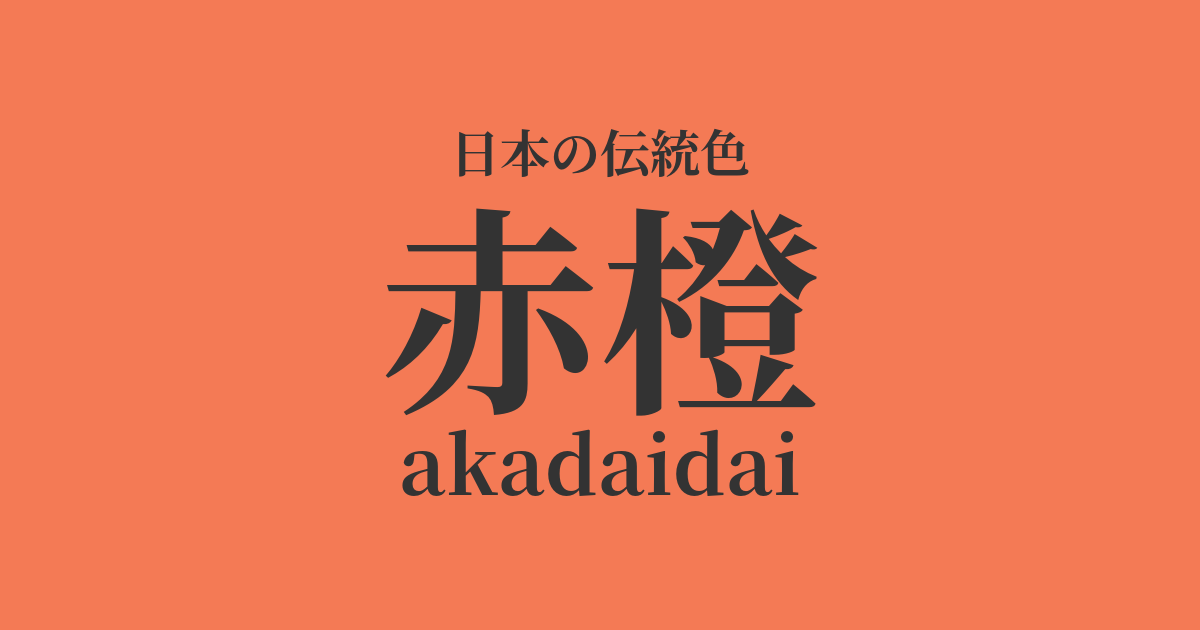
| Japanese color name | red orange |
|---|---|
| reading | akadaidai |
| HEX | #F47A55 |
| RGB | 244, 122, 85 |
What is reddish-orange? Origin and etymology
As the name suggests, "red-orange" refers to a vibrant, reddish-orange color. The color originates from the color of the bitter orange (daidai), a type of citrus fruit, when it ripens. The bitter orange has the characteristic of not falling from the tree even when it ripens in winter, returning to green again in the summer of the following year, and then ripening again in winter. This characteristic has been likened to "generation after generation," and the fruit has been considered an auspicious fruit.
Therefore, the bitter orange has long been cherished as a lucky charm, such as being placed on top of the Kagami Mochi (rice cakes) during the New Year. The reddish-orange color of the fruit is also said to have come to be recognized as an auspicious color symbolizing vitality and prosperity. This warm and lively hue is reminiscent of the sun and fire, and has become established as a color that gives a positive impression.
Historical background of reddish-orange
While there are few clear documents indicating when the specific color name "akadaidai" (red-orange) became established, orange-based colors themselves have existed since ancient times. Among the treasures of the Shōsōin from the Nara period, there are orange-dyed textiles believed to have been dyed using a combination of safflower and Japanese knotweed, demonstrating the high level of dyeing technology at the time. These colors are thought to have been used in the clothing and furnishings of noble people.
With the advent of the Edo period, popular culture flourished, and a wide variety of colors began to be used in the world of ukiyo-e prints and kimonos. Bright and vivid colors such as reddish-orange were particularly incorporated into the kimonos, obi sashes, and accessories of young women, creating a vibrant and stylish look. It is said that these colors were also effectively used in ukiyo-e woodblock prints to color the clothing of figures and the backgrounds.
Related literature, waka poetry, and seasonal words
While it's difficult to pinpoint specific famous waka poems or literary works that directly feature the color name "akadaidai" (red-orange), the color's origin, "daidai" (orange), is a winter seasonal word frequently used in haiku. The orange fruit, which retains its vibrant color even in the winter cold, has been used as a subject for poems as a symbol of vitality and good fortune. Scenes in which its color stands out in contrast to a snowy landscape have also been depicted in haiku.
In narrative literature, similar colors such as "koji-iro" (orange) and "mikan-iro" (mandarin orange) are sometimes used to describe the colors of characters' clothing. These colors, like reddish-orange, give a warm and bright impression and are thought to have played a role in symbolizing the youthfulness and lively personality of the characters.
Color scheme preview
This is to check the readability of the text when this color is used as the background.
Red-orange color scheme proposal
Nightingale (#918D40)
The combination of the reddish-orange of ripe fruit and the olive green reminiscent of leaves and branches creates a color scheme that evokes the harmony of nature. Earth tones complement each other well, giving a warm, calm, and stable impression. It is well-suited for creating a Japanese-style atmosphere.
Navy blue (#192F60)
The warm color reddish-orange and the cool color navy blue are close to complementary colors, enhancing each other's beauty. The vibrancy of the reddish-orange stands out, while the navy blue provides a sense of balance, resulting in a modern and sophisticated impression. It offers high visibility and is an effective design accent.
Generated color (#FBF9F4)
The natural, soft hues of the ecru color gently envelop the vibrancy of the reddish-orange, creating a bright and cohesive overall tone. This color scheme is ideal for creating a natural and warm space, fostering a friendly and comfortable atmosphere.
Practical Scenes
In the world of traditional Japanese clothing, reddish-orange is used in obi sashes, obiage (sash ties), and formal wear such as furisode (long-sleeved kimono), expressing vibrancy and youthfulness. It is especially often incorporated into autumn and winter attire, and as a warm color, it is also expected to have the effect of brightening the complexion.
In interior design, it is effective as an accent color. Incorporating it into cushion covers, rugs, or one wall brings warmth and vibrancy to the entire space. It is especially compatible with natural wood and spaces based on white.
In web and graphic design, it is used for call-to-action buttons and banner ads that aim to attract the user's attention. It is also believed to have an appetite-stimulating effect, and is therefore frequently used in food-related packaging and websites.