
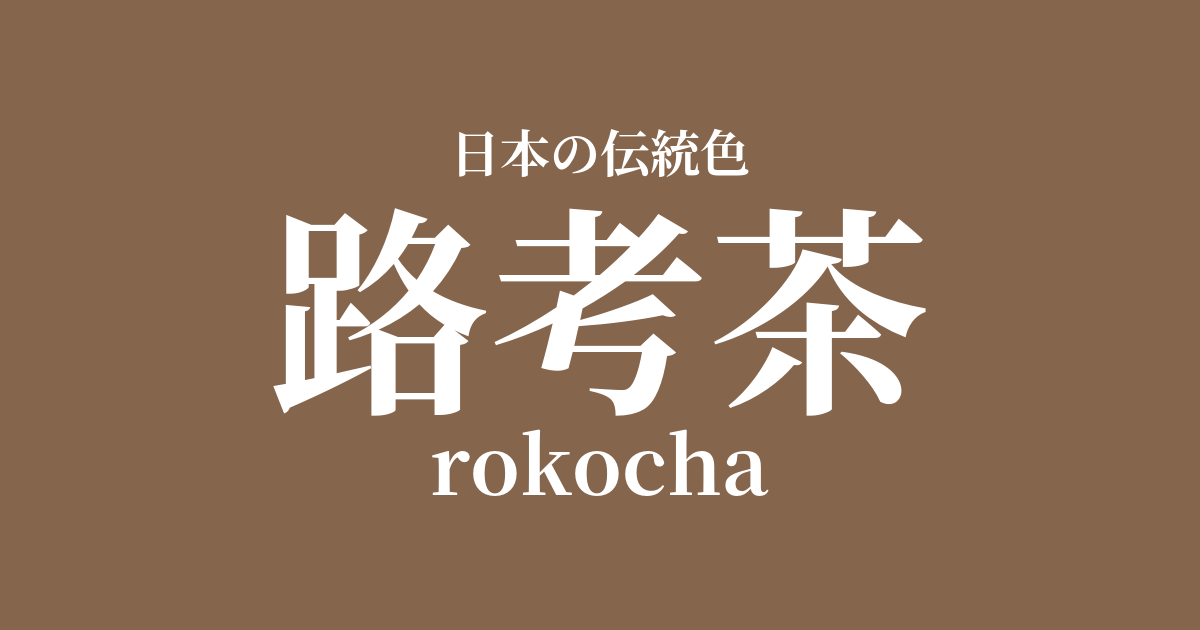
| Japanese color name | Rukocha |
|---|---|
| reading | rokocha |
| HEX | #85654C |
| RGB | 133, 101, 76 |
What is Rokōcha? Origin and etymology
Rokōcha is a color name derived from Segawa Kikunojō II, a popular Kabuki actor of the mid-Edo period. His haiku pen name was "Rokō," and this greenish-brown color, which he favored using in his stage costumes, came to be called "Rokōcha." It is a prime example of an "actor's color," where an actor's name becomes the color name, illustrating how enthusiastic ordinary people were about Kabuki actors at the time and how they imitated their fashion.
The color is not simply brown, but has complex nuances of green and gray. This is said to reflect the dyeing techniques of the time. It is said that the fabric, dyed yellow with plant dyes such as bayberry and Japanese knotweed, was treated with an iron-containing mordant to dull the color, and then a small amount of indigo was added as a finishing touch to create this unique, subdued tone. This complex process produced a deep color that resonated with the Edo aesthetic of "chic" and refined taste.
Historical background of Luo Kao tea
The popularity of Rokōcha tea is believed to have begun around the Meiwa era (1764-1772) in the mid-Edo period. During this time, Edo's townspeople culture reached its peak, and Kabuki was the greatest form of entertainment for the common people. Popular actors, in particular, were fashion leaders, and the colors of the costumes they wore quickly became extremely popular throughout Edo.
The second generation Segawa Kikunojo was an actor who enjoyed immense popularity as an onnagata (female impersonator). His elegant acting style and the subdued, calm colors he favored matched the temperament of Edoites who disliked ostentation and valued "chic" (refined elegance). Rokōcha, along with Ichikawa Danjūrō's "Danjūrōcha" and Onoe Kikugorō's "Baikōcha," became a sensation as an "actor's color" that symbolized the trends of the time.
This trend wasn't limited to just the color of kimonos. Rokōcha (a type of brown) was also incorporated into accessories such as obi sashes, han-eri collars, and drawstring pouches, and was widely used by both men and women. Ukiyo-e prints also depict townspeople wearing Rokōcha kimonos, making it an important color for understanding the fashion culture of the time.
Related literature, waka poetry, and seasonal words
The name "Rokōcha" can be found in literary works and humorous books depicting the customs of the Edo period. For example, in the humorous book "Kokei no Sanshō" (1787) written by Santō Kyōden, there is a line that says "the color of Rokōcha." This suggests that Rokōcha was still a recognized color among people more than a decade after its popularity.
While this color isn't directly mentioned in many waka or haiku poems, its subdued hue is deeply connected to Japanese aesthetics such as wabi-sabi and iki. Although not a specific seasonal word, its calm tone often evokes autumn scenes. As a color symbolizing Edo period townspeople culture, it has been effectively used in later historical novels and dramas to recreate the atmosphere of the time.
Color scheme preview
This is to check the readability of the text when this color is used as the background.
Roko tea color scheme suggestion
Generated color (#FBF9F4)
The deep, dignified impression of the Rokōcha tea is enhanced by the bright, soft white of the off-white color. A contrast is created, making each color stand out. A sense of cleanliness and elegance is added, creating a modern atmosphere while remaining traditionally Japanese.
Aphrodisiac tea (#716246)
The combination of Lu Kao tea and Kobi tea, both being a greenish-brown, creates a unified and calming impression. The gradation of colors creates a sense of depth and dimension. It can be described as a sophisticated and refined color scheme.
Suou (#9E3D3F)
The combination of the mellow Rokōcha tea and the deep reddish sappanwood adds vibrancy and strength. It's a classic and striking combination, reminiscent of those seen in Edo-period Kabuki costumes. The colors are almost complementary, enhancing each other's beauty.
Practical Scenes
In traditional Japanese clothing, the color Rokōcha (a type of brown) is particularly appealing. When used with everyday kimonos and obi sashes made of silk or cotton, it creates an effortlessly chic and stylish look. It is also a popular color for men's haori jackets and hakama trousers, giving off a calm and mature air.
In interior design, incorporating it into wallpaper, curtains, and sofa upholstery brings a sense of calm and depth to a space with a Japanese modern feel. It pairs exceptionally well with wooden furniture and natural materials such as bamboo and washi paper, contributing to the creation of a relaxing space.
In web and graphic design, using it as a background or key color can convey tradition, reliability, and a sense of luxury. It is suitable for websites of established brands and content dealing with historical themes, giving users a calm and sophisticated impression.