
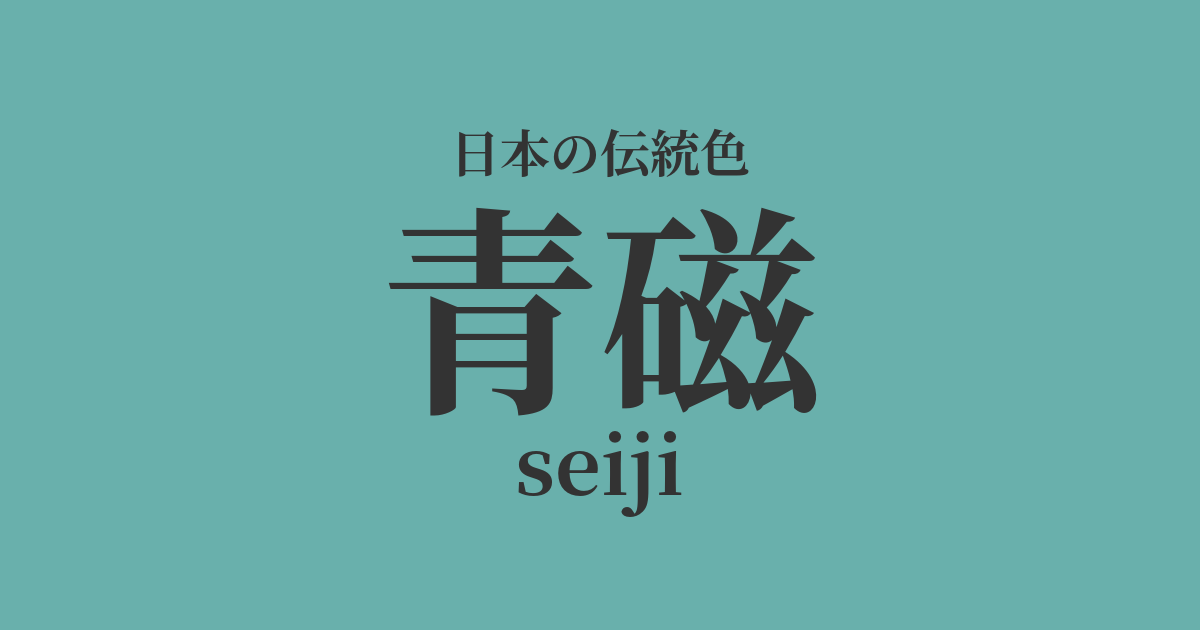
| Japanese color name | Celadon |
|---|---|
| reading | seiji |
| HEX | #69B0AC |
| RGB | 105, 176, 172 |
What is celadon? Origin and etymology
Celadon is a color name derived from the color of the glaze used in celadon porcelain, a type of ceramic fired in China. The small amount of iron in the glaze of celadon porcelain undergoes a chemical reaction during a firing technique called "reduction firing," where oxygen supply is cut off in the kiln, resulting in its unique bluish-green color. This mysterious, deep, and clear hue was also called "hisoku" (secret color) and was used as a term of endearment to particularly excellent pieces. This beautiful color of ceramics has since become established as a traditional Japanese color.
Historical background of celadon
While celadon porcelain itself had been produced in China since ancient times, it is believed that it was only during the Heian period that it was introduced to Japan on a large scale and became highly valued among the aristocracy. Celadon produced during the Song dynasty in China, in particular, was considered the finest quality and, due to its rarity, was treated as a symbol of power and wealth. During the Muromachi period, many masterpieces of celadon were included in the "Higashiyama Collection" amassed by the shogunate, including Ashikaga Yoshimasa, and it played an important role in the culture of the tea ceremony.
During the Edo period, the production of celadon porcelain by Japanese potters began in earnest at kilns such as the Nabeshima domain kiln in Saga, and excellent domestic celadon ware was produced. As a result, celadon became known to a wider range of people, not just a privileged few. Even in modern times, its elegant and subdued color has continued to be cherished in various fields such as crafts, textiles, and paintings.
Related literature, waka poetry, and seasonal words
The elegant hue of celadon has long been admired in literary works. In Heian period literature such as "The Tale of Genji" and "The Pillow Book," celadon appears as a noble object, effectively used as a prop to symbolize the refined aesthetic sense and high social status of the characters. Its clear blue-green color has also been likened to the color of the sky after the rain or the color of a still water surface, and it was a favorite subject of poetry in the world of waka and haiku.
In modern literature, the serene and mystical image of celadon has inspired many writers. It is depicted not only as an object, but also as a color that expresses natural landscapes and the emotions of people. Although not directly designated as a seasonal word, it is often used in poetic expressions as a color reminiscent of spring's young leaves or summer's clear streams.
There is a sky bluer than celadon, a spring evening.
Color scheme preview
This is to check the readability of the text when this color is used as the background.
Color scheme proposals for celadon
White training (#FEFDF9)
The cleanliness and elegance of celadon are enhanced by the soft, pure white of the white glaze. This color scheme evokes the relationship between the clay body and glaze of porcelain, creating a refined and calm impression. It is suitable for Japanese-style spaces and minimalist designs.
Coral color (#F88379)
The tranquil blue-green of the celadon and the warm, vibrant red of the coral create a beautiful contrast. The colors complement each other, giving an elegant yet華やかな (gorgeous) impression. This is a classic color combination often seen in ornaments and kimono ensembles.
Dark brown (#654321)
The deep, rich brown tones complement the delicate hues of celadon, creating a sense of calm and gravitas. Evoking natural elements like wood and earth, it exudes a stable and sophisticated atmosphere. It adds a refined touch to interior design and fashion.
Practical Scenes
In the world of traditional Japanese clothing, celadon green is used in formal kimonos such as visiting kimonos, solid-colored kimonos, and accessories like obi sashes and obi ties, expressing an elegant and understated beauty. It is especially favored as a color suitable for quiet and tranquil occasions such as tea ceremonies. Due to its refreshing quality, it is also suitable for kimonos worn from early summer to summer.
In interior design, incorporating it into fabrics such as wallpaper, curtains, and cushions brings a sense of freshness and tranquility to a space. It harmonizes well not only with Japanese-style rooms but also with modern Western-style rooms based on white and gray, serving as an accent color that creates a sophisticated atmosphere.
In web and graphic design, using this color as a background or key color can create a clean and trustworthy impression. It is particularly effective in building the image of brands and services that emphasize tradition, quality, and harmony with nature.