
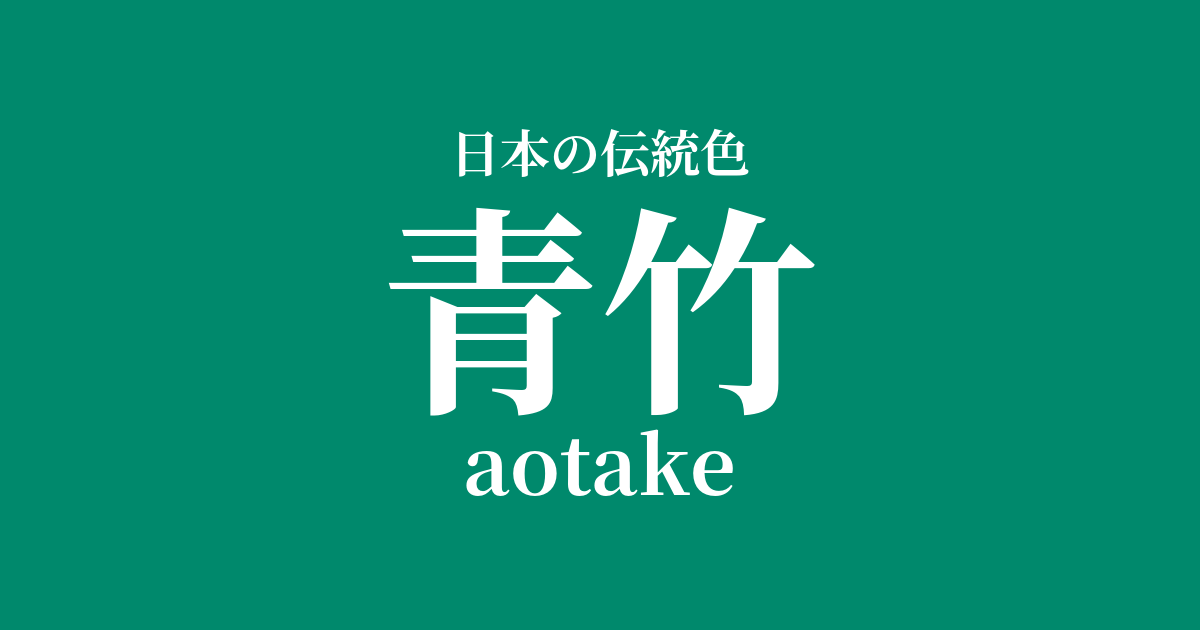
| Japanese color name | green bamboo |
|---|---|
| reading | aotake |
| HEX | #00896C |
| RGB | 0, 137, 108 |
What is Aotake? Origin and Etymology
As the name suggests, "aotake-iro" (blue bamboo green) is a color name derived from the vibrant blue-green color of young, newly grown bamboo stalks. Bamboo has been deeply rooted in the lives and culture of the Japanese people since ancient times. Its straight, upward-reaching growth and evergreen nature, which prevents it from shedding its leaves even in winter, have made it a symbol of vitality, permanence, and purity. This refreshing and powerful image of bamboo is reflected in the color name.
In ancient Japan, the word "ao" (blue) referred to a wide range of colors, including green, indigo, and even white and black. Therefore, it was quite natural to describe the vibrant green of bamboo as "aotake" (blue bamboo). This color name can be seen as one manifestation of the Japanese culture, in which people have found subtle differences in color in natural landscapes and established them as words.
Historical background of green bamboo
While bamboo itself has been used in people's lives since the Jomon period, there are few precise records about when the color name "aotake-iro" (green bamboo) became established. However, literary works from the Heian period, such as "The Tale of Genji," beautifully depict scenes of bamboo groves and the green color of bamboo products, suggesting that this color was recognized by people from ancient times. Among the nobility, bamboo motifs were incorporated into furnishings and clothing.
During the Edo period, dyeing techniques advanced significantly, and a wide variety of colors became available to ordinary people. Bamboo green, with its refreshing hue, was particularly favored for summer clothing such as yukata, tenugui (hand towels), and fans. Furthermore, among the samurai class, the unbreakable nature of bamboo was seen as a symbol of bravery and integrity, and this color was reportedly used in the decoration of weapons and armor.
Related literature, waka poetry, and seasonal words
Bamboo is a very important subject in Japanese literature and art. In "The Tale of the Bamboo Cutter," considered the oldest Japanese story, bamboo is depicted as a symbol of mystery and sacredness, as Princess Kaguya is found inside a bamboo stalk. Through this story, the vibrant green color of bamboo has become associated with an image of purity and nobility.
In the world of haiku, "young bamboo" and "green bamboo" are used as seasonal words for summer. The sight of bamboo shoots vigorously growing from the ground into bamboo stalks symbolizes the vibrant life force of summer. Many haiku poets have expressed the changing seasons by composing poems about the sound of the wind blowing through bamboo groves or the vividness of green bamboo wet with rain.
A human voice can be heard in the green bamboo.
Color scheme preview
This is to check the readability of the text when this color is used as the background.
Color scheme proposal for green bamboo
Coral color (#F88F79)
The cool blue-green of bamboo and the warm red of coral create a beautiful contrast in this color scheme. The colors vividly complement each other, conveying a sense of vitality and splendor. This combination of colors, found in nature, gives a lively impression.
White training (#FFFFFF)
By combining it with pure white, the refreshing and clean feel of bamboo green is maximized. It's a very refreshing and sophisticated color scheme, reminiscent of light filtering through a bamboo grove or bamboo in a snowy landscape. It's ideal for creating an impression of cleanliness and elegance.
Blue gold (#FABE00)
Adding a vibrant yellow, turmeric, as an accent brings brightness and dynamism to the calm bamboo green. This combination evokes the image of sunlight filtering through a bamboo grove, giving a modern and elegant impression within a traditional Japanese atmosphere.
Practical Scenes
In the world of traditional Japanese clothing, bamboo green is frequently used, especially for summer kimonos, yukata, obi sashes, and obi ties. Its refreshing hue provides a visually cool feeling and creates a stylish look. It is also used in men's kimonos and hakama, and is favored as a color that expresses honesty and dignity.
In interior design, incorporating it as an accent in wallpaper, fabrics, and accessories brings a sense of calm and freshness to the space. It goes well not only with Japanese-style rooms but also with natural modern style living rooms. It harmonizes with the green of houseplants, creating a relaxing space.
In web and graphic design, this color is suitable for expressing themes such as trustworthiness, nature, and the environment. Using it as a corporate color or key color for a website helps build an honest and clean brand image.