
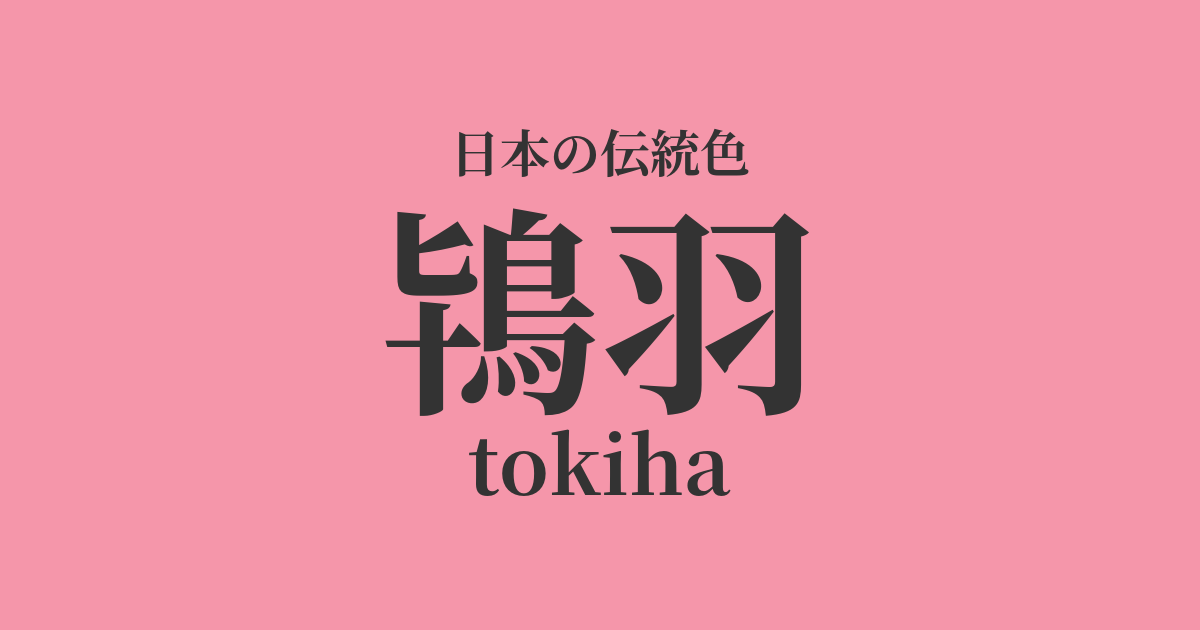
| Japanese color name | Tokiha |
|---|---|
| reading | Tokiha |
| HEX | #F596AA |
| RGB | 245, 150, 170 |
What is Tokiwa? Origin and etymology
Tokiha-iro refers to a pale pinkish-yellow color found in the flight feathers of the Japanese crested ibis (Toki), a bird designated as a special natural monument of Japan. The kanji character "鴇" in the color name is the kanji representation of the ibis, and "羽" directly indicates that it is derived from its feathers. The ibis's body is originally white, but the underside of its wings and some of its flight feathers have a beautiful pale pink tint, and this delicate hue was adopted as the color name.
This color name is relatively new, having become popular in the late Edo period, and is said to have been particularly favored by young women due to its elegant hue.
Before this color became popular, similar pink shades existed, such as "peach blossom pink" and "pink pink." However, Tokiha pink stands apart from these colors, possessing a more natural and subdued nuance. Combined with the rarity and mystique of the Japanese crested ibis, it captured people's hearts not merely as a pink color, but as a color that evokes elegance and a sense of narrative. Its name symbolizes Japan's rich natural environment and the delicate color culture that has drawn inspiration from it.
Historical background of Tokiwa
The color Tokiwa-iro (a shade of pink) is said to have become popular during the late Edo period, particularly during the Bunka and Bunsei eras (1804-1830). This was a time when townspeople's culture flourished, and new colors were constantly emerging among the common people. Tokiwa-iro was one such color, and it gained popularity among fashion-conscious people of the time. It is said that the incorporation of this color into stage costumes by Kabuki actors was a key factor in its popularity.
This color was particularly favored for the kimonos, obi sashes, undergarments, and cosmetics of young women. Clothing that appears to be this color can be seen in the beautiful women depicted in ukiyo-e prints of the time by artists such as Kitagawa Utamaro and Torii Kiyonaga. Its popularity did not wane even into the Meiji era; its elegant and lovely hue continued to be loved by many women, and it remains a staple color in traditional Japanese clothing to this day.
Related literature, waka poetry, and seasonal words
The color name "Tokiha-iro" (ibis feather color) was established in the late Edo period, and therefore does not directly appear in classical literature such as the Manyoshu or The Tale of Genji from before that time. However, the crested ibis itself has long been a subject of poetry and song, and its beautiful appearance has been celebrated. Since its establishment as a color name, it has sometimes been used in modern literature to describe the color of women's clothing.
For example, in novels from the Meiji and Taisho periods, you can find descriptions of characters' kimonos being described as "tokiha-iro (crepe silk)." This is thought to be an attempt to convey the gentleness, loveliness, and somewhat ephemeral impression that the color evokes to the characters. While "toki" (crested ibis) is a seasonal word associated with autumn, "tokiha-iro" itself is not generally treated as a seasonal word.
Color scheme preview
This is to check the readability of the text when this color is used as the background.
Tokiwa's color scheme proposal
Willow Rat (#899186)
The soft reddish hue of the ibis feather color is complemented by the calm, greenish-gray of the willow gray. This combination, reminiscent of flowers and plants in nature, gives an elegant and gentle impression. It is suitable for creating a refined atmosphere in Japanese clothing and Japanese-style designs.
White training (#FCFAF2)
When paired with pure white, the loveliness and elegance of the ibis feather color are brought out to the fullest. This color scheme exudes cleanliness and refinement, making it suitable for celebratory occasions and sacred events. The soft contrast gives the viewer a sense of reassurance and a gentle impression.
Indigo tea (#555647)
The deep, rich indigo tea tones beautifully complement the bright pink, creating a sophisticated impression. It adds a sense of calm and elegance to the often sweet pink, resulting in a modern and chic atmosphere. The colors complement each other perfectly, creating a well-balanced color scheme.
Practical Scenes
In the world of traditional Japanese clothing, the color *tokiha* (a type of pinkish-brown) is widely used, especially in women's kimonos such as *furisode* (long-sleeved kimono), *houmongi* (formal visiting kimono), and *komon* (casual kimono). It is also a popular color for expressing the feeling of spring, and when incorporated as an accent in accessories such as obi (sash), obiage (sash scarf), and obijime (sash cord), the entire outfit takes on a bright and gentle impression. It is sometimes chosen as the color for wedding attire.
In interior design, it is most effective when used as an accent color. Incorporating it into cushions, curtains, or parts of the wallpaper brings warmth and a soft atmosphere to the space. It pairs very well with neutral colors such as white, beige, and light gray, as well as natural wood-grain furniture.
In the fields of web design and graphic design, it is used as the image color for services and products aimed at women, as well as cosmetic brands. Because it combines approachability and elegance, it can give target users a sense of security and a positive impression. It is versatile and easy to use as both a main color and an accent color.