
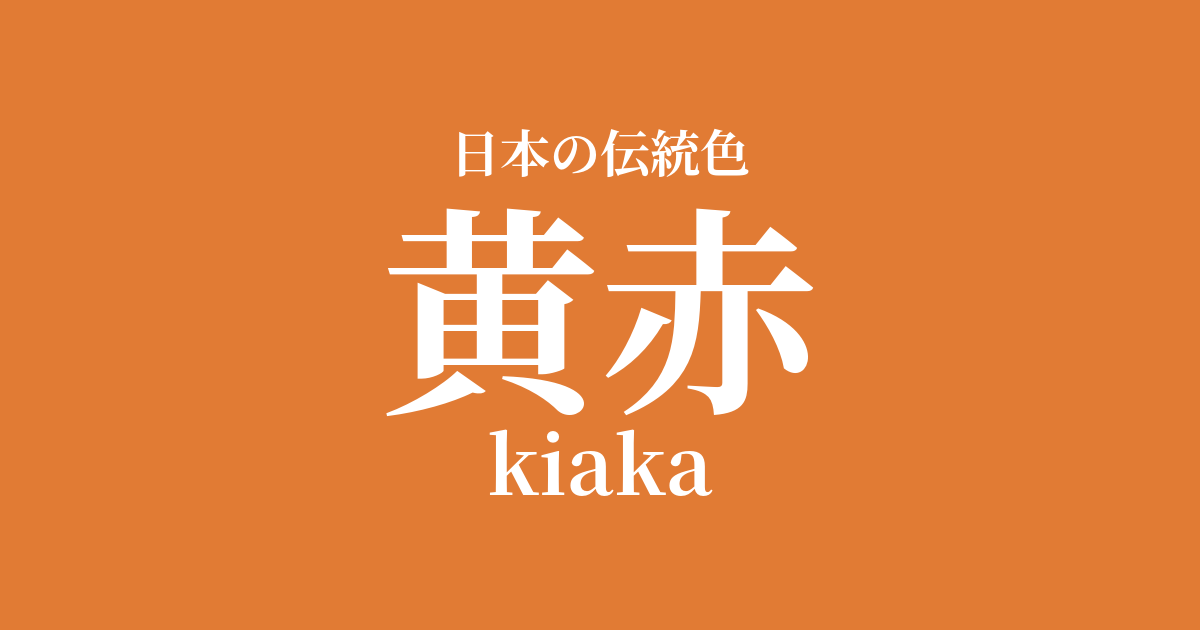
| Japanese color name | yellow red |
|---|---|
| reading | kiaka |
| HEX | #E17B34 |
| RGB | 225, 123, 52 |
What is yellow-red? Origin and etymology
Yellow-red, as its name suggests, is a color that lies between yellow and red, referring to a vivid orange. Unlike traditional color names derived from specific dyes or pigments, it is a name that directly expresses the hue based on the concept of the three primary colors. In the JIS color standards, it is defined as "a vivid yellowish-red," giving a warm and lively impression.
Although it rarely appears in ancient texts, it is believed to have become commonly used in modern times as colors were systematically organized.
Historical background of yellow and red
While the name "yellowish-red" as a color name is considered to have become established in modern times, the shade itself has been deeply rooted in Japanese life since ancient times. For example, "persimmon color," which represents the color of persimmons, an autumn fruit, and "ouni," which is dyed with safflower and gardenia, are representative colors of the yellowish-red family. These colors have been cherished as symbols of nature's bounty and the changing seasons.
In particular, during the Heian period, the yellowish-red color "Ōni" (黄丹) was designated as a forbidden color, reserved only for the Crown Prince's robe. It is said to symbolize the color of the rising sun and was considered a very noble and sacred color. Thus, shades close to yellowish-red have a long history of being treated as colors with special significance.
Related literature, waka poetry, and seasonal words
While the color name "yellow-red" doesn't often appear directly in literary works, many poems have depicted scenes that evoke this color. Examples include autumn sunsets, ripe persimmons, and colorful autumn leaves. These motifs have been used in waka and haiku poetry since the Manyoshu era to express the changing seasons and emotions.
As seasonal words, "persimmon" and "autumn leaves" are representative of autumn, and the yellow and red hues are deeply connected to Japan's rich sense of the four seasons.
As I eat a persimmon, the bell rings at Horyuji Temple.
Color scheme preview
This is to check the readability of the text when this color is used as the background.
Yellow and red color scheme proposal
鶸Menghuang (#8D9943)
This combination of colors is natural, reminiscent of ripe fruit and young leaves. The colors complement each other, creating a vibrant impression. Because they are all earth tones, they harmonize easily, creating a warm and natural atmosphere.
Lapis Lazuli (#1F4788)
These colors are close to complementary colors, and their vibrantness is enhanced by each other. They create a dramatic contrast, like an autumn sunset sky and a deep ocean, making them suitable for powerful and impressive designs. They offer high visibility and an eye-catching effect.
Dark brown (#664434)
The gradation of similar colors creates a unified and calming atmosphere. The warm and deep color scheme is reminiscent of autumn leaves and tree trunks. It gives a stable, elegant, and sophisticated impression.
Practical Scenes
In the world of kimono, yellow-red is used in accessories such as obi sashes, obi ties, and han-eri collars, adding an accent to the entire outfit. It is a particularly suitable color for expressing the feeling of autumn. Because it gives a youthful and vibrant impression, it is sometimes incorporated as part of the patterns of furisode (long-sleeved kimono) and houmongi (formal visiting kimono).
In interior design, incorporating yellow-red into fabrics such as cushion covers, rugs, and curtains brings warmth and brightness to the entire space. It's also believed to stimulate appetite, making it a popular accent color in dining areas. Painting just one wall this color can also be effective.
In web and graphic design, the attention-grabbing properties of yellow and red make them ideal for call-to-action (CTA) elements such as buttons and banners. They are also effective as brand colors for services that want to convey friendliness and vitality, but because they can be tiring on the eyes if used excessively, they are generally used as accent colors.