
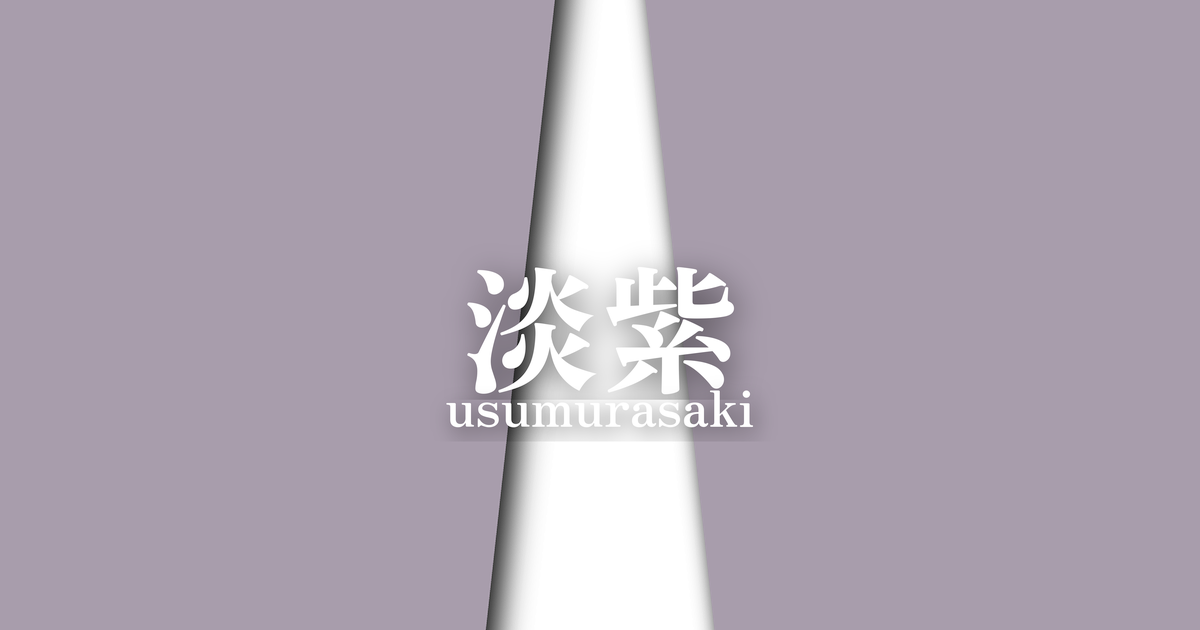
| Japanese color name | light purple |
|---|---|
| reading | usumurasaki |
| season | 夏 |
| Color of the table | Light purple (usumurasaki) |
| Back color | White (shiro) |
What is pale purple? Origin and etymology
The color name "usumurasaki" (pale purple) derives from its base color of a light purple, as the name suggests. This color is said to evoke images of flowers that bloom in summer, such as bellflowers and carnations. In the aristocratic society of the Heian period, purple was revered as a noble color, but among them, pale purple was favored as a color that evoked coolness and elegance in the strong summer sunlight. The combination of pale purple on the outside and white on the inside creates a sense of coolness and refinement, bringing a sophisticated aesthetic to summer attire.
The historical background of light purple
During the Heian period, the combination of colors in layered garments was an important means of expressing the changing seasons. Nobles incorporated the changing seasons and natural scenery into their attire by combining the colors of the outer and inner fabrics of their clothing, or the colors of the layers they wore. "Pale purple" was one of the representative colors of summer and was particularly popular among women in the imperial court. This cool color scheme, which seemed to alleviate the summer heat, reflects the aesthetic sensibilities of the time, which sought visual coolness.
This color scheme was more than just a combination of colors; it also reflected the wearer's refinement and sensibility.
Related literature, waka poetry, and seasonal words
The color "pale purple" appears in Heian period literature such as The Tale of Genji and The Pillow Book, in the attire of noble characters and in descriptions of scenes. For example, in The Tale of Genji, there are scenes in which high-ranking characters such as Hikaru Genji and Murasaki no Ue are depicted wearing purple-toned clothing. Although there are not many instances where it is directly mentioned as "pale purple layering," the nuances of different shades of purple were skillfully used to symbolically express the characters' feelings and the sense of the season.
As a seasonal word for summer, "pale purple" evokes images of bellflowers and other flowers, and in the world of Japanese poetry, it was a favored subject for expressing coolness and transience.
The sun shines faintly purple, yet the bellflowers bloom.
Pale purple season and scenery
"Pale purple" is a color combination worn during the summer season. Specifically, it corresponds to the period from May to June in the old lunar calendar, which corresponds to June to August in the modern calendar. This color scheme is reminiscent of the colors of bellflowers, carnations, or morning glories that bloom in the summer. The combination of pale purple on the outside and white on the inside gives a cool and pure impression even in the strong summer sun, bringing a moment of coolness to the viewer.
It was used in summer ceremonies at the imperial court and in everyday attire to express elegance and dignity appropriate for the season.
Light purple color scheme proposal
Light green (#A9D159)
Moegi is a vibrant yellowish-green reminiscent of young leaves in early summer. When combined with the cool purple of "Awamurasaki," it expresses both the vitality and refreshing feeling of summer flowers. The colors complement each other, creating a fresh and youthful impression.
White training (#F3F3F3)
Shironeri is a shade of silk that is close to pure white. It harmonizes with the white lining, bringing out the purity and elegance of "pale purple" to the fullest. This combination evokes the coolness of summer clouds and the water's edge, creating an extremely refined and minimalist beauty.
Silver mouse (#AFB1B4)
Silver gray is a light gray with a slight bluish tint. It harmonizes with the quiet and calm atmosphere of pale purple, giving an urban and modern impression. It evokes scenes of summer twilight or rainy days, creating an intelligent and cool color scheme.
Practical Scenes
In Heian period clothing, "pale purple" was worn as a summer uchiki (outer robe) or hitoe (unlined kimono). Its cool hue was particularly favored in women's attire. In modern times, incorporating it into kimono or yukata color schemes creates a classic yet sophisticated summer look. Furthermore, in interior design, using it in fabrics such as curtains and cushions brings a sense of coolness and tranquility to a room.
In web design and graphic design, it can be used as a key color when you want to express an elegant and gentle atmosphere.