
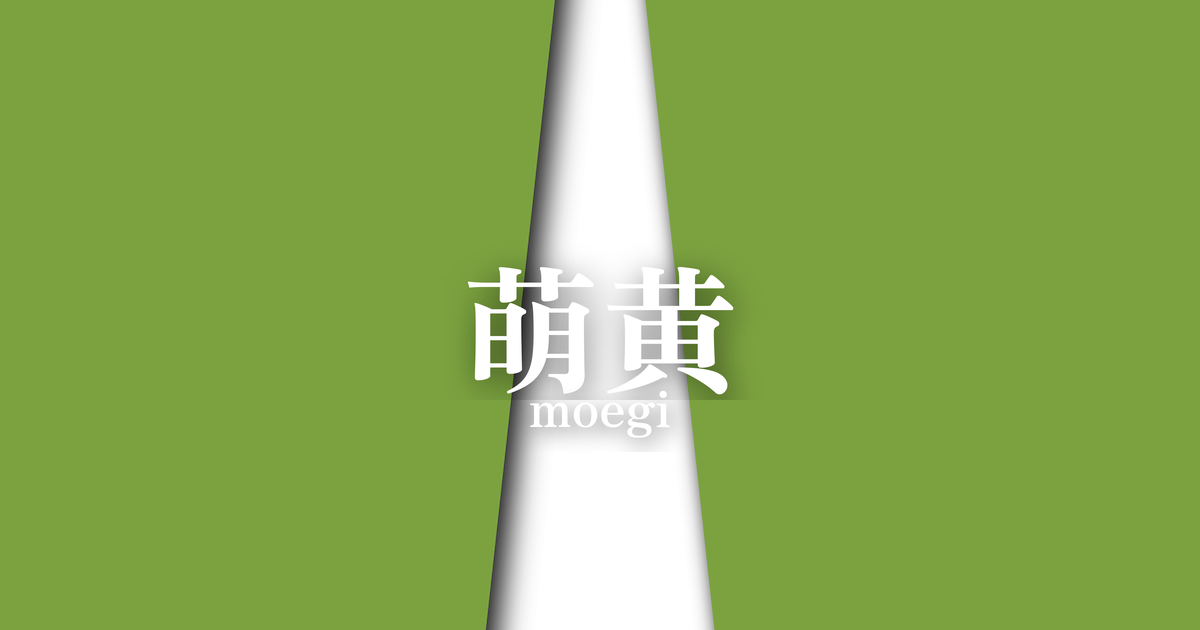
| Japanese color name | Light green |
|---|---|
| reading | moegi |
| season | Miscellaneous (year-round/celebratory) |
| Color of the table | Moegi (light green) |
| Back color | White (shiro) |
What is Moegi? Origin and etymology
"Moegi" is a color name derived from the appearance of plants sprouting in early spring. As its name suggests, it has long been cherished by the Japanese as a color symbolizing youthful vitality and hope for the future. In the context of layered kimono, "Moegi" is used with Moegi on the outside and white on the inside. This combination is said to skillfully express the fresh scenery of young grass sprouting from beneath the snow or new shoots illuminated by the spring sunlight.
While these "miscellaneous" colors can be worn in any season, they were particularly favored for celebratory occasions and the attire of young people.
The color "moegi" (light green) has existed since before the Heian period and was a symbol of youth and immaturity. For example, there are records indicating that it was designated as the color of the robes of low-ranking military officers. However, as a color combination for layered garments, it reflects the refined aesthetic sense of the Heian aristocracy, which incorporated the beauty of nature and the radiance of life into clothing, rather than its social significance. When combined with white, it further enhances the vibrancy of moegi and creates a clean and refreshing impression.
Historical background of Moegi
During the Heian period, the colors of clothing were an important element in aristocratic society, reflecting an individual's education and aesthetic sense. "Kasane no Irome" (layered color combinations) represented the pinnacle of this culture, with various color schemes devised according to the season and occasion. "Moegi" (light green) was frequently used in the attire of young men and women due to its vividness and youthful image. It is said to have been used for the noshi (court robe) of young lords who had just come of age, and for the uchiki (outer robes) of young ladies serving in the imperial court.
It was often worn at celebratory occasions and other festive events, and also had aspects of being an auspicious color.
From the Kamakura period onward, as the samurai class became dominant, preferences in clothing shifted towards simpler and more robust styles. However, "moegi" (a light greenish-brown) continued to be cherished as a color symbolizing youth and vitality. In particular, "moegi nioi odoshi" (a color of light green lacing) was seen as the color of the lacing on armor, a type of military equipment, and was used to represent the youthfulness and bravery of samurai. In this way, "moegi," along with its positive image, became deeply rooted in Japanese color culture across generations.
Related literature, waka poetry, and seasonal words
"Moegi" (light green) frequently appears in classical Heian period literature such as "The Tale of Genji" and "The Pillow Book." In the "Wakamurasaki" chapter of "The Tale of Genji," when Hikaru Genji first sees Murasaki no Ue, who is still a young girl, her attire is described as "a yellow undergarment and a light green outer robe," highlighting her youth and loveliness. Furthermore, the scent of "moegi" is also described as part of the attire of young Hikaru Genji himself, giving readers an impression of nobility and freshness.
"The scent of sprout green" refers to a color scheme that changes from a deep sprout green to a gradually lighter shade. This is an example of the sophisticated sense of color of the Heian aristocracy, who expressed beauty not only through the combination of single colors but also through the shades of color. In the world of waka poetry, "sprout green" is used as a seasonal word for spring, and was often used when composing poems about the joy of the arrival of spring, such as young grass peeking out from the melting snow or willow branches beginning to bud.
I went to Kasugano to pick young greens, but the grass peeking through the snow was already sprouting.
The season and scenery of light green
The layered color combination "Moegi" (light green) symbolizes the color of young grass that sprouts all at once with the arrival of spring. It vividly evokes the image of new shoots powerfully emerging from the melting snow after enduring the harsh winter, and the sight of young leaves shining in the soft sunlight of spring. This color is full of the breath of life and the energy of growth, giving the viewer a sense of freshness and hope.
This color was classified as "miscellaneous" and was permitted to be worn year-round, not limited to a specific season. However, due to its origin and the imagery associated with the color, it was considered most appropriate for spring attire. Furthermore, because it symbolizes youth and new beginnings, it is said to have been frequently worn at celebratory ceremonies such as coming-of-age ceremonies and weddings, as well as at festive banquets in the imperial court.
A proposed color scheme using light green.
Yamabuki (#F8B500)
The vibrant green of the light green and the bright yellow of the Japanese kerria are a color combination that evokes the flowers blooming profusely in the fields and mountains of spring. It gives a lively, cheerful, and gorgeous impression. It is said to have been one of the favored combinations in Heian period attire as well.
Plum blossom color (#F2A0A1)
By combining it with the color of plum blossoms that bloom in early spring, it can express the joy of the arrival of spring. The light green of the fresh green color complements the pink of the plum blossoms, creating a lovely and elegant impression. It is easy to incorporate into Japanese accessories and modern designs.
Lapis Lazuli (#1F4788)
The combination of vibrant light green and deep, clear lapis lazuli is close to complementary colors, enhancing each other's beauty. This combination adds a sense of calm and intelligence to a youthful impression, creating a sophisticated look even in contemporary designs.
Practical Scenes
In Heian period attire, layers of light green were used in the noshi (a type of everyday robe) worn by young nobles, and in the uchiki (a type of robe) that made up the karaginu-mo (a formal court attire) worn by ladies-in-waiting. Its fresh color is said to have symbolized the wearer's youth and high status. When combined with white, it created an impression of cleanliness and elegance, making it suitable for celebratory occasions.
In modern Japanese clothing, light green remains one of the most popular colors. It is used in furisode (long-sleeved kimono), houmongi (formal visiting kimono), and accessories such as obiage (sash ties) and obijime (sash cords), adding a youthful and vibrant touch to the outfit. It is especially often chosen for tea ceremonies and celebratory occasions during the spring season.
Beyond traditional Japanese clothing, light green is used in a variety of fields. In interior design, it can be used as an accent color for wallpaper and cushions, bringing a bright and natural atmosphere to a room. In web and graphic design, it is an effective color for expressing concepts such as freshness, eco-friendliness, and growth.