
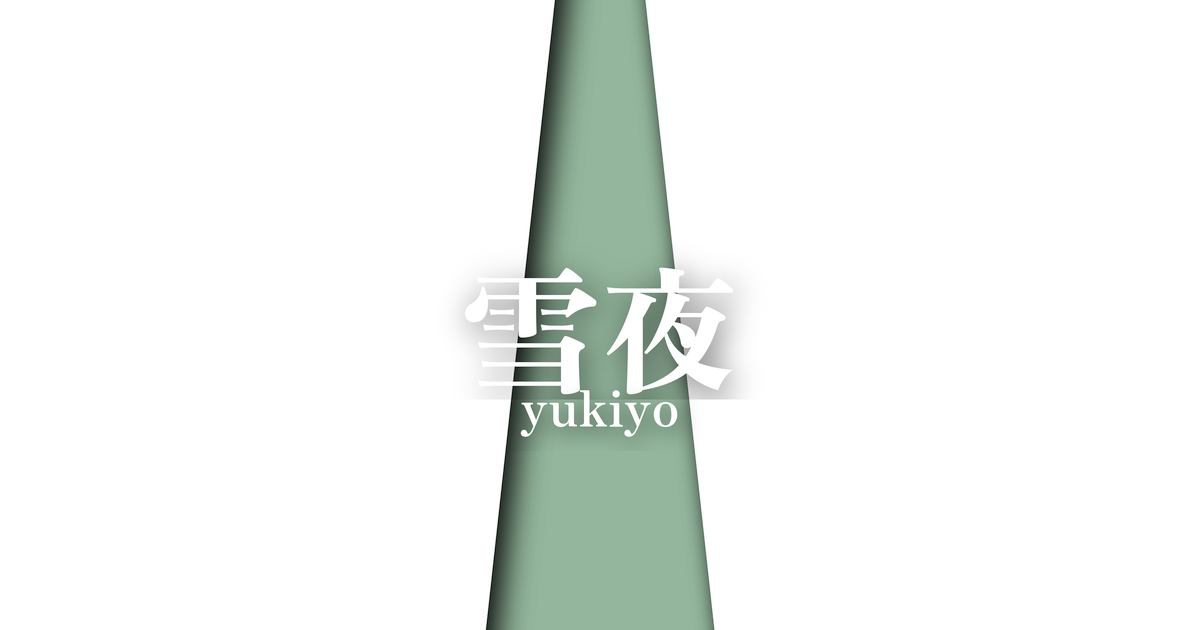
| Japanese color name | snowy night |
|---|---|
| reading | yukiyo |
| season | 冬 |
| Color of the table | White (shiro) |
| Back color | light blue (usuao) |
What is a "snowy night"? Origin and etymology
"Yukiyo" (snowy night) is a color combination that takes its name directly from the scenery of a winter night. The white on the outside represents the silently falling snow, while the light blue on the inside is said to represent the night sky that appears faintly bluish due to the light of the snow, or the color of the ice that freezes beneath the snow. It is one of the color combinations that originated from the refined aesthetic sense of the Heian period aristocracy, who keenly felt the beauty of the natural scenery and the changing seasons around them and reflected that beauty in the color schemes of their clothing.
Its poetic name itself evokes the clear, serene air of a winter night.
Historical background of a snowy night
During the Heian period, a culture of incorporating the beauty of nature in each season into clothing matured within aristocratic society. "Snowy Night" is thought to be one of the representative winter colors that emerged within this context. Rather than being used in official court ceremonies, it is presumed to have been favored for private occasions where individual aesthetic sensibilities and refinement could be displayed, such as snow-viewing parties and poetry gatherings.
While there are not many contemporary documents that describe specific examples of its wear, its name appears in later court etiquette books such as the "Masasuke Shōzoku Shō," indicating that it was passed down to later generations as a traditional color combination.
Related literature, waka poetry, and seasonal words
In Heian literature, snow frequently appears as an important motif. In the section "When the snow fell very heavily" in The Pillow Book, a keen aesthetic sense for snowscapes is depicted, conveying the aesthetic sensibilities of the aristocracy of that time. In The Tale of Genji, snow scenes are also used as an effective backdrop to symbolize the characters' feelings or to add atmosphere to the story.
While the color scheme "Snowy Night" itself is rarely described directly, this color combination is deeply connected to the quiet and beautiful scenes of snowy nights depicted in classical literature, and it expressed the refined sensibilities of the wearer.
At dawn, the white snow falls over the village of Yoshino, revealing the moon of the waning night.
Snowy Night Season and Scenery
"Snowy Night" is a color scheme that expresses the harsh yet beautiful nature of winter, and was mainly worn during the winter season, from around November to February according to the calendar. The white of the outer color symbolizes the purity of fresh snow, while the light blue of the inner color symbolizes the clear winter night sky and the faint light of snow. This color scheme not only represents the cold season, but also incorporates the clarity and dignified atmosphere of a winter night enveloped in silence into the attire.
Wearing it in conjunction with winter scenes such as snowy days or snow-viewing parties is said to add an extra layer of charm.
Color scheme proposal for a snowy night
Silver mouse (#AFB1B4)
The achromatic gray, which enhances the tranquil atmosphere of a snowy night, evokes images of a cloudy winter sky and rocky surfaces. It gives depth and calmness to the overall color scheme, and is a harmonious combination that was frequently used in Heian period attire.
Plum blossom color (#F2A0A1)
Adding warm colors, like the red plum blossoms blooming amidst the cold, snowy landscape, evokes a sense of life's breath amidst the harshness of winter. The single warm color stands out beautifully against the cool tones of white and light blue, creating a stunning contrast.
Dark blue (#001133)
The deep indigo, reminiscent of the profound darkness of night, highlights the brightness of the white and light blue of a snowy night. The clear contrast creates a more dramatic and sophisticated impression. This color scheme is also easy to apply to modern designs.
Practical Scenes
In Heian period attire, the "snowy night" color scheme was primarily used in the layering of the uchiki (a type of kimono worn by women). It was likely favored for elegant occasions, especially during the winter season, such as snow-viewing parties and moon-viewing gatherings. In modern Japanese clothing, incorporating this color scheme into winter visiting kimonos, casual kimonos, or accessories like obiage (sash ties) and obijime (sash cords) can create a refined and seasonally appropriate look.
Furthermore, it is also used in the fields of interior design and web design as a color scheme to express a quiet and calm winter image.