
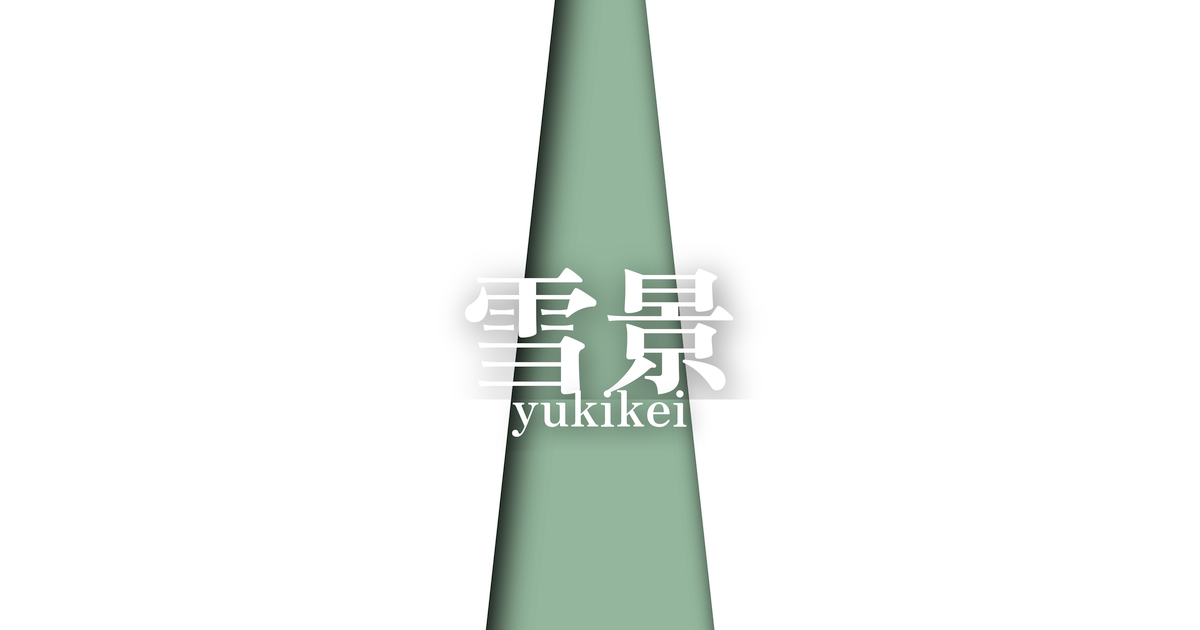
| Japanese color name | snow scene |
|---|---|
| reading | yukikei |
| season | 冬 |
| Color of the table | White (shiro) |
| Back color | light blue (usuao) |
What is a snowscape? Origin and etymology
"Yukikei" (Snowscape) is a color combination that, as its name suggests, represents a winter snowscape. The white on the outside represents freshly fallen snow, while the light blue on the inside is said to symbolize the frozen surface of water beneath the snow or the color of the winter sky visible through the gaps in the snow clouds. This color scheme skillfully expresses the faint presence of life and the crisp air that can be felt in a silent, silvery world.
This color scheme strongly reflects the refined aesthetic sense of the Heian aristocracy, who incorporated natural scenery into the colors of their clothing and enjoyed the changing seasons.
Historical background of snowscapes
During the Heian period, expressing a sense of the seasons through the colors of clothing was considered an important aspect of refinement in aristocratic society. "Kasane no Irome" (layered color combinations) were the epitome of this aesthetic sensibility, serving as a means of demonstrating the wearer's sensibilities in both public and private settings. Winter color combinations, such as "Yukikei" (snowscape), are thought to have been worn particularly from the end of the year, when preparations for the New Year began, until the snow melted.
It is said that in the layered uchiki (outer robes) worn by women in the imperial court, this color scheme elegantly evoked winter scenes and served to announce the arrival of the season to those who saw it.
Related literature, waka poetry, and seasonal words
The color scheme of "snowy landscapes" resonates deeply with the winter scenes depicted in Heian literature. As Sei Shōnagon praised in "The Pillow Book," saying, "In winter, the early morning is the best. The sight of falling snow is beyond description," the crisp beauty of a snowy morning was something special to the aristocracy of the time. Furthermore, in narrative literature such as "The Tale of Genji," snowy landscapes are used as an important device to symbolically depict the feelings of the characters and the atmosphere of the scene.
In Japanese poetry, "snow" is a representative seasonal word for winter, and this color also represents the refined playfulness of the Heian aristocracy, imbuing it with a literary sensibility.
At dawn, the white snow falls over the village of Yoshino, revealing the moon of the waning night.
Snowy season and scenery
"Snowscape" is a color scheme worn during the winter season, especially from late November to around February when it snows. The combination of the "white" of a vast snowfield and the "pale blue" reminiscent of a quietly flowing river, a frozen lake, or a clear winter sky expresses the solemnity and pure beauty of winter nature. Wearing this color scheme was not merely about matching the season, but an expression of a sophisticated aesthetic sense, embodying the stillness and crisp atmosphere of a snowscape.
It is said to have been favored for use in winter ceremonies at the imperial court and at snow-viewing parties.
Color scheme proposals for snowscapes
Silver mouse (#AFAFAF)
A color scheme that further enhances the serene atmosphere of a snowy landscape. The combination of cool colors such as white and light blue, along with the addition of achromatic silver-gray, allows for a more refined expression of the monochrome world of winter. In contemporary design, it gives a minimalist and calm impression.
Plum blossom color (#F2A0A1)
The addition of the warm, soft red of plum blossoms to the cool color scheme of a snowy landscape creates a visual contrast, adding vibrancy and vitality. It evokes the first signs of spring amidst the harsh winter, and was also used in Heian period costumes to express the changing seasons.
Tokiwa color (#007B43)
The combination of the white of the snow, the pale blue of the sky, and the deep green of the evergreens creates a scene that can be considered a quintessential Japanese winter landscape. The contrast of colors is striking, giving a powerful yet elegant impression. It is suitable for use as an accent color in kimono sashes, accessories, and interior design.
Practical Scenes
The "snowscape" color scheme can be used in a variety of situations even today. In traditional Japanese clothing, incorporating it into visiting kimonos, casual kimonos, and accessories such as obiage and obijime worn during the winter season creates a stylish and seasonally appropriate look. In particular, the combination of a white kimono with a light blue obi can be seen as a modern interpretation of the aesthetics of this color scheme.
In interior design, adding light blue cushions or curtains as accents to a white-based space can create a quiet and calming Scandinavian atmosphere or a minimalist Japanese modern space. In website and graphic design, this clean color scheme is effective for branding products and services that require a sense of luxury and cleanliness.