
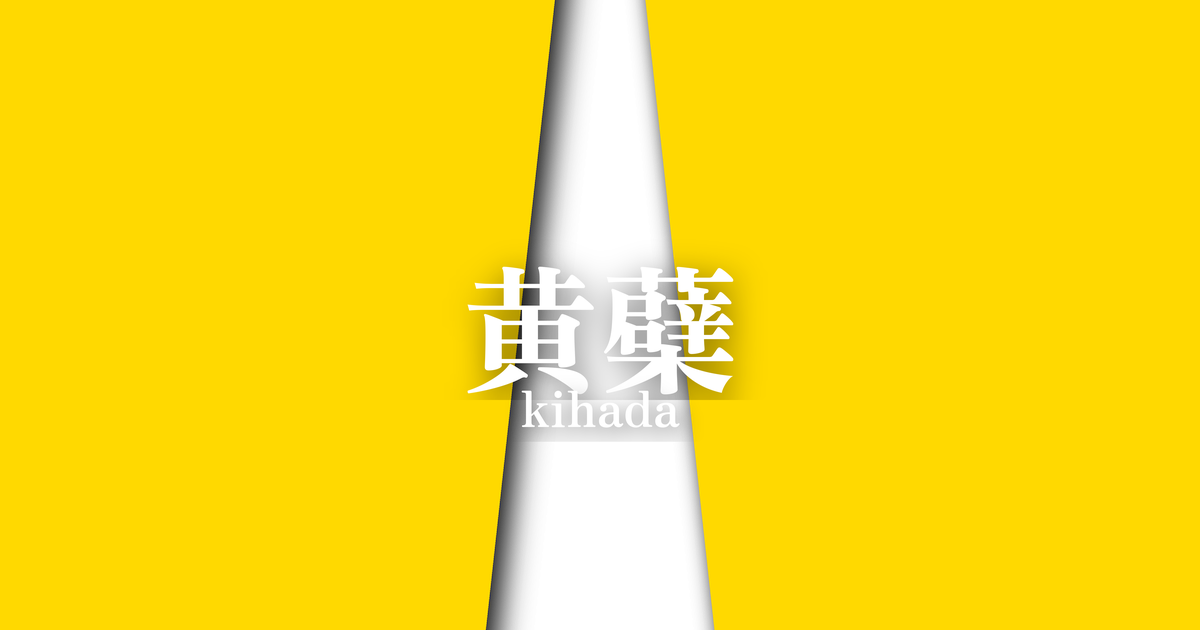
| Japanese color name | Yellow locust |
|---|---|
| reading | kihada |
| season | Miscellaneous (year-round/celebratory) |
| Color of the table | Yellow (ki) |
| Back color | White (shiro) |
- What is *Huanghuang*? Origin and etymology
- Historical background of the yellow sappan
- Related literature, waka poetry, and seasonal words
- The season and scenery of yellow sedge.
- Yellow smear color scheme proposal
- Practical Scenes
- FAQ
- Color combinations for the same season (miscellaneous (year-round/celebratory))
What is *Huanghuang*? Origin and etymology
The name "Kiha" originates from the dye extracted from the bark of the Phellodendron amurense (Kihada), a deciduous tree belonging to the citrus family. The inner bark of this tree is a vibrant yellow and has been used as a dye and in traditional Chinese medicine since ancient times. As a color combination for layered garments, "Kiha" expresses the bright and powerful yellow of this plant. By using this color on the outside and combining it with pure white on the inside, it gives an impression of elegance and sophistication. It is said to have been often used on special occasions such as celebrations.
Historical background of the yellow sappan
During the Heian period, the color of clothing was an important indicator of the wearer's social status and education. The dye used for "Kihada" (yellow sapwood), along with other yellow dyes such as gardenia and kariyasu (a type of jasmine), was considered a noble color. In particular, it is said to have been a color second only to "Kōrozen" (yellowish-brown dye) worn by the emperor, and was reserved for members of the imperial family and high-ranking nobles. Therefore, records show that clothing of this color was worn at auspicious occasions such as court ceremonies and banquets.
Related literature, waka poetry, and seasonal words
The color "Kiha" (黄阗) is frequently mentioned in classical literature due to its vividness. In works such as "The Tale of Genji" and "The Pillow Book," it is described as the color of the characters' clothing, playing a role in conveying the character's status and the atmosphere of the scene. For example, in scenes of splendid banquets, a young nobleman is sometimes depicted wearing a Kiha-colored court robe. Furthermore, the name of the color has also been used as a theme in waka poetry, and it has been cherished as a color that symbolizes the beauty of nature and vitality.
The season and scenery of yellow sedge.
"Kiha" is a "zatsu" (miscellaneous) layered color combination that is not limited to a specific season and can be worn year-round. In particular, its bright and vivid yellow color symbolizes vitality and prosperity, and was considered a suitable color for celebratory occasions. It was often used in auspicious ceremonies marking milestones in life, such as coming-of-age ceremonies, weddings, and New Year's celebrations. In terms of natural imagery, it is reminiscent of the yellow rose that blooms in spring or the ginkgo leaves that change color in autumn, but it was valued as a color with a universal beauty that transcends seasons.
Yellow smear color scheme proposal
Dark purple (#493759)
The bright yellow of the yellow sappanwood and the deep purple, considered a noble color, are almost complementary colors, enhancing each other's beauty. This dignified color scheme, also seen in the attire of Heian-period aristocrats, gives a powerful and magnificent impression. It is also effective in creating a sense of luxury in modern designs.
Light green (#A4D146)
Combining it with a fresh, vibrant green reminiscent of new leaves creates a color scheme that evokes the youthful vitality of spring. The brightness of the yellow sappan harmonizes with the fresh impression of the green, creating a bright and hopeful atmosphere. It is suitable for Japanese clothing accessories and interior decoration.
Suou (#9E3D3F)
The deep, subdued red of the sappanwood complements the vibrancy of the yellow sappanwood, giving the overall design a sense of gravitas and elegance. Combining these two colors, often used at celebratory occasions, creates an even more formal and festive atmosphere.
Practical Scenes
In Heian period attire, this color was primarily used in men's court robes (naoshi and kariginu) and women's uchiki (uchiki). It was particularly favored by high-ranking nobles as a color worn during celebratory occasions. In modern times, it is incorporated into the color schemes of kimonos and obi sashes, creating a vibrant and festive atmosphere suitable for celebrations. Furthermore, its clear color scheme can be applied to interior design, bringing brightness and elegance to a space as an accent color.
In web design, using this technique on banners and buttons you want to attract attention can enhance visibility and create a positive impression.