
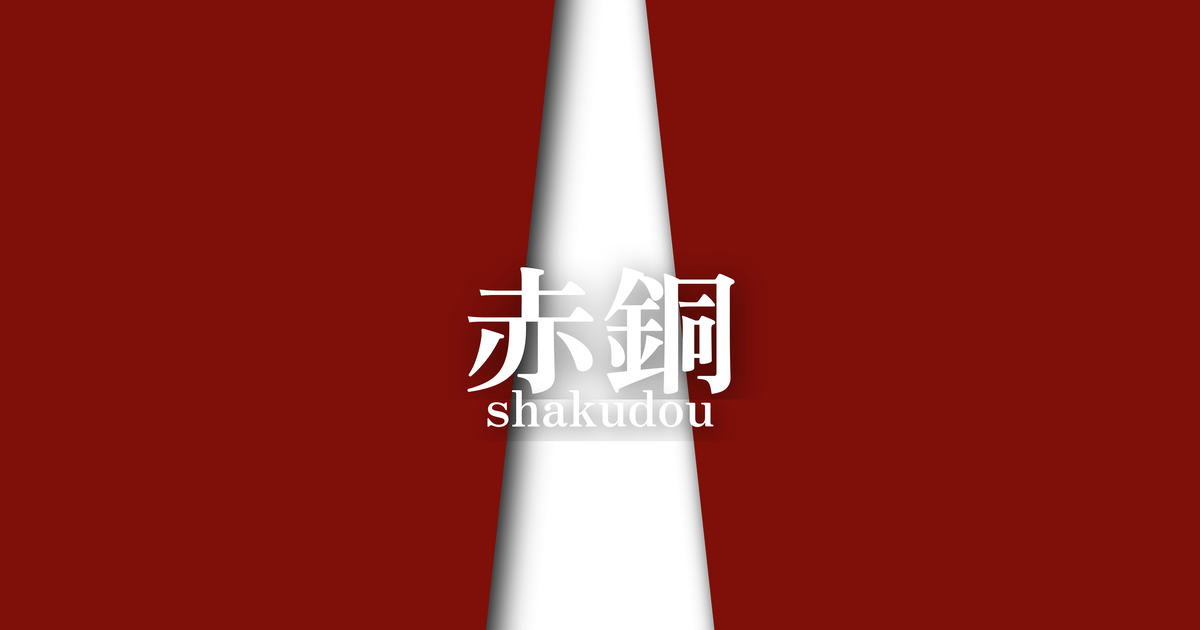
| Japanese color name | Red copper |
|---|---|
| reading | shakudou |
| season | Miscellaneous (year-round/celebratory) |
| Color of the table | reddish-bronze color (shakudouiro) |
| Back color | White (shiro) |
What is red copper? Origin and etymology
Shakudō is the name of an alloy made by adding a few percent of gold to copper. This alloy, when subjected to a special treatment called "boiling finish," emits a beautiful blackish-purple luster reminiscent of a raven's wet feathers, and has been used since ancient times for sword fittings such as sword guards (tsuba) and small knives (kozuka), as well as for high-quality crafts.
The "shakudo" color combination, used in traditional Japanese kimono layering, features the unique deep reddish-blackish-brown of this alloy as the "front" color, while the "back" color is contrasted with pure white. This color scheme combines the weight and elegance of the metal with the sacredness of white, creating a dignified and solemn atmosphere.
Historical background of copper
The color combinations of layered garments represent the culmination of the refined aesthetics of color in the aristocratic society of the Heian period. Expressing the changing seasons and natural scenery through the color schemes of clothing was an important way to demonstrate the wearer's education and depth of sensibility.
"Shakudo" is classified as a "miscellaneous" color, meaning it is not associated with any particular season. This is because its origin is an alloy, an artificial material rather than a natural phenomenon, and it is thought to have been worn regardless of the season, mainly at celebratory ceremonies and formal public occasions.
Due to its rich color and its connection to military equipment, it has been suggested that this color may have been used in men's attire, particularly in the formal court attire worn by military officers. It is presumed that this color played a role in ceremonial occasions as a symbol of strength and dignity.
Related literature, waka poetry, and seasonal words
It is difficult to find direct descriptions of the color combination "shakudo" in Heian period literary works such as "The Tale of Genji" and "The Pillow Book." These stories tend to focus on vibrant colors derived from seasonal flowers such as cherry blossoms, red plum blossoms, yellow roses, and pinks.
However, in the court ceremonies and official scenes that form the backdrop of the story, the characters must have worn formal attire. While literary works depict the colors that color individual emotions and love stories, colors like "red copper" likely supported the worldview as official colors that indicated social status and dignity.
The season and scenery of copper
"Akado" (red copper) is not a color that expresses a specific season, so it is worn year-round. Unlike many other colors that reflect the colors of nature, such as the fresh green of spring or the autumn leaves, its value lies in its universal elegance and sophistication.
This color scheme is most appropriate for formal celebratory occasions such as coming-of-age ceremonies, conferment of rank, and celebratory banquets. It reflects a similar sensibility to the coordination of formal wear and celebratory occasions in modern kimono, and was highly valued as a color combination that simultaneously expresses solemnity and purity.
Copper color scheme proposal
Kutsuha color (#915E33)
The deep red of the copper and the yellowish-brown of the withered leaves harmonize to create a dignified and calm impression. This color scheme is also seen in the attire of military officers of the same period and is suitable for formal autumn occasions and elegant designs.
Light green (#A9D159)
The combination of a deep, rich reddish-brown color and a vibrant, fresh green adds a touch of youthfulness to the powerful design. It evokes the attire of young warriors from the Heian period, creating an eye-catching contrast even in a modern design.
Indigo (#274A78)
The warm copper tones and cool indigo blue complement each other, creating an intelligent and sophisticated impression. This color scheme is also seen in armor and crafts, and is effective in situations where you want to convey trustworthiness and stability.
Practical Scenes
In Heian period attire, it is believed that this garment was primarily used by men, especially military officers, in their sokutai and hitatare, to convey dignity and formality. As formal attire for celebratory occasions, it played a role in symbolizing the wearer's status.
In modern Japanese clothing, reddish-brown is often incorporated into accessories such as obi sashes, haori jackets, and obi ties. It is particularly favored in men's kimonos and hakama trousers as a color that conveys calmness and dignity. Pairing a white kimono with a reddish-brown obi sash allows for a modern interpretation of the aesthetics of layered color combinations.
In the fields of interior design and web design, using copper as an accent color brings a sense of depth and luxury to a space. When copper is incorporated into designs based on white, beige, or wood tones, it can effectively create a sophisticated, modern Japanese atmosphere.