
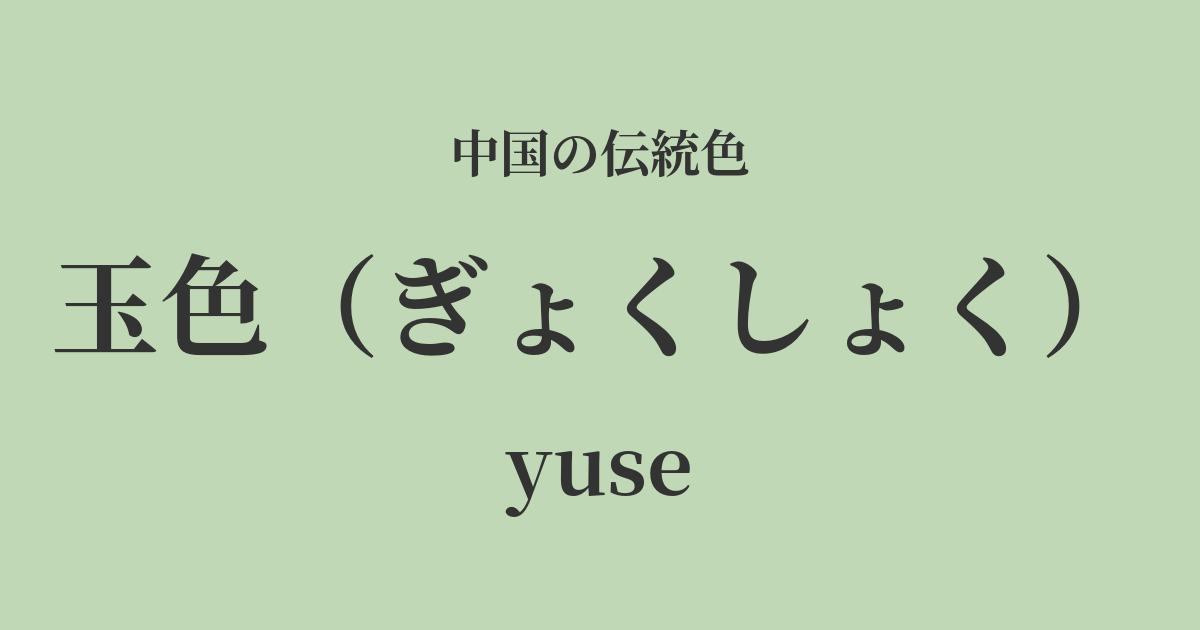
| Color name | jade color |
|---|---|
| reading | Gyokushoku |
| pinyin | yuse |
| HEX | #C0D8B6 |
| RGB | 192, 216, 182 |
What is "Tamairo"? Origin and etymology
Gyokushoku, as the name suggests, is a color name that refers to the pale, gentle greenish-white color of "jade," a gemstone that has long been considered the most precious treasure in Chinese culture.
The term "jade" here primarily refers to nephrite, and the ideal was a type with a moist luster and warm color, especially like the highest quality "yōshihakugyoku" (yōshihakugyoku). The color of jade is not merely the color of a beautiful stone, but a profound color that also embodies the five virtues of a virtuous person—benevolence, righteousness, wisdom, courage, and purity—as well as spiritual values such as purity and permanence, which jade symbolizes.
Historical background of the color jade
The history of jade in China is very old, dating back to the Neolithic period. Initially, it was used as a tool for rituals and as an ornament, and was believed to possess special powers due to its hardness and beauty.
During the Zhou dynasty, jade began to take on a strong moral significance. In his "Book of Rites," Confucius likened jade to the virtue of a gentleman, elevating its value from a mere material possession to something spiritual. This idea had a profound influence on later generations, and emperors, nobles, and literati of successive dynasties all cherished jade.
In particular, the Qianlong Emperor of the Qing Dynasty was known as an avid collector of jade, and many of the highest quality jade artifacts were gathered in the imperial court. Throughout this long history, the color of jade has become deeply rooted in Chinese culture as a symbol of authority, dignity, and ideal character.
Jade in Chinese Art and Crafts
The color of jade had a profound influence on Chinese art and crafts. The most representative example is celadon porcelain. In particular, celadon from the Ru ware and official kilns fired during the Song dynasty is described as resembling the color of the sky after a rain shower, and also as the ideal color of jade. Potters attempted to recreate the moist texture and deep hue of jade using clay and glaze. This exquisite blue-green color became a model for later ceramics, considered the "pinnacle of color."
In clothing culture, jade was used to express refined and understated beauty. Hanfu (traditional Chinese clothing) in jade silk fabrics was said to subtly demonstrate the wearer's intelligence and dignity, and was favored by literati and aristocrats who preferred sophisticated, non-extravagant attire.
Gennen Junzi, Wen Qi Ruyu.
Color scheme preview
This is to check the readability of the text when this color is used as the background.
Color scheme proposals for jade
Moon White (#E6E6E6)
The quiet gleam of the jade and the pale white, reminiscent of moonlight, resonate with each other, creating a very pure and refined impression. It is a classic and beautiful color scheme that evokes tranquility and elegance.
Pilestone (#995A34)
The combination with reddish-brown ochre, reminiscent of the earth, evokes a sense of harmony in nature. The earthy color scheme will bring peace and stability to the mind.
Coral beads (#F2A0A1)
By adding a gentle, coral-like red to a pale jade color, it creates an elegant look with warmth and a subtle touch of glamour. It's perfect for creating a graceful and feminine atmosphere.
Practical Scenes
In interior design, the color jade brings a sense of calm and tranquility to a space. Incorporating it into wallpaper or fabrics in living rooms and bedrooms enhances relaxation and creates a comfortable atmosphere. It also pairs exceptionally well with natural materials such as light-colored wood and bamboo, creating a sophisticated space regardless of whether it's Japanese or Western style.
In fashion, jade green is a color that symbolizes intelligence and elegance. When incorporated into silk or linen blouses and dresses, it creates a subtle and refined impression while making the skin look beautiful. In particular, in traditional Japanese clothing, incorporating jade green into obi sashes and accessories adds a refined and elegant touch to the entire outfit.
In web and graphic design, using it as a background color is easy on the eyes and enhances content readability. It is suitable for websites of brands that want to convey trustworthiness, tradition, and harmony with nature.