
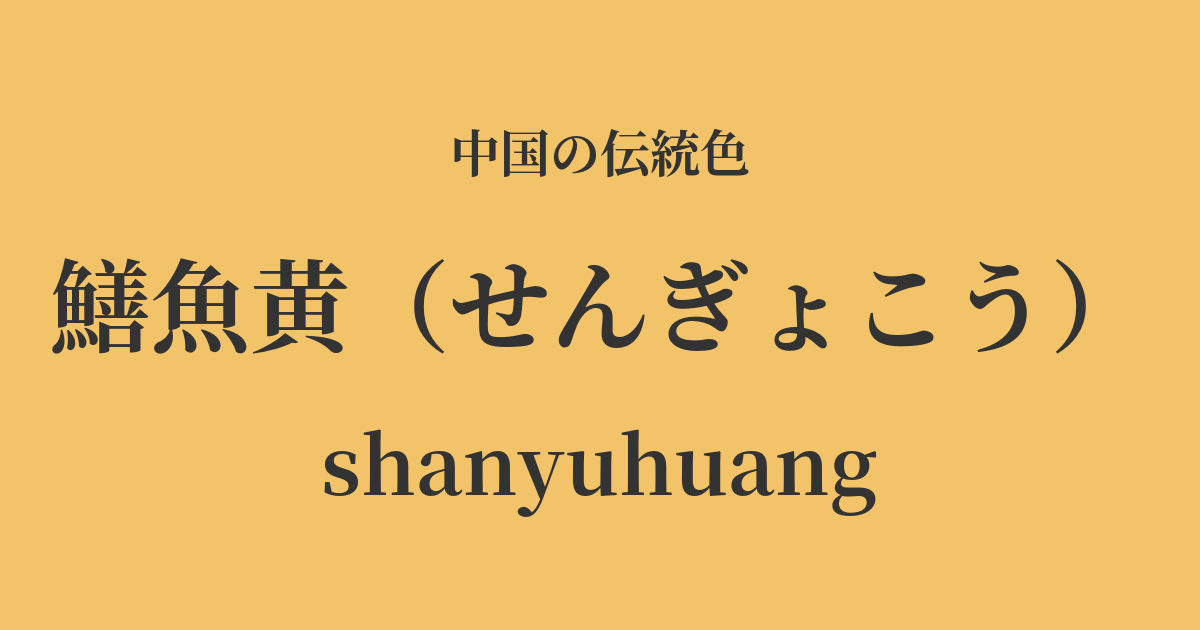
| Color name | Salmon fish yellow |
|---|---|
| reading | Sengyoko |
| pinyin | shanyuhuang |
| HEX | #F2C368 |
| RGB | 242, 195, 104 |
What is "鳝鱼黄"? Origin and etymology
Sengyokou, as the name suggests, is a color derived from "sengyokou," which means rice paddy eel. Specifically, it refers to the slightly muted, warm yellow color of the rice paddy eel's belly.
This color, named after a delicate sensibility that captures the hues of living things in nature, is not simply yellow, but also evokes the feeling of the earth, such as soil and mud. It is characterized by a deep hue that is calm yet somehow imbued with the warmth of life.
Historical background of Eel Yellow
The history of eel yellow glaze is particularly deeply intertwined with the history of Chinese ceramics. This color was most notable in the "eel yellow glaze" porcelain produced from the Ming to the Qing dynasties.
The Qing Dynasty, spanning the reigns of Kangxi, Yongzheng, and Qianlong, saw the pinnacle of pottery technology, resulting in the creation of a wide variety of glazes. Eel yellow glaze is one such example. By using iron as a coloring agent and firing at high temperatures, irregular blue and black spots appear on a yellow or brown background. It is said to have been named this because the pattern resembles the skin of a rice eel.
These porcelain pieces, with their unique and simple beauty, were highly valued at court and also appreciated among literati. They were cherished not only as mere objects but also as works of art to adorn studies.
Eel yellow in Chinese art and crafts
The beauty of the Eel Yellow glaze is best embodied in the ceramics of the Ming and Qing dynasties. This glaze was applied to a variety of vessels, including vases, water pitchers, bowls, and brush washers. The unique patterns created by the "kiln transformation" process, where no two pieces have the same design, can be described as works of art that combine the randomness of nature with the skill of the craftsman.
The colors are not ostentatious, but possess a quiet and serene elegance. They harmonize well with spaces adorned with arts that value spirituality, such as ink paintings and calligraphy, and play a role in tightening the overall atmosphere.
In the realm of fashion culture, this more subdued yellow, distinct from the vibrant "bright yellow" used by emperors, may have been used for the more understated attire of intellectuals and high-ranking officials. This earthy color was more suited to expressing inner richness and dignity than to ostentation.
Tsuba fish yellow, snakeskin green, longquan blue, crab shell blue, kiln change skill different
Color scheme preview
This is to check the readability of the text when this color is used as the background.
Yellow color scheme proposal
赭石 (#993425)
This combination of earth tones, derived from soil and minerals, creates a sense of calm and sophistication, making it a suitable color scheme for creating quiet and intellectual spaces such as a study or tea room.
Matsuka Midori (#BCEE68)
The warmth of the eel yellow is combined with the youthful, pine-bud-like pine green, creating a vibrant and natural impression. It brings a bright yet gentle atmosphere to interiors and fashion.
Tsukihaku (#EAF4FC)
The pure, moon-white color, reminiscent of moonlight, enhances the warmth and subtlety of the eel yellow. While combining traditional colors, this elegant color scheme gives a modern and sophisticated impression.
Practical Scenes
In interior design, eel yellow brings warmth and tranquility to a space. Even when used over large areas such as wallpaper, curtains, or sofa upholstery, it creates a comfortable atmosphere without feeling overwhelming. It pairs particularly well with wooden furniture, Japanese aesthetics, and Asian modern interiors.
In fashion, yellow is a sophisticated color that isn't too flashy, making it easy to incorporate into outfits regardless of age. Especially in autumn, using this color in trench coats, knitwear, or accessories like scarves creates an intelligent and refined look.
In web design and graphic design, using it as a background or accent color can give the entire site a sense of reliability, warmth, and historical depth. It is suitable for themes related to traditional crafts, food, and lifestyle.