
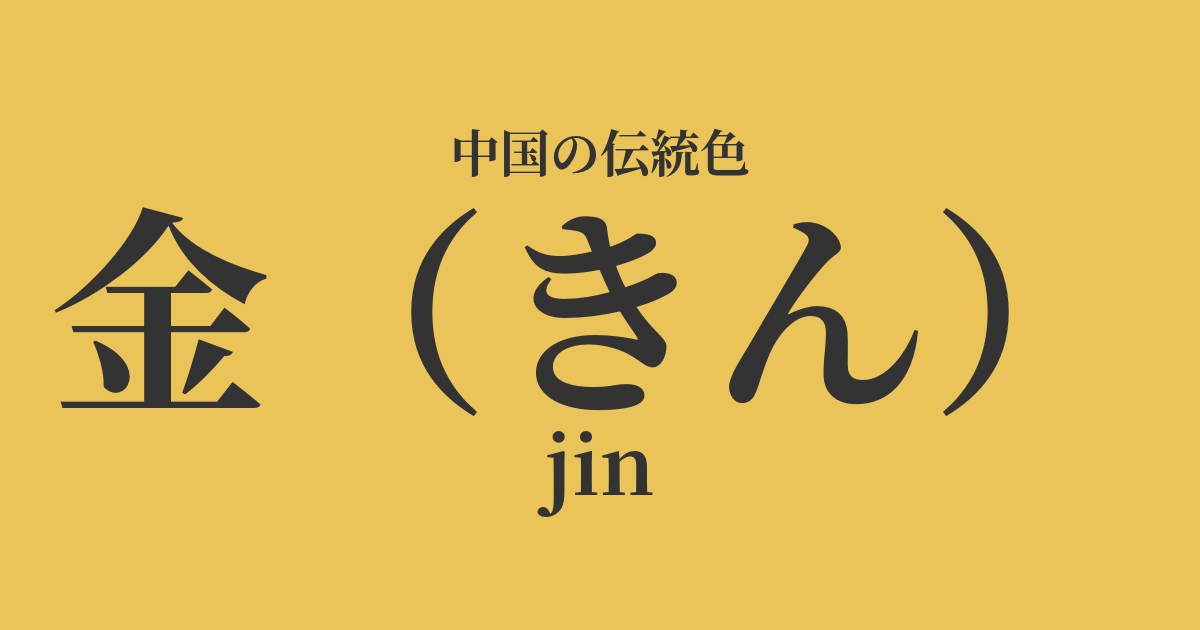
| Color name | 金 |
|---|---|
| reading | gold |
| pinyin | jin |
| HEX | #EAC459 |
| RGB | 234, 196, 89 |
What is gold? Origin and etymology
"Gold" is a color derived from the precious metal "gold," as its name suggests. Due to its brilliance and rarity, it has long been considered a symbol of wealth, power, and permanence.
In the Five Elements philosophy, "metal" is the element that governs the west and autumn, and is originally associated with the color white. However, the color "gold" as a color name refers to the lustrous yellow of metal itself, and because it evokes the brilliance of the sun and fertile rice stalks, it was also revered as an auspicious color.
The historical background of gold
Qin Shi Huang revered the color black, which is associated with the virtue of water, but from the subsequent Han dynasty onward, and especially during the Tang dynasty, gold established itself as the color of the imperial family. The dragon robe worn by the emperor often featured yellowish hues, but embroidery with gold thread further accentuated the emperor's authority.
During the Song Dynasty, gold spread to the aristocracy and wealthy merchant classes, and was widely used in luxurious ornaments and furnishings. In the Ming and Qing dynasties, gold became an important color symbolizing the emperor's authority in architecture, such as when yellow glazed tiles, the emperor's color, were used on the roof of the Forbidden City. Gold leaf and gold paint were used lavishly in the decoration of Buddhist statues, scriptures, and buildings, creating an atmosphere of grandeur and sanctity.
Gold in Chinese Art and Crafts
In Chinese art, gold holds a special significance. In Buddhist art, the technique of applying gold leaf to Buddha and Bodhisattva statues expresses a divine radiance. In the field of ceramics, the technique of "gold decoration," where patterns are painted with gold on top of the glaze, developed, resulting in the creation of numerous magnificent works.
In terms of clothing culture, the garments of emperors and royalty were adorned with luxurious embroidery using gold thread. In particular, "Unkin," a silk fabric woven with auspicious motifs such as dragons and phoenixes in gold thread, is considered the pinnacle of this art. These garments served to visually demonstrate the wearer's status and authority.
1000 gold barrels of refined sake, 1000 bottles of pure sake, and 1000 bottles of pure sake.
Color scheme preview
This is to check the readability of the text when this color is used as the background.
Gold color scheme proposal
Vermilion (#D9341D)
This is one of the most auspicious color combinations in China, symbolizing wealth and joy. It creates a festive atmosphere and gives a powerful and vibrant impression.
Navy blue (#19254B)
The deep navy blue accentuates the golden shimmer, creating a dignified and serene impression. It evokes a quiet and majestic atmosphere, like the moon shining in the night sky.
Ivory white (#F2E6CE)
When combined with the soft, warm white of ivory, the brilliance of gold harmonizes elegantly. It expresses a graceful, refined, and understated sense of luxury.
Practical Scenes
In interior design, using it as an accent color brings luxury and warmth to a space. Simply incorporating it into small items like lighting fixtures, picture frames, and cushions can create a sophisticated atmosphere. It pairs particularly well with dark brown wood and black furniture.
In fashion, incorporating gold into dresses, accessories, bags, and other small items instantly creates a glamorous and special look. It's perfect for celebrations and parties. Pairing it with basic colors like black, navy, and white creates a refined and elegant style.
In web design and graphics, it's effective as an accent for brand websites that want to convey a sense of luxury and trustworthiness. Using it in buttons, headings, and icons can attract the user's attention and create a sense of exclusivity. However, overuse can make it look too flashy, so the key is to use it sparingly while considering the overall balance.