
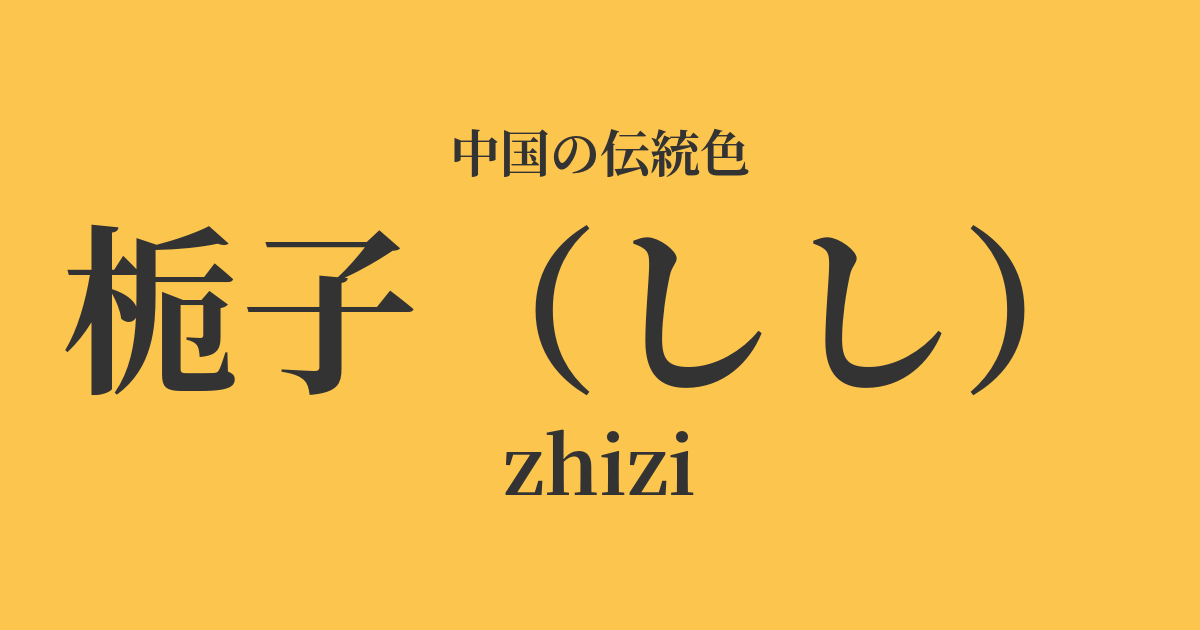
| Color name | Horiko |
|---|---|
| reading | Shishi |
| pinyin | zhizi |
| HEX | #FBC54E |
| RGB | 251, 197, 78 |
What is a 栀子? Origin and etymology
"Shishi," as its name suggests, is a bright, vivid yellow color obtained from the fruit of the gardenia plant, a member of the Rubiaceae family. The pigment, extracted by drying and boiling the ripe fruit, has long been a familiar yellow dye that has enriched people's lives.
This color is characterized by its warm, vibrant hue, reminiscent of sunlight and abundant harvests. In times before chemical dyes existed, it was a precious color obtained from nature, used not only for clothing but also for coloring food and in traditional Chinese medicine, and was deeply rooted in the culture.
The historical background of Kanako
The history of dyeing with gardenia is very old, dating back to the Han Dynasty. Among the silk fabrics unearthed from the Mawangdui Han tombs in Changsha, some were dyed with gardenia, suggesting that it was a major dye for over 2,000 years.
During the Sui and Tang dynasties, yellow came to be regarded as a noble color symbolizing the emperor. The "Ochre-yellow robe" worn by the emperor was a special color created through a complex process of dyeing the cloth with safflower as an underdye and then applying safflower as a topcoat. On the other hand, pure yellow dyed with safflower alone was widely used for the robes of monks (kesa) and the clothing of ordinary people, and was popular across various social strata.
The stag beetle in Chinese art and crafts
In clothing culture, the color *Yuzuri* was particularly favored for women's attire. When dyed on silk, *Yuzuri*, combined with its luster, was exceptionally beautiful, adding a vibrant touch to the skirts and robes of Hanfu clothing. Its bright hue symbolized youthfulness and vitality, surely delighting the hearts of those who saw it.
Furthermore, the vibrant yellow seen in the glazes of Tang sancai pottery is reminiscent of the color of the kanji pigment. Although not a direct dye, it can be seen that the aesthetic sense of yellow held by people of that era was reflected in the world of ceramics. In the world of painting, the pigment of the kanji pigment was sometimes used as a natural pigment, and its gentle hue was utilized when depicting the clothing of figures and flowers in art such as gongbi painting.
Inshiniro is useful, Yodoki Sowa.
Color scheme preview
This is to check the readability of the text when this color is used as the background.
Yanagi's color scheme proposal
Tensei (#4D80AB)
The vibrant Tousuki color is complemented by the calming sky blue, creating a natural and stable color scheme reminiscent of the sky and earth. It gives an intelligent and sophisticated impression, adding elegance to a peaceful atmosphere.
Matsuka Midori (#BCEE68)
When combined with youthful pine and flower green, it creates a vibrant color scheme reminiscent of the arrival of spring and budding, giving a fresh and approachable impression that is bright, hopeful, and inviting.
Beni Kaido (#F2A0A1)
Adding vibrant crabapple red enhances the warmth of the kanoko color, creating a festive and joyful impression. It evokes a feminine and elegant atmosphere, brightening the hearts of those who see it.
Practical Scenes
Incorporating the color "Yoko" into your fashion will instantly brighten your face and give you a cheerful and positive impression. It's lovely to use it as a main color in items like dresses and blouses, as well as as an accent color in accessories like scarves and bags. It also pairs exceptionally well with natural materials such as cotton and linen, creating a natural and sophisticated look.
In interior design, using this color in cushion covers or curtains brings a warm and cozy atmosphere to the entire room. Combining it with white, beige, or wood-grain furniture creates a bright and open Scandinavian-style space. Using this color for just one wall as an accent wall is also a good way to add depth and individuality to a space.
In web design, it is suitable as the main or accent color for sites that want to convey friendliness and fun. It is especially compatible with content related to food, childcare, and lifestyle, conveying a sense of security and positive feelings to users.