
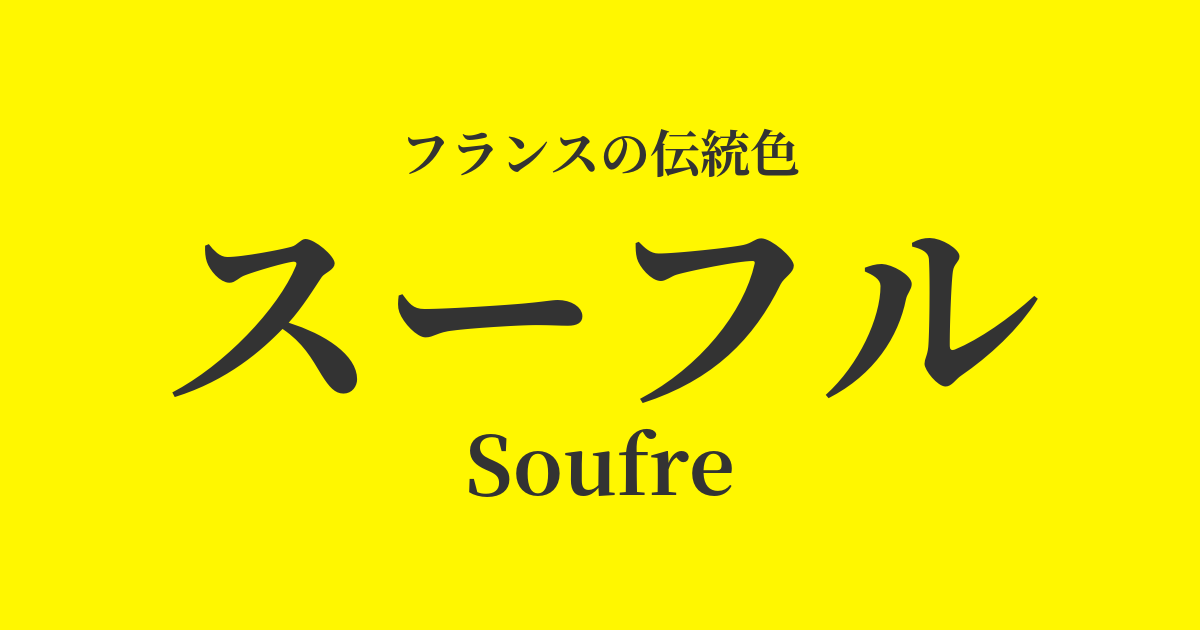
| French | Soufre |
|---|---|
| Katakana | Souffle |
| HEX | #FFF700 |
| RGB | 255, 247, 0 |
What is a soufflé? Origin and etymology
Soufre is a French word meaning "sulfur." As the name suggests, this color comes from the bright, slightly greenish-yellow color of sulfur crystals.
Sulfur, a mineral known since ancient times, was believed to possess mystical powers due to its flammability. In particular, in medieval European alchemy, sulfur was considered a "burning stone" and, along with mercury, one of the two fundamental principles that constitute all things, and was an important substance symbolizing the active masculine principle and the sun. This background gives the color soufre a mystical and intellectual depth that goes beyond being merely a color name.
Historical background of Soufre
The vibrant yellow of soufre has historically held ambiguous meanings. In medieval Europe, sulfur was sometimes associated with hell and demons, and its color was sometimes treated as a symbol of betrayal and heresy. On the other hand, its brilliant brightness was also used to represent sacred light in the decoration of manuscripts and other objects.
From the 18th century onward, with the advancement of science and the development of new chemical pigments, the expressive power of yellow improved dramatically. The emergence of cadmium yellow, made from sulfur compounds, brought artists unprecedented stability and vibrancy in yellow.
French Impressionist painters, in particular, actively used these new pigments to depict outdoor light. Bright yellow, as exemplified by soufflé, became an essential color for expressing the sparkle of sunlight and the radiance of life.
Souffles in the world of art and fashion
In the field of art, the vivid yellows such as chrome yellow and cadmium yellow, which Vincent van Gogh favored, deeply resonate with the color imagery associated with Soufre. The vibrant yellow seen in his masterpiece "Sunflowers" solidified the role of yellow in modern painting.
Furthermore, Neo-Impressionist painters, including Georges Seurat, attempted to scientifically represent light by juxtaposing pure colors within the technique of pointillism. In their palettes, bright yellows like those of Sue were an important element in representing light itself.
In the world of fashion, innovative couturiers such as Paul Poiret in the early 20th century and later Elsa Schiaparelli incorporated bold colors into their designs. The vibrant yellow of Souffle, for example, broke with traditional color sensibilities and remains beloved by many designers today as a color that brings new freedom and energy to women's attire.
Yellow, what a beautiful color! It's perfectly suited to represent the sun.
Color scheme preview
This is to check the readability of the text when this color is used as the background.
Souffle's color scheme proposal
Gris de l'Ain (#BDB8A2)
The vibrant souffle is gently complemented by a calming flaxen gray. This combination creates a natural yet sophisticated and intelligent contrast, adding an elegant accent to interiors and fashion.
Noir d'Ivoire (#2B2B2B)
The striking brightness of Soufle is balanced by the deep black of ivory. It gives a modern and graphic impression, enabling powerful, eye-catching expressions in web design and other applications.
Vert Veronese (#599263)
This combination of Souffle, reminiscent of sunlight, and Veronese's vibrant green evokes the life force of plants. It creates a fresh and lively impression, reminiscent of the harmony of nature, and produces a comfortable and open space.
Practical Scenes
In fashion, souffle is a color that can take center stage in an outfit. A single dress or blouse in souffle can create a glamorous impression, and incorporating it through accessories such as scarves, bags, or shoes can instantly brighten and modernize the overall style. It pairs particularly well with basic colors such as black, navy, and gray.
In interior design, it's an ideal accent color to bring energy and playfulness to a space. Incorporating it on just one wall, or adding it through cushions, artwork, or lighting fixtures, will bring the space to life. Adding Souffle to a minimalist, white-based space creates a warm and modern atmosphere.
In web and graphic design, its high visibility is a major advantage. It's effective when used for buttons, banners, and icons that you want to draw attention to. However, using it extensively can strain the eyes, so using it only as an accent is considered a sophisticated approach.