
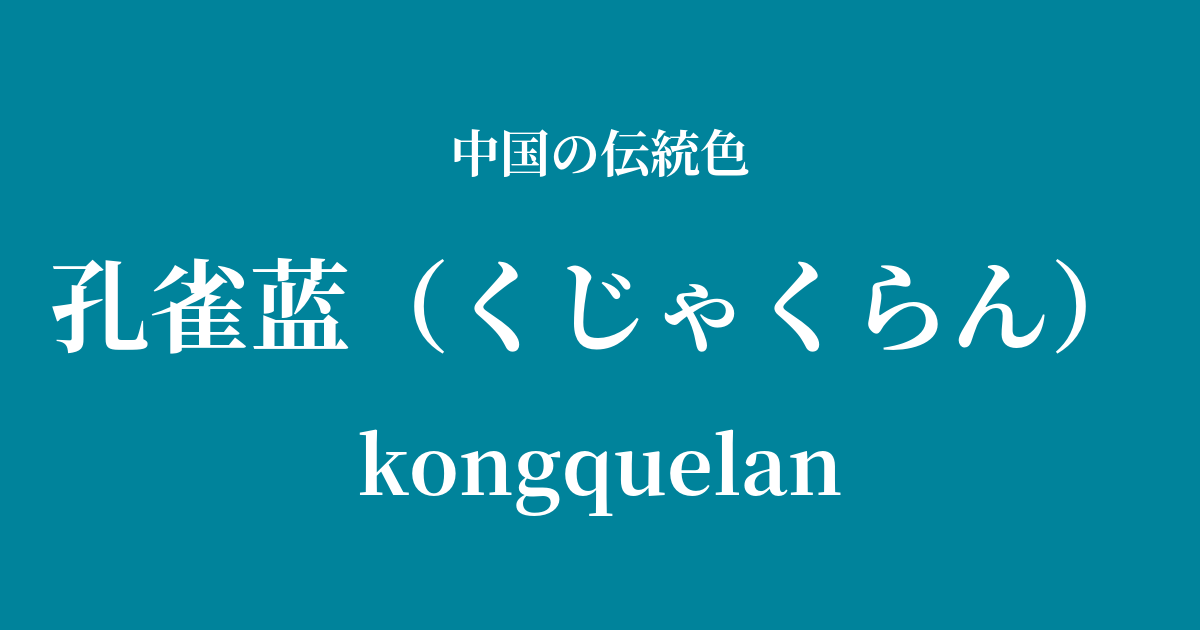
| Color name | peacock |
|---|---|
| reading | Peacock |
| pinyin | kongquelan |
| HEX | #00839B |
| RGB | 0, 131, 155 |
What is Peacock Blue? Origin and Etymology
As its name suggests, Kujakuran (peacock blue) is a deep, vibrant blue-green color derived from the beautiful ornamental feathers of the male peacock.
The mystical colors that peacocks display when they spread their feathers, changing depending on the light, are particularly striking. Among them, the deep, greenish-blue color was named "Peacock Blue."
More than just a simple blue, this color evokes the brilliance of life and the beauty of natural forms, and has long captivated people, recognizing it as a special color.
Historical background of peacock blue
In Chinese history, peacocks have been revered as "auspicious birds," meaning they are considered lucky birds that bring good fortune and prosperity. Their beautiful appearance has made them symbols of peace and prosperity.
During the Tang Dynasty, peacocks were kept in the imperial court, and their elegant appearance was admired by the nobility. From this time onward, the beauty of peacocks began to frequently appear as a subject in poetry and paintings.
During the Ming and Qing dynasties, peacock feathers acquired even more special meaning. In particular, during the Qing dynasty, the "hualing" (花翎), a peacock feather ornament bestowed by the emperor, was considered one of the highest honors signifying an official's achievements and rank. Thus, peacock blue became established not only as a beautiful color, but also as a color symbolizing social status such as authority and nobility.
Peacock blue in Chinese art and crafts
The color peacock blue has seen significant development in the world of Chinese arts and crafts, particularly in ceramics. This glaze, known as "peacock blue glaze," is said to have originated in the Yuan Dynasty and reached its peak in the Jingdezhen kilns during the Ming Dynasty. By applying the glaze directly to unglazed pottery and firing it at a low temperature, a deep, vibrant blue-green color reminiscent of a jewel is created. Works created using this technique were highly prized by emperors and collectors throughout history due to their rarity and beauty.
Furthermore, peacock blue was an important color in clothing culture as well. Not only were peacock feather decorations worn on hats by officials during the Qing Dynasty, but this color was also favored in the Hanfu worn by women of high status, as well as in luxurious silk fabrics and embroidery, adding splendor and elegance to their attire.
Midori-o-kinka-iro, 經玓玓线ふ凇.
Color scheme preview
This is to check the readability of the text when this color is used as the background.
Peacock blue color scheme proposal
Fuji Huang (#FFC32B)
This combination with a vibrant yellow is reminiscent of the golden patterns on a peacock's feathers. The colors complement each other, creating a luxurious and exotic impression.
Moon white (#D6ECF0)
By combining it with a pale, moonlight-like bluish-white, the depth of the peacock blue is highlighted. The result is a quiet, refined, and elegant color scheme.
Hot fat (#C02F5A)
The combination with rouge, a vibrant reddish-purple derived from safflower, creates a bold and passionate impression. It brings out the best in each color, resulting in a striking space and design.
Practical Scenes
In interior design, incorporating peacock blue into accent walls, sofas, and cushions instantly adds a sense of luxury and depth to a space. It pairs well with gold, brass, and dark wood, creating a classic yet modern atmosphere.
In fashion, incorporating this color with lustrous materials such as silk and velvet further enhances its beauty. Using it in dresses, blouses, scarves, and other accessories will add a touch of elegance and sophistication to your outfit.
In web and graphic design, using peacock blue as a key color can convey trustworthiness and expertise. When combined with white or light gray, it results in a highly visible, sophisticated, and clean design.