
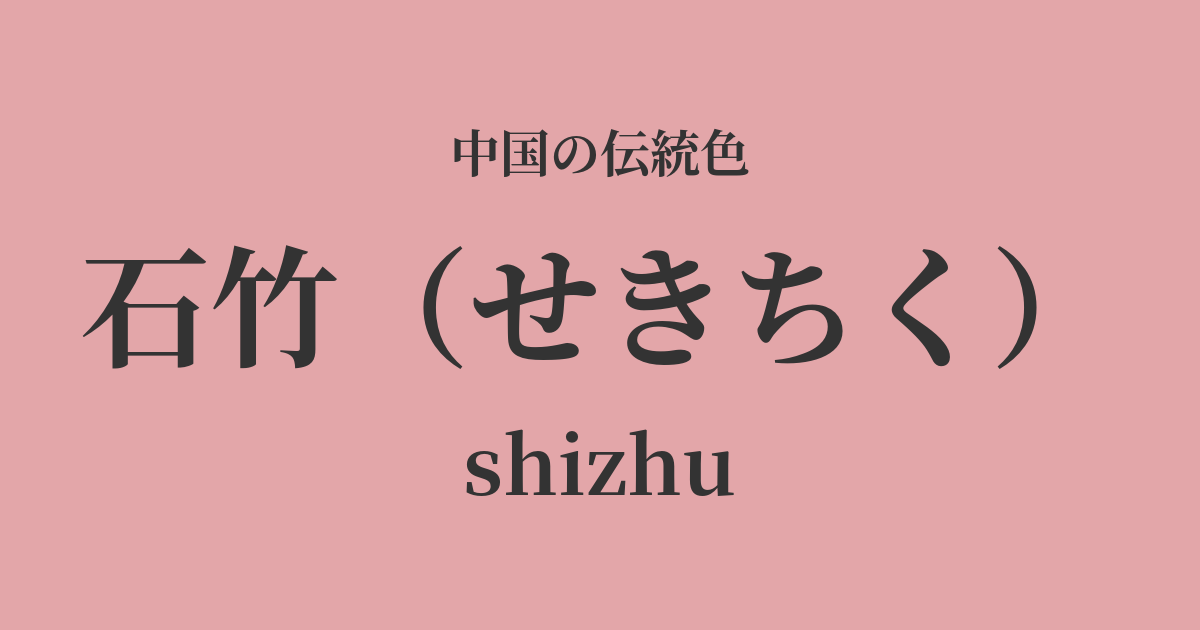
| Color name | stone bamboo |
|---|---|
| reading | Sekichiku |
| pinyin | shizhu |
| HEX | #E3A6A9 |
| RGB | 227, 166, 169 |
What is Dianthus? Origin and Etymology
"Sekichiku" is a gentle, calming pink color derived from the delicate flower of the Dianthus chinensis, a perennial plant belonging to the carnation family.
It is said that the name comes from the character for "stone," reflecting its strong vitality in growing even in harsh environments like rocky areas, and the character for "bamboo," because the nodes of its stem resemble those of bamboo. This color name, which delicately captures the beauty of nature, reflects the rich Chinese culture of appreciating familiar wildflowers.
Historical background of carnations
Dianthus has long been a popular ornamental plant in China. Its beauty was celebrated in the works of Tang Dynasty poets, and it was one of the flowers beloved by literati and artists.
During the Song Dynasty, horticultural culture flourished, and many varieties of carnations were developed, adding color to people's lives. The Ming Dynasty pharmacological text "Compendium of Materia Medica" mentions them as medicinal herbs, but they were primarily favored as a subject for paintings due to their high ornamental value.
Through this long cultural history, the color of the carnation flower became established as an elegant and feminine color, and it is said to have been particularly favored as a color for the clothing and cosmetics of women in the royal court.
Carnations in Chinese Art and Crafts
In Chinese art, the carnation is a frequently depicted subject in the "flower and bird painting" genre. Often painted alongside leading flowers such as peonies and plum blossoms, its delicate appearance adds a subtle touch of color to the picture.
Furthermore, carnation motifs can also be found in the painting of ceramics. In particular, the delicate and gentle hues of the carnation were beautifully expressed on porcelain using techniques such as fencai (royalty painting), which developed during the Qing dynasty.
In clothing culture, this color was used in Hanfu, especially in women's jackets and skirts. The combination of lustrous silk fabric and carnations symbolized the wearer's elegance and gentle character, and it was also a very popular color for embroidery threads.
Spring return to the valley, the ground is bright red.
Color scheme preview
This is to check the readability of the text when this color is used as the background.
Carnation color scheme proposal
Matsuka Midori (#B0D2C1)
This color scheme is very natural, reminiscent of carnation flowers, leaves, and stems. It gives a calm, peaceful, and refined impression. The combination also evokes a Japanese aesthetic.
Fuji purple (#C0A2C7)
Both are elegant color combinations derived from flowers. They create a feminine and sophisticated atmosphere, giving a romantic impression. A refined splendor is born.
Ehuang (#FFF143)
Combining it with a bright, soft yellow creates a cheerful and lovely impression reminiscent of springtime. This color scheme is recommended when you want to create a youthful and positive atmosphere.
Practical Scenes
In interior design, incorporating carnations into fabrics such as cushions, curtains, and rugs brings warmth and a gentle atmosphere to a space. They are ideal as an accent color in rooms based on white, light gray, and beige tones.
In fashion, it pairs well with feminine items such as blouses and dresses. It blends well with the skin and can brighten the complexion. Even incorporating it through accessories like scarves or bags can add a touch of elegance to your outfit.
In web and graphic design, it is suitable for feminine-themed websites and content related to wellness and beauty. Using it as an accent color rather than a main color tends to create an elegant and sophisticated impression.