
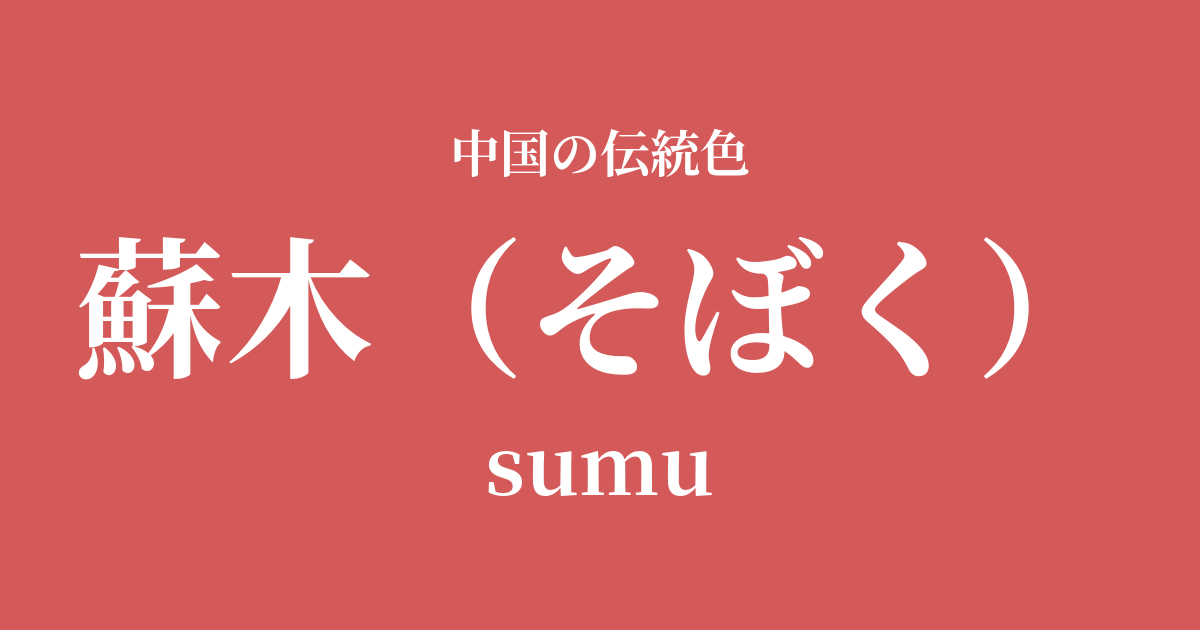
| Color name | Soki |
|---|---|
| reading | Soboku |
| pinyin | sumu |
| HEX | #D45A59 |
| RGB | 212, 90, 89 |
What is Soboku? Origin and etymology
Soboku is a slightly purplish-red color extracted from the heartwood of the sappanwood tree, a small legume native to tropical Asia. It is said that the name originates from a place name in Southeast Asia that historically exported this wood to China.
By finely crushing the heartwood and boiling it in hot water, a red dye solution can be obtained. A distinctive feature is that the shade changes depending on the type of mordant used; using lye as a mordant results in a purplish-red, while using alum produces a more vibrant red. This variation in color has long stimulated the curiosity of dyers and weavers.
Introduced to Japan during the Nara period, it was treated as a color of nobility. Textiles dyed with sappanwood remain among the treasures of the Shōsōin, testifying to its deep history. This deep yet somehow warm red, characteristic of natural dyes, has captivated people across generations.
Historical background of Sugi
Sappanwood has long been an important commodity traded throughout Asia. In China, during the Tang Dynasty, it was already highly valued as an imported item from the South China Sea, and records show that it was used as a dye to color the clothing of people of high social standing.
During the Song Dynasty, sappanwood dyeing became even more widespread with the development of dyeing techniques. It was used not only for ceremonial court attire but also became widely popular among the upper classes. The Ming Dynasty technical manual "Tiangong Kaiwu" also describes dyeing methods using sappanwood in detail, indicating that it was an indispensable element in the dyeing and weaving culture of the time.
Furthermore, sappanwood was highly valued not only as a dye but also as a traditional Chinese medicine. It was believed to promote blood circulation and relieve pain, and was traded as a medicinal ingredient. In this way, sappanwood has supported people's lives in both cultural and medical contexts throughout Chinese history.
Su Mu in Chinese Art and Crafts
The color of the sappanwood tree is deeply intertwined with Chinese clothing culture. In particular, its color development when used to dye silk fabrics is exceptional, achieving both depth and splendor on lustrous materials. Its beauty stood out in special occasions, such as in the luxurious Hanfu worn by emperors and nobles, and in the ceremonial robes used in rituals.
Furthermore, it is believed that sappanwood was also used as a pigment in painting. In particular, it may have been used in meticulous painting of figures and birds and flowers to express the vibrant red of clothing or the delicate shading of peony petals. The calm tones unique to natural materials gave the works elegance and depth.
Purple thong sliding door Su-painted brocade
Color scheme preview
This is to check the readability of the text when this color is used as the background.
Sumiki's color scheme proposal
Tsukihaku (#EAF4FC)
The calm red of the sappanwood tree, combined with the pure white of the moonflower, creates an elegant color scheme where each color enhances the other. It evokes a sense of cleanliness and sophistication, making it suitable for modern Japanese designs and websites.
Willow green (#B8CE9E)
Despite being complementary colors, red and green are both naturally derived, soft hues that are pleasing to the eye and create a harmonious effect. They evoke the vitality of plants, giving a lively impression and making them ideal for fashion and interior design.
赭石 (#955547)
Both sappanwood and ochre are warm, reddish-brown colors. Using similar colors together creates a sense of unity and a very calm, dignified impression. It is recommended for creating a traditional and dignified atmosphere in a space.
Practical Scenes
In the world of fashion, sappanwood yellow works well as an elegant accent color. Incorporating it into dresses and skirts creates a glamorous yet not overly flashy impression. It also looks lovely used as a pop of color in accessories such as scarves, bags, and obi sashes.
In interior design, this color brings warmth and tranquility to a space. Incorporating it into fabrics such as cushion covers, rugs, and curtains will envelop the entire room in a refined atmosphere. Using this color as an accent wall also creates a striking impression.
In web and graphic design, it's effective when you want to express a sense of luxury, tradition, or Japanese aesthetics. When used as a main color, it creates a powerful impression, and when used as an accent for headings or buttons, it attracts attention and tightens the overall design.