
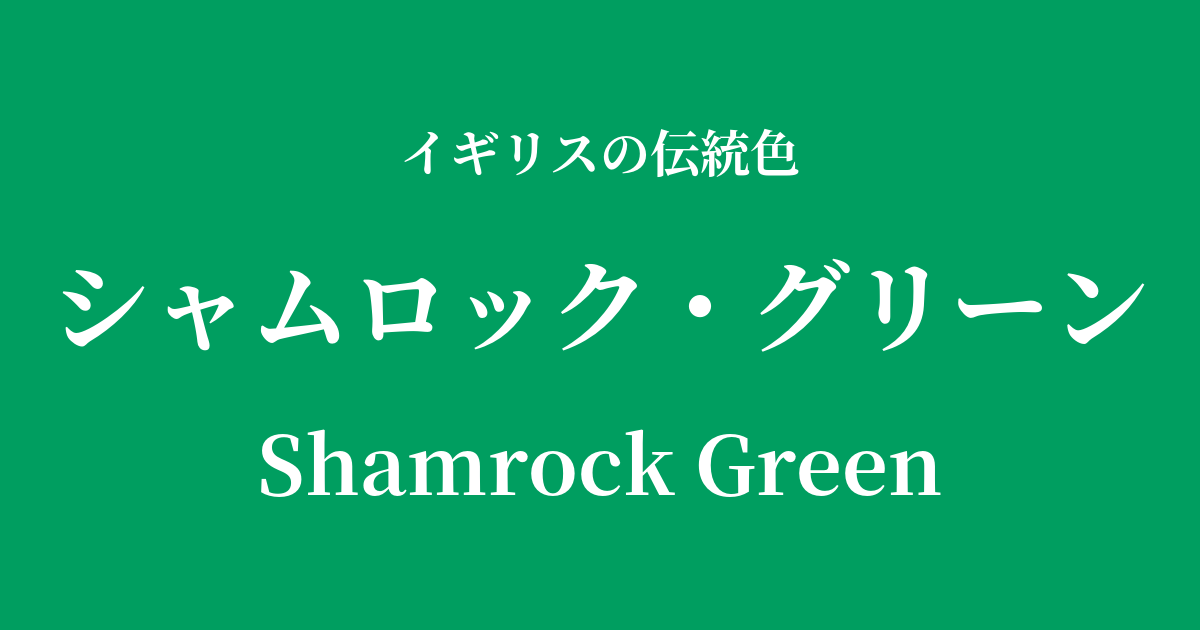
| Original English name | Shamrock Green |
|---|---|
| Japanese notation | Shamrock Green |
| HEX | #009E60 |
| RGB | 0, 158, 96 |
What is Shamrock Green? Origin and Etymology
Shamrock Green, as its name suggests, is a vibrant and lively green color derived from the leaves of the shamrock, the national flower of Ireland.
Shamrocks are generally a general term for three-leaved plants such as clover and wood sorrel, and they symbolize Ireland's rich natural environment.
This color came to have special significance largely due to the legend of Saint Patrick, the patron saint who introduced Christianity to Ireland in the 5th century.
It is said that he used the three leaves of the shamrock to explain the Christian Trinity (Father, Son, and Holy Spirit). This anecdote has made the shamrock and its green color a deeply rooted symbol in Irish faith and culture.
Historical background of shamrock green
Shamrock green has played a significant role in history as a symbol of Irish nationalism and identity.
In the late 18th century, as independence movements against British rule gained momentum, green became the color of resistance and hope for the Irish people. Particularly during the Irish Revolt of 1798, revolutionaries wore green flags and insignia, and the phrase "The Wearing of the Green" became a widespread expression of Irish patriotism.
On the other hand, the British royal family has also used this color in relation to Ireland. For example, Queen Victoria is said to have worn a dress embroidered with shamrocks when she visited Ireland. This was a political message showing respect for Irish culture and a desire for reconciliation between the two countries.
Thus, shamrock green has reflected the complex history of Britain and Ireland, sometimes as a symbol of resistance, and sometimes as a symbol of reconciliation.
Shamrock Green in British Culture
Shamrock green is at its most vibrant on St. Patrick's Day, which takes place every year on March 17th. On this day, Irish people not only in Ireland but all over the world wear clothing and accessories of this color and participate in parades. This festival, in which the entire city is dyed green, is one of the most famous events symbolizing Irish culture.
In the world of sports, this color also represents Irish pride. The Irish national rugby and football teams are affectionately known as the "Green Army," and the players wear uniforms predominantly in shamrock green. That vibrant green unites the hearts of the players on the field and their supporters.
This color also frequently appears in traditional Irish crafts. It is used in decorative items adorned with Celtic patterns, as the green of Connemara marble, or as an accent color in hand-woven tweed fabrics, conveying Ireland's rich natural beauty and artistic sensibility.
Oh the Shamrock, the green, immortal Shamrock! Chosen leaf of Bard and Chief, Old Erin's native Shamrock!
Color scheme preview
This is to check the readability of the text when this color is used as the background.
Shamrock Green color scheme proposal
Cream (#FFFDD0)
The vibrant shamrock green is gently complemented by the soft cream hue, creating a natural and comforting atmosphere. It evokes a calm and warm impression reminiscent of the Irish countryside.
Oxford Blue (#002147)
The combination of vibrant green and sophisticated deep blue complements each other, creating a refined impression. It's a classic and dignified color scheme that conveys confidence and composure while also feeling fresh.
Burgundy (#800020)
The combination of green and deep reddish-purple, which are close to complementary colors, creates a dramatic and striking contrast. It evokes a sense of richness and depth, giving an elegant impression that is suitable for autumn and winter fashion and sophisticated interiors.
Practical Scenes
In interior design, shamrock green is an ideal accent color that brings vitality and brightness to a space. Simply incorporating it through small items like cushions, curtains, or art panels will give the entire room a lively feel. Combining it with white, natural wood, and gold hardware creates a sophisticated and modern space.
In fashion, it's effective as an accent color in an outfit. Especially in spring and summer, incorporating it into shirts, scarves, or bags adds freshness and vibrancy to your look. Furthermore, pairing it with traditional tweed jackets or Aran knitwear creates a classic Irish style.
In websites and graphic design, this color is useful for conveying positive messages such as "nature," "growth," "eco," and "good fortune." Using it for call-to-action buttons or headlines you want to draw attention to can capture users' eyes and create a fresh and trustworthy image.