
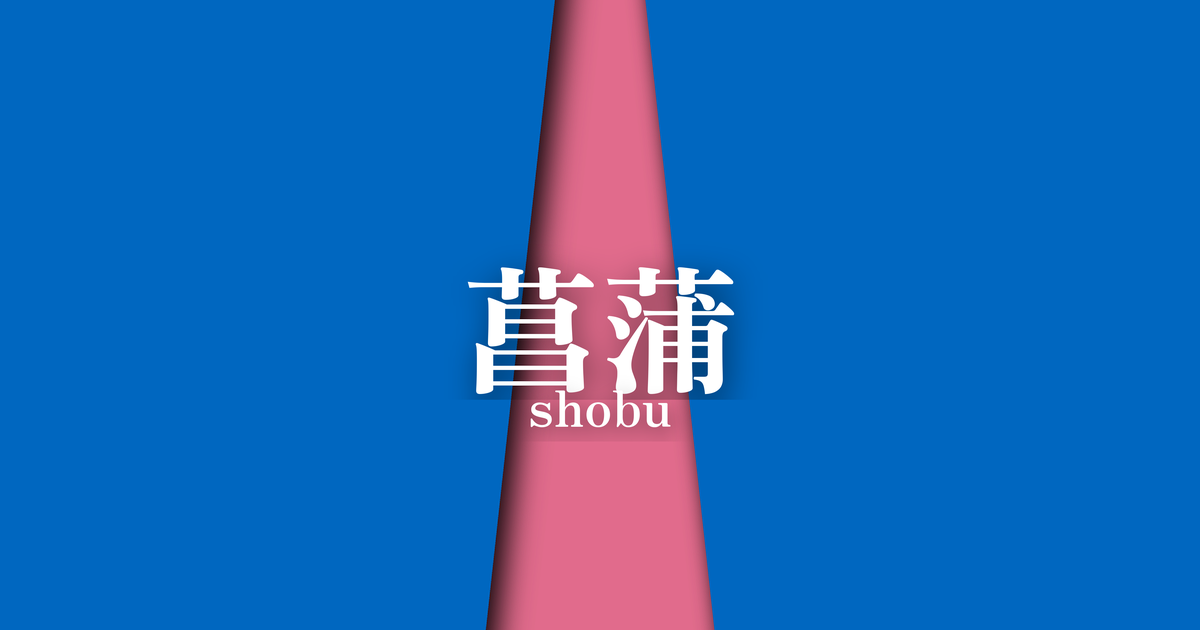
| Japanese color name | iris |
|---|---|
| reading | shobu |
| season | 夏 |
| Color of the table | blue (ao) |
| Back color | Plum blossom color (kobaiiro) |
What is an iris? Origin and etymology
"Shobu" (iris) is a color combination derived from the iris, which blooms by the water in early summer, as its name suggests. The Tango no Sekku festival on the fifth day of the fifth month of the lunar calendar is also called "Shobu no Sekku" (iris festival), and irises were displayed at the eaves of houses as a plant to ward off evil spirits, and were also used in iris baths. The appearance of this plant, which symbolizes this season, is reflected in the color scheme of clothing.
The color scheme is said to represent the fresh, greenish-blue of the iris's slender leaves with the blue on the front, and the delicate color of the flowers with the reddish-plum blossoms on the back. It can be seen as an expression of the aesthetic sense of the Heian period aristocrats who captured the natural landscapes and the changing seasons with a delicate sense of color and incorporated them into their clothing.
Historical background of irises
During the Heian period, expressing a sense of the seasons through the colors of clothing was considered an important aspect of refinement in aristocratic society. "Kasane no Irome" (layered color combinations) is an aesthetic of color schemes that was refined within that culture. "Shobu" (iris) is one of the representative colors of summer and is thought to have been worn especially in events and ceremonies related to the Tango no Sekku (Boys' Festival).
Because it was considered stylish to anticipate the season, this color scheme was used from around the time of Rikka (the beginning of summer). In the "Masasuke Shōzoku Shō," a book on court customs and etiquette believed to have been compiled during the Kamakura period, irises are mentioned as a color to be worn in May. Although there have been some differences in the interpretation of the color scheme depending on the era, it has been passed down for a long time as a color that colors early summer.
Related literature, waka poetry, and seasonal words
In the "Early Bracken" chapter of "The Tale of Genji," there is a scene in which Hikaru Genji presents his adopted daughter Tamakazura with an "iris-patterned robe" as a gift for the Boys' Festival. This garment is said to have been made in the colors of irises, and it is a valuable description that tells us about the customs of the time. Furthermore, in scenes of the Boys' Festival depicted throughout the story, people are shown exchanging gifts of iris roots attached to medicinal balls, suggesting that this color scheme enhanced the celebratory mood of the festival.
The cuckoo sings among the irises in May; I too experience a love I know nothing of.
The season and scenery of irises
"Iris" is a color scheme worn during the summer season, especially in the fifth month of the lunar calendar, which corresponds to around June in the modern calendar. It is a color combination associated with the Tango no Sekku (Boys' Festival) and was favored for use in court ceremonies during this period. The blue on the outside symbolizes the vitality of iris leaves growing by the water's edge, while the reddish-orange color peeking out from the inside symbolizes the loveliness of the flowers just beginning to bloom.
This vibrant yet refreshing color scheme evokes the image of irises standing proudly in the humid air of the rainy season. The pure image of irises, which herald the arrival of early summer and are believed to ward off evil spirits, is embodied in the attire, resulting in a color scheme full of seasonal charm.
Color scheme proposal for irises
White training (#FFFFFF)
This combination evokes the whiteness of iris roots and the refreshing feeling of summer. It enhances the vibrancy of blue and plum blossom pink, creating a clean and dignified impression. It's suitable for emphasizing freshness in summer attire and designs.
Light green (#A2D785)
The combination with the fresh green of young iris leaves beautifully expresses the vitality of early summer. The harmony of similar colors, blue (leaves) and fresh green (young leaves), creates a natural and lively impression.
Yamabuki (#FFBF00)
Like irises, the yellow-orange blossom blooms by the water's edge in early summer. The yellow-orange, a complementary color to blue, enhances the other color, creating a vibrant and lively impression. It's a fitting combination for occasions expressing celebratory feelings.
Practical Scenes
During the Heian period, this color scheme was primarily used for layering women's uchiki (outer robes) and for the contrasting colors of men's clothing. It was especially worn at occasions that emphasized seasonality, such as celebrations for the Boys' Festival (Tango no Sekku). The lining's color peeking out from the cuffs and hem expressed the beauty of the contrast between the iris leaves and flowers.
In modern times, incorporating the "iris" color scheme into kimono and obi, or accessories such as obiage and obijime, creates a stylish and seasonal look. This color scheme is also effective in interior design and graphic design for expressing the freshness of early summer and a Japanese aesthetic. It can give a traditional yet modern impression.