
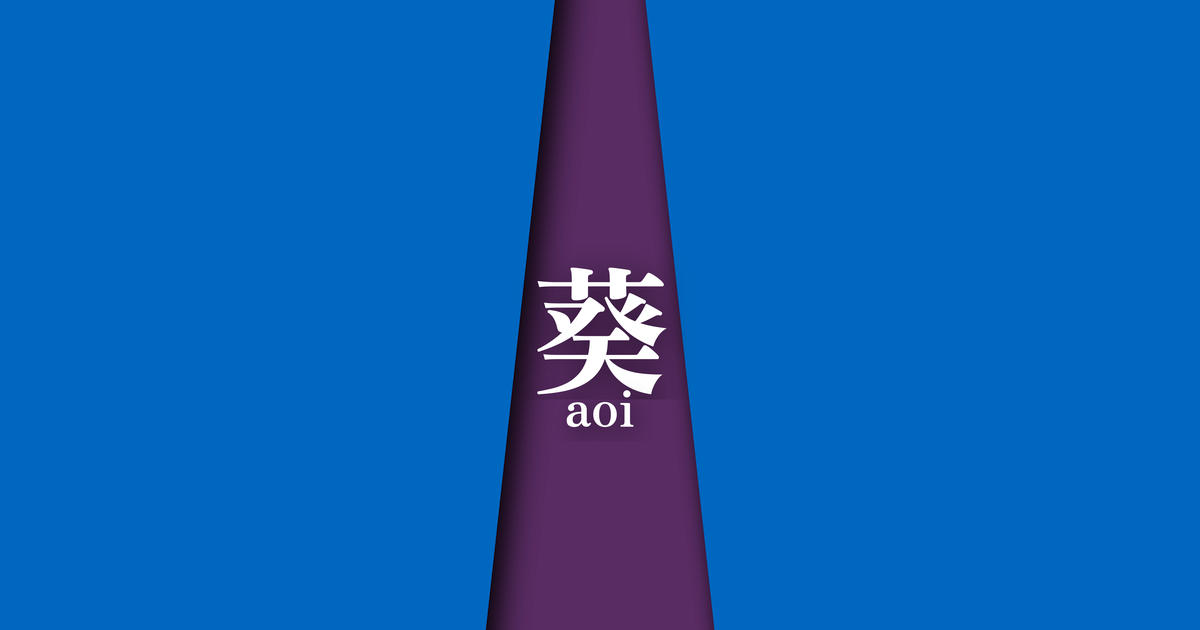
| Japanese color name | 葵 |
|---|---|
| reading | aoi |
| season | 夏 |
| Color of the table | blue (ao) |
| Back color | Purple (murasaki) |
What is Aoi? Origin and etymology
The layered color combination "Aoi" (hollyhock) is, as the name suggests, derived from the hollyhock flower that blooms in summer. The blue on the outside is said to represent the fresh green of the hollyhock's leaves, while the purple on the inside represents the color of the noble flower that blooms in the shade of the leaves. In ancient Japan, green and blue were not clearly distinguished and were both called "ao," so the color of the leaves was represented by blue.
During the Heian period, the hollyhock was a very important plant to aristocratic society, used as a decoration in the Kamo Festival (Aoi Festival), and it is thought that its sacredness and beauty, which symbolizes the season, were incorporated into the colors of clothing.
Aoi's historical background
In the aristocratic society of the Heian period, the "kasane no irome," a color scheme of clothing that emphasized the seasons, was considered an important aspect of refinement. "Aoi" (hollyhock) was one of the colors that represented summer, and it is said that it was particularly favored during the Kamo Festival, which was held in the fourth month of the lunar calendar (around May in the modern calendar). During the festival, it was customary to decorate ox-drawn carriages, crowns, and clothing with hollyhock leaves (Futaba aoi). Wearing clothing in this color scheme was a sophisticated way of showing respect for the festival and expressing a sense of the season.
This color, which gives a cool and noble impression, is said to have been widely used in summer court ceremonies and other events.
Related literature, waka poetry, and seasonal words
The color "Aoi" (hollyhock) is deeply intertwined with the world of classical literature. The "Aoi" chapter of "The Tale of Genji" depicts the tragedy of Lady Aoi, the principal wife of Hikaru Genji, who dies after a carriage dispute with Lady Rokujo, and the Kamo Festival is set as an important stage in the story. The very existence of this chapter speaks to the importance of Aoi and the Kamo Festival in the aristocratic culture of the time.
Furthermore, "The Pillow Book" vividly describes the splendid procession of the Kamo Festival, allowing us to glimpse the cultural background of the "Aoi" color through literary works.
Before the hollyhock I wore as a tribute withers, how can I visit the mountain on the day we meet?
The season and scenery of hollyhocks
"Aoi" is a color combination used in traditional Japanese clothing to express the seasonal feeling from early summer to mid-summer. The vibrant blue of the outer layer symbolizes the lush green leaves of the hollyhock plant bathed in the strong summer sun, while the deep purple of the inner layer symbolizes the elegant color of the flowers that bloom in the shade of those leaves. This contrast between blue and purple has the effect of bringing coolness and calmness to the summer heat. The most appropriate time to wear it was considered to be from April to May of the old lunar calendar, especially around the time of the Kamo Festival (Aoi Festival) in Kyoto.
This color scheme is one of the colors that symbolizes the aesthetic sense of the Heian aristocracy, who were keen to perceive the changing seasons and reflect them in their attire.
Aoi's color scheme proposal
White training (#FFFFFF)
By combining it with pure white, the cool blue and purple of the "Aoi" pattern are further enhanced, creating a sacred impression. This color scheme evokes a pure and noble atmosphere, reminiscent of the rituals of the Kamo Festival.
Light green (#A9D159)
The bright green of the young leaves, reminiscent of fresh green foliage, complements the color of the hollyhock leaves, richly expressing the vibrant natural scenery of early summer. It's a combination that gives a lively and youthful impression.
Yamabuki (#F8B500)
Adding a vibrant golden yellow as an accent color brings vibrancy and brightness to the subdued blue and purple color scheme. This combination, reminiscent of the strong summer sun, gives a lively impression.
Practical Scenes
In the Heian period, the "Aoi" (hollyhock) color was used in the layering of the uchiki (a type of summer kimono worn by court ladies) and in the noshi (a type of formal robe worn by men). Wearing this color scheme, especially when attending the Kamo Festival, was considered a sophisticated gesture demonstrating a deep understanding of the season and the festival. In modern times, incorporating the "Aoi" color into the combination of kimono and obi creates a stylish and fashionable summer look.
Furthermore, in the fields of interior design and web design, this color scheme is used to create a cool, calming, and traditional Japanese atmosphere, thus contributing to the creation of elegant spaces.