
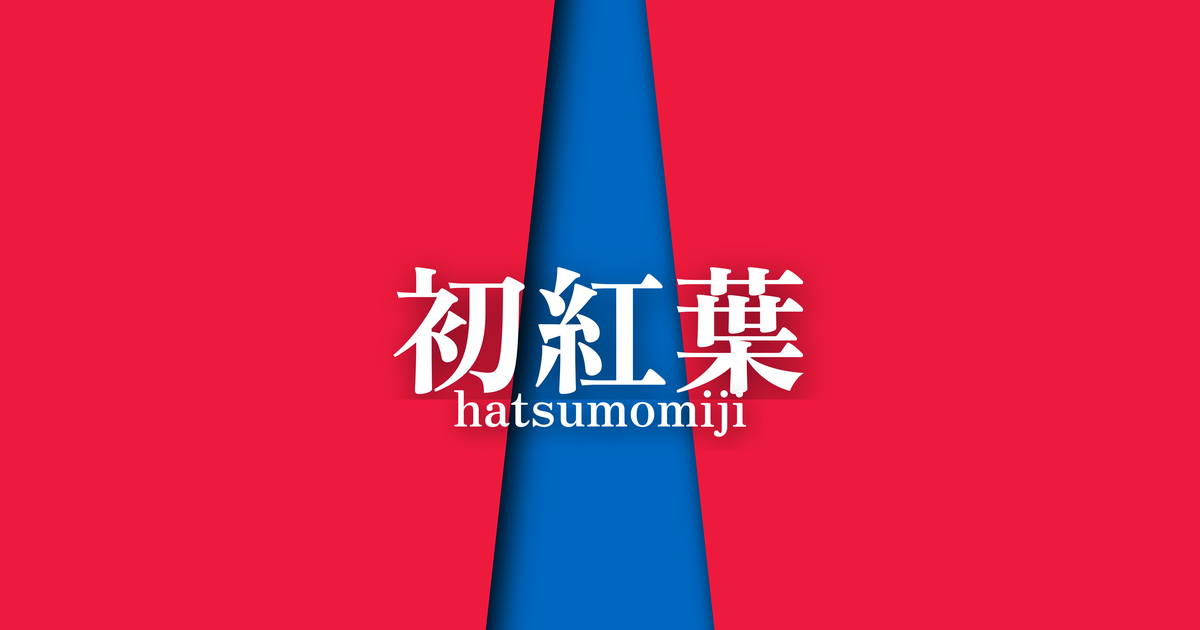
| Japanese color name | First autumn leaves |
|---|---|
| reading | hitsumomiji |
| season | 秋 |
| Color of the table | Red (aka) |
| Back color | blue (ao) |
- What is "Hatsumomiji" (first autumn leaves)? Origin and etymology.
- Historical background of the first autumn leaves
- Related literature, waka poetry, and seasonal words
- The season and scenery of the first autumn leaves
- Color scheme proposals for the first autumn leaves
- Practical Scenes
- FAQ
- Color combinations for the same season (autumn)
What is "Hatsumomiji" (first autumn leaves)? Origin and etymology.
Hatsumomiji (first autumn leaves) is a color combination that reflects the scene of the leaves beginning to change color at the start of autumn. As the name suggests, it expresses the vibrant scenery of the first autumn leaves. The red on the front is said to symbolize the fiery red maple leaves, while the blue on the back is said to symbolize the clear stream flowing beneath the leaves and the clear autumn sky. The bold and contrasting colors of red and blue highlight the fresh surprise of the arrival of autumn and the beauty of nature.
Historical background of the first autumn leaves
During the Heian period, aristocrats developed "kasane no irome," a system of color combinations in clothing that expressed the changing seasons, as an important cultural practice. It is presumed that the "hatsumomiji" (first autumn leaves) color combination was used in court ladies' attire as a symbol of autumn's arrival. This color scheme reflects the refined aesthetic sensibilities of the people of that time, who embraced the beauty of nature. Although there are not many records of specific instances of its use, it is mentioned in later clothing texts as one of the representative autumn colors.
Related literature, waka poetry, and seasonal words
"Hatsumomiji" (first autumn leaves) is a scene beloved in classical literature, especially in the world of waka poetry. The *Kokin Wakashū* and *Shin Kokin Wakashū* contain numerous poems that celebrate the beauty of autumn leaves just beginning to change color and the feeling of the changing seasons evoked by them. As a color combination in kimono, "Hatsumomiji" visually expresses the delicate view of nature and aesthetic sensibilities expressed in these waka poems through the color scheme of clothing. It can be said to be one of the color combinations that symbolizes the sensibilities of the Heian aristocracy, where literature and clothing culture were closely intertwined.
The dew on the changing colors of the reeds wets my sleeves, and the first autumn leaves beat against my clothes.
The season and scenery of the first autumn leaves
The "First Autumn Leaves" design represents the season from September to October, which heralds the arrival of autumn. It depicts the fresh scene just before the trees on the mountains fully change color, when red and yellow begin to mix with the green. The vibrant red on the front represents the maple leaves just beginning to change color, while the blue on the back evokes the clear autumn sky and the cool water of a mountain stream. It is a pure and vibrant color scheme that captures the beauty of nature as it heralds the arrival of autumn while a trace of summer still lingers.
Color scheme proposals for the first autumn leaves
Withered leaf color (#917347)
The vibrant reds and blues of the first autumn leaves, combined with the calming browns of withered leaves, express the depth of the entire autumn forest. The harmonious color scheme evokes the scene as the leaves change color and begin to fall.
Shironeri (#FFFFFF)
By combining it with pure white, the vivid reds and blues of the first autumn leaves are further enhanced. It evokes the whiteness of autumn morning mist and frost, giving the overall color scheme a sense of cleanliness and elegance. This combination is also easily applicable to modern designs.
Dark purple (#493759)
The deep purple, considered a noble color, brings elegance and tranquility to the vibrant beauty of the first autumn leaves. This color scheme evokes the twilight of autumn foliage and the serenity of an autumn night. It's an elegant combination also seen in the attire of the Heian period.
Practical Scenes
In terms of clothing, this color scheme is believed to have been used for the uchiki (a type of kimono worn by court ladies) during the Heian period. As a stylish outfit that anticipated the feeling of autumn, it is thought to have been worn especially at events such as moon-viewing parties and autumn leaf viewing parties from September to October. The vivid contrast between red and blue likely also served to showcase the wearer's aesthetic sense to those around them.
In modern times, this color scheme is incorporated into kimonos, obi sashes, and Japanese accessories, giving them a classic yet modern feel. Its striking colors have also attracted attention in the design world. Using it as a key color in web design, product packaging, or interior accents can create spaces and products that evoke a sense of traditional Japanese aesthetics.